Format
Audiobooks vs Reading
Where the evidence says they are equivalent, and the specific places print still wins.
Updated September 2026 · By Sawyer V.

The short version
For narrative — stories, memoir, anything you read for pleasure — the research consistently finds comprehension closely comparable between listening and reading. For material you need to search, annotate or return to, print has real and measurable advantages.
Some links on this page are affiliate links. If you buy through one we earn a commission at no extra cost to you, and it does not change which books are here or the order they appear in. Read the full disclosure.
How we picked
This page compares formats rather than books, so the picks below are audiobooks that demonstrate what the format does well. We have not listened to all three, and where we describe research we link to it rather than paraphrasing from memory.
What we do on every list: read the publisher’s own description rather than a summary of it, check print length and first publication year against library catalog data (last refreshed October 21, 2026), confirm the book is still sold in the format we suggest, and write the match line before the blurb. What we do not do is claim to have read every book here cover to cover. The full method is published, and it is written so anyone can check it.
What the research actually finds
The question has been studied since the 1970s, and the general finding for narrative material is that listening and reading produce closely comparable comprehension. The influential framework here is the simple view of reading, which treats reading comprehension as decoding plus language comprehension — and predicts that once decoding is fluent, the two channels converge.
Where differences show up, they are mostly about control rather than channel. A reader can slow down, reread a paragraph, or skim back to check a name; a listener cannot do any of that without losing their place. That matters enormously for study material and hardly at all for a novel.
We are not going to overstate this. Study designs vary, the material tested is often short passages rather than whole books, and anyone claiming a settled scientific verdict is selling something. The honest summary: for stories, the format is not the variable that matters. For dense factual material, it is.
Where print genuinely wins
- Anything you need to search. You cannot flip back through audio, and the character you half-remember from chapter three is effectively gone.
- Diagrams, maps and tables. If the information is spatial, audio simply cannot carry it.
- Books with footnotes doing real work. Recordings handle them badly, usually by reading them inline, which wrecks the sentence they interrupt.
- Study. Annotation, highlighting and rereading are the mechanics of learning, and they are all harder in audio.
- Poetry, arguably. Some poetry is transformed by being read aloud; some depends on the shape on the page.
Where audio wins is not really a comprehension argument at all. It is that it converts hours that did not previously exist — driving, walking, cooking, cleaning — into reading time. That is a larger effect than any difference in retention.
The short answer
Who each book is for, at a glance. Select a row for the full write-up.
| # | Book | Give this if | Where to buy |
|---|---|---|---|
| 1 | 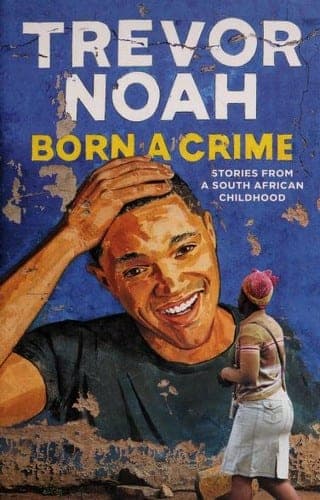 Born a CrimeTrevor Noah · 304 pagesThe author's own voice | you want the clearest demonstration | |
| 2 | 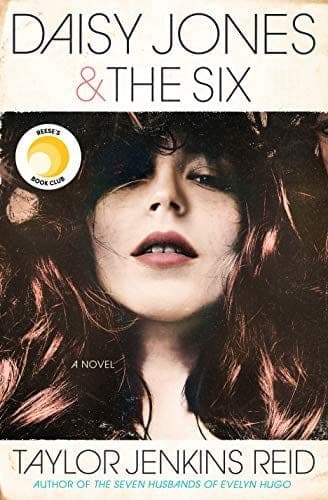 Daisy Jones & The SixTaylor Jenkins Reid · 400 pagesA form that suits recording | you want to hear what a full cast does | |
| 3 | 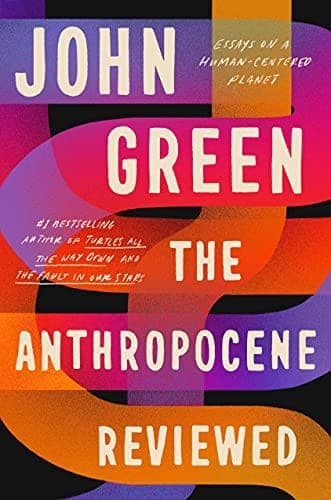 The Anthropocene ReviewedJohn Green · 328 pagesWriting built for the voice | you listen in short pieces |
#ad — buying through these links earns us a commission at no cost to you. Prices, where shown, come straight from Amazon’s product feed; the listing is always the final word.
Three books that show what audio does well
1. The author's own voice
Born a Crime
Trevor Noah
Give this ifyou want the clearest demonstration
A memoir largely about language, read by a comedian who performs every accent in it. Nothing on the page can reproduce that, which is the whole argument for the format in one book.
- Print length
- 304 pages
- First published
- 2016
- Formats
- print, Kindle and audio where the publisher offers them
#ad — how we’re funded · price as of October 24, 2026
2. A form that suits recording
Daisy Jones & The Six
Taylor Jenkins Reid
Give this ifyou want to hear what a full cast does
A novel written as interview transcripts. With a different actor per voice it becomes a documentary, which is what the printed version is imitating.
- Print length
- 400 pages
- First published
- 2019
- Formats
- print, Kindle and audio where the publisher offers them
#ad — how we’re funded · price as of October 24, 2026
3. Writing built for the voice
The Anthropocene Reviewed
John Green
Give this ifyou listen in short pieces
Essays originally written for a podcast, read by their author. The sentences are shaped for speech, and it shows.
- Print length
- 328 pages
- First published
- 2019
- Formats
- print, Kindle and audio where the publisher offers them
#ad — how we’re funded · price as of October 24, 2026
Why people keep asking whether it counts
The anxiety behind the question is usually about legitimacy rather than comprehension: an unspoken sense that listening is easier and therefore lesser. It is worth saying plainly that the printed book is itself a technology, that reading aloud was the normal mode for most of literate history, and that silent private reading is the historical exception rather than the default.
If somebody has finished a book and can tell you what happens in it, they have read it. The interesting question is not whether it counts but which format suits the material — and on that, the answer is genuinely useful rather than defensive.
There is a practical version of the same point that gets lost in the argument. Someone who listens to twenty books a year while driving has read twenty books they would otherwise not have read at all, because those hours were never available for print. Measured against the realistic alternative — silence, or a podcast — audio is not competing with reading. It is competing with nothing, and it wins.
What we would skip
Listening to something you are trying to study
The one place print's advantage is not arguable. Material you need to search, cross-reference, annotate or return to is genuinely harder in audio, because you cannot skim backwards and you cannot see the page you half-remember. If someone is learning a subject rather than enjoying a story, print is the better tool.
Questions people ask
Does listening to an audiobook count as reading?
For narrative material, research consistently finds comprehension closely comparable. For material you need to search, annotate or study, print has real advantages. If you finished it and can say what happens, you read it.
Do you remember less from audiobooks?
For stories, the evidence does not support a meaningful gap. For dense factual material, probably yes — largely because you cannot skim back, reread or annotate.
Is it cheating to listen to audiobooks?
No. Reading aloud was the normal mode for most of literate history; silent private reading is the historical exception. The useful question is which format suits the material.
What should I read in print instead of listening to?
Anything with diagrams, maps, tables or load-bearing footnotes, and anything you are studying rather than enjoying. Those are the cases where the format genuinely changes the outcome.
Can you speed up audiobooks?
Most apps go to 3x, and heavy listeners commonly use 1.5x to 2x. Comprehension holds up well for most people at moderate speeds; past that it varies a great deal by narrator and by listener.
Sources
- Audible Premium Plus membership page — The only authoritative source for current Audible plans, prices and terms.
- Open Library Search API — First publication year, median print length and cover art for every book on this page. Queried 8 September 2026.
- Libby, by OverDrive — Free ebook and audiobook lending through US public libraries. We earn nothing from it and recommend it anyway.
Read next
- How Audible Actually Works
Credits, included titles, gifting and cancellation — Audible explained without the marketing.
- Print vs Kindle
Where paper wins, where e-ink wins, and why most heavy readers end up with both.
- Audiobooks vs Podcasts
Why podcast listeners bounce off audiobooks, and the five books that bridge the gap.
- Best Audiobooks for Beginners
Six first audiobooks, and the three mistakes that make people give up in the first hour.
- Audiobooks
Audiobook lists, Audible explained, and the titles that are genuinely better in audio.