Format
Ebooks vs Print
The three questions that are not about reading: cost, retention, and what you actually own.
Updated September 2026 · By Sawyer V.
The short version
Ebooks are not reliably cheaper, retention differences are small for narrative and real for study material, and buying an ebook is buying a license rather than an object. None of that makes them worse; all of it is worth knowing.
Some links on this page are affiliate links. If you buy through one we earn a commission at no extra cost to you, and it does not change which books are here or the order they appear in. Read the full disclosure.
How we picked
This page compares formats rather than books. The picks are titles where the format decision has a practical consequence. We have not read all four.
What we do on every list: read the publisher’s own description rather than a summary of it, check print length and first publication year against library catalog data (last refreshed October 21, 2026), confirm the book is still sold in the format we suggest, and write the match line before the blurb. What we do not do is claim to have read every book here cover to cover. The full method is published, and it is written so anyone can check it.
The cost question, honestly
Ebooks are cheaper in some places and not in others, and the pattern is worth knowing because it is counterintuitive.
- Independently published genre fiction: the ebook is dramatically cheaper, often by an order of magnitude. This is where the format's price advantage genuinely lives.
- New releases from major publishers: the ebook is frequently priced close to the hardback, for commercial reasons that have nothing to do with production cost.
- Older titles: a used paperback usually beats the ebook, and by a lot.
- Classics: out-of-copyright texts are free as ebooks, which is a real and underused advantage.
Any price we show is for one edition only, and prices change constantly across formats and retailers. Compare both on the listing at the moment you buy; it takes ten seconds and the answer varies by book.
Retention: what the research actually says
Studies comparing comprehension on screen and on paper generally find small or no differences for narrative reading, and more consistent advantages for print with expository or study material — text you need to search, cross-reference and return to.
The likely mechanism is not the screen but navigation. A printed book gives you a spatial memory of where something was: roughly two-thirds through, on the left-hand page. Scrolling text has no such landmarks, which matters when you are trying to find a passage rather than enjoy one.
So the practical rule is the same as with audiobooks versus reading: for stories, the format is not the variable that matters. For material you are learning, print has a real advantage and it is worth spending on.
What you actually own
This is the difference people notice least at purchase and most later. Buying an ebook is buying a license to access a file, not an object. In practice that means: you generally cannot lend it, you cannot sell it, you cannot leave it to anybody, and it is tied to an account and a platform.
It is not a reason to avoid ebooks — the convenience is real and most reading is not archival. It is a reason to buy print for the books you expect to keep, lend or hand on, which is a much smaller set than most people's shelves suggest.
It is also the reason a printed book is a better gift. An inscription, a wrapped object and something that can sit on a shelf for thirty years are all things a license cannot do.
The short answer
Who each book is for, at a glance. Select a row for the full write-up.
| # | Book | Give this if | Where to buy |
|---|---|---|---|
| 1 | 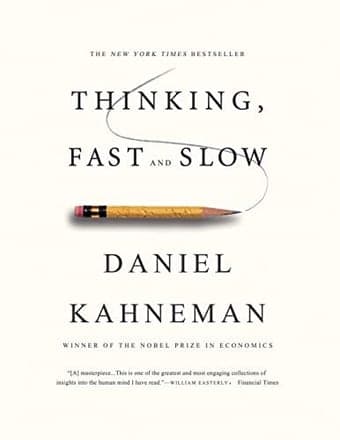 Thinking, Fast and SlowDaniel Kahneman · 528 pagesPrint, if you are studying it | they want to retain the argument | |
| 2 | 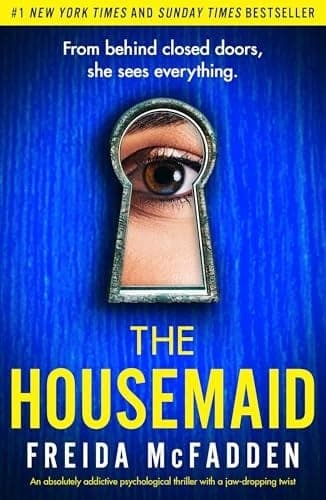 The HousemaidFreida McFadden · 336 pagesEbook, comfortably | they read fast and move on | |
| 3 | 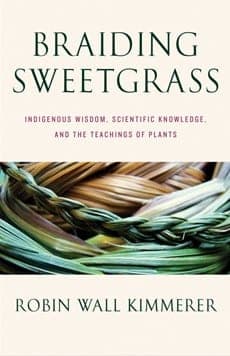 Braiding SweetgrassRobin Wall Kimmerer · 409 pagesPrint, for the way it is read | they will read it over months | |
| 4 | 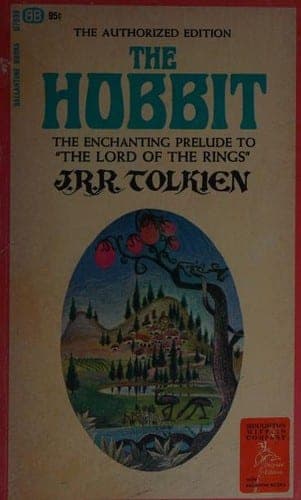 The HobbitJ. R. R. Tolkien · 310 pagesPrint, because it gets given away | there is any chance it gets handed to a child |
#ad — buying through these links earns us a commission at no cost to you. Prices, where shown, come straight from Amazon’s product feed; the listing is always the final word.
Four books where the decision matters
1. Print, if you are studying it
Thinking, Fast and Slow
Daniel Kahneman
Give this ifthey want to retain the argument
A long argument built from experiments you will want to flip back to. This is precisely the material where the research finds print's advantages are real rather than marginal.
- Print length
- 528 pages
- First published
- 2011
- Formats
- print, Kindle and audio where the publisher offers them
#ad — how we’re funded · price as of October 24, 2026
2. Ebook, comfortably
The Housemaid
Freida McFadden
Give this ifthey read fast and move on
Read in two sittings and never returned to. There is no benefit to owning a physical copy of a book you will finish this weekend and not open again.
- Print length
- 336 pages
- First published
- 2022
- Formats
- print, Kindle and audio where the publisher offers them
#ad — how we’re funded · price as of October 24, 2026
3. Print, for the way it is read
Braiding Sweetgrass
Robin Wall Kimmerer
Give this ifthey will read it over months
Designed to be read a chapter at a time over a long stretch. A physical book on a table gets picked up; a file in a device competes with everything else on the device.
- Print length
- 409 pages
- First published
- 2013
- Formats
- print, Kindle and audio where the publisher offers them
#ad — how we’re funded · price as of October 24, 2026
4. Print, because it gets given away
The Hobbit
J. R. R. Tolkien
Give this ifthere is any chance it gets handed to a child
Books that get passed on need to be objects. A license cannot be lent, inherited or found on a shelf by somebody else years later.
- Print length
- 310 pages
- First published
- 1937
- Formats
- print, Kindle and audio where the publisher offers them
#ad — how we’re funded · price as of October 24, 2026
What we would skip
Assuming the ebook is the cheaper option
It frequently is not. New releases from major publishers are often priced close to the hardback, and a used paperback of an older title is usually far cheaper than either. The ebook is reliably cheaper for independently published genre fiction and reliably not for front-list titles, which is the opposite of what most people assume.
Questions people ask
Are ebooks cheaper than print?
For independently published genre fiction, dramatically. For new releases from major publishers, often not — they are frequently priced close to the hardback. Used paperbacks usually beat both for older titles.
Do you remember less from ebooks?
For narrative reading, differences are small or absent. For study material the advantage of print is more consistent, probably because a physical book gives you a spatial memory of where something was.
Do you own an ebook you buy?
You buy a license to access a file, not an object. In practice you generally cannot lend, sell or bequeath it, and it is tied to an account and a platform.
Which should I buy for a book I want to keep?
Print. Anything you expect to lend, hand on or still own in thirty years should be an object, and that is a much smaller set of books than most shelves suggest.
Sources
- Open Library Search API — First publication year, median print length and cover art for every book on this page. Queried 8 September 2026.
- Kindle Unlimited signup page — The only authoritative source for current Kindle Unlimited pricing and catalog terms.
- Libby, by OverDrive — Free ebook and audiobook lending through US public libraries. We earn nothing from it and recommend it anyway.
Read next
- Print vs Kindle
Where paper wins, where e-ink wins, and why most heavy readers end up with both.
- Audiobooks vs Reading
Where listening and reading are equivalent, where print wins, and why the question keeps coming up.
- Is Kindle Unlimited Worth It?
The two numbers that decide it, what the catalog actually holds, and who should skip it.
- Gifts for Book Lovers That Aren't Books
For the reader who owns everything: what gets used, what gets re-gifted, and why.
- Kindle & KU
The Kindle Unlimited question, the Audible comparison, and print versus screen.
- Can You Print a Kindle Book?
No, and here is why, what you can print instead, and when to just buy the paper edition.
- Hardcover vs Paperback
When the hardcover earns its price, and why there are three print formats rather than two.