Read-alikes
Books Like Atomic Habits
Including two books that argue against it, which is more useful than eight that agree.
Updated September 2026 · By Sawyer V.

The short version
Decide whether they want more systems or a different argument. Most read-alike lists give eight versions of the same advice; the more useful next book is often one that disagrees, because the genre's weakness is that it never argues with itself.
Some links on this page are affiliate links. If you buy through one we earn a commission at no extra cost to you, and it does not change which books are here or the order they appear in. Read the full disclosure.
How we picked
We split the list into books that extend the argument and books that contest it, and we note where a widely cited book rests on research that has not replicated well. We have not read all eight.
What we do on every list: read the publisher’s own description rather than a summary of it, check print length and first publication year against library catalog data (last refreshed October 21, 2026), confirm the book is still sold in the format we suggest, and write the match line before the blurb. What we do not do is claim to have read every book here cover to cover. The full method is published, and it is written so anyone can check it.
The short answer
Who each book is for, at a glance. Select a row for the full write-up.
| # | Book | Give this if | Where to buy |
|---|---|---|---|
| 1 | 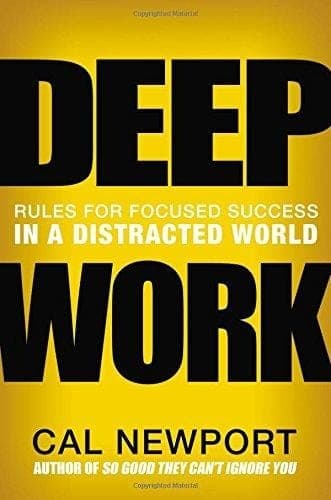 Deep WorkCal Newport · 303 pagesThe natural continuation | they want more systems | |
| 2 | 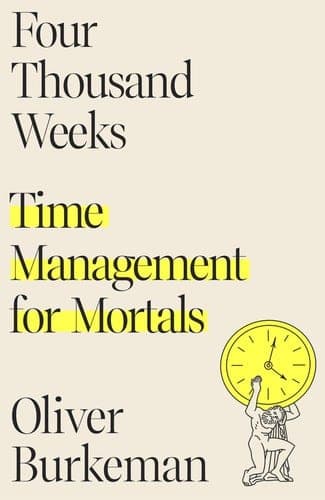 Four Thousand WeeksOliver Burkeman · 280 pagesThe book that argues back | they are starting to feel like a project | |
| 3 | 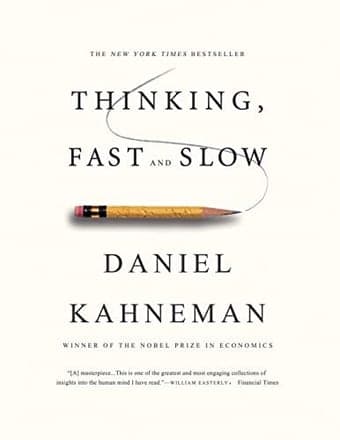 Thinking, Fast and SlowDaniel Kahneman · 528 pagesThe research underneath | they want the evidence rather than the summary | |
| 4 | 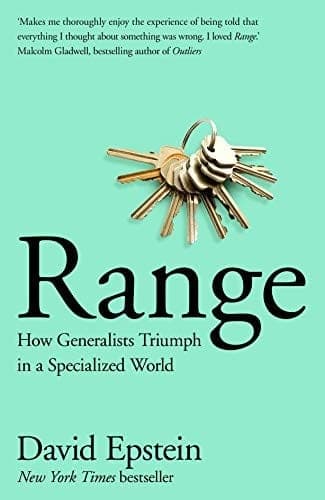 RangeDavid Epstein · 352 pagesThe other argument back | they are anxious about not having specialized | |
| 5 |  The Creative ActRick Rubin · 432 pagesFor making things rather than optimizing | the goal is output, not efficiency | |
| 6 |  Why We SleepMatthew Walker · 360 pagesThe single highest-leverage change | they want one thing that actually moves everything | |
| 7 |  QuietSusan Cain · 368 pagesEnvironment over willpower | they suspect the problem is their surroundings | |
| 8 |  Being MortalAtul Gawande · 283 pagesThe long view | they are optimizing and have not asked what for |
#ad — buying through these links earns us a commission at no cost to you. Prices, where shown, come straight from Amazon’s product feed; the listing is always the final word.
Eight books, agreeing and disagreeing
1. The natural continuation
Deep Work
Cal Newport
Give this ifthey want more systems
The case for long uninterrupted concentration as a rare and increasingly valuable skill. It is the most direct extension of the Atomic Habits argument and the one its readers most often go to next.
- Print length
- 303 pages
- First published
- 2016
- Formats
- print, Kindle and audio where the publisher offers them
#ad — how we’re funded · price as of October 24, 2026
2. The book that argues back
Four Thousand Weeks
Oliver Burkeman
Give this ifthey are starting to feel like a project
A time-management book arguing that the problem is finitude and no system fixes it. It is the most useful counterweight to the entire genre, and it takes the genre seriously rather than sneering at it.
- Print length
- 280 pages
- First published
- 2021
- Formats
- print, Kindle and audio where the publisher offers them
#ad — how we’re funded · price as of October 24, 2026
3. The research underneath
Thinking, Fast and Slow
Daniel Kahneman
Give this ifthey want the evidence rather than the summary
Two systems of thought, and a career's worth of experiments on how reliably the fast one misleads us. It is the source a great deal of popular behavior writing draws on.
One caveat: Some findings in it have not replicated well, which the author acknowledged. Read it as a landmark rather than as a settled reference.
- Print length
- 528 pages
- First published
- 2011
- Formats
- print, Kindle and audio where the publisher offers them
#ad — how we’re funded · price as of October 24, 2026
4. The other argument back
Range
David Epstein
Give this ifthey are anxious about not having specialized
The case that generalists and late specializers outperform in complex fields. It contradicts the optimize-one-thing instinct directly, and it argues from evidence rather than from encouragement.
- Print length
- 352 pages
- First published
- 2019
- Formats
- print, Kindle and audio where the publisher offers them
#ad — how we’re funded · price as of October 24, 2026
5. For making things rather than optimizing
The Creative Act
Rick Rubin
Give this ifthe goal is output, not efficiency
A record producer's short chapters on attention, taste and finishing things. Deliberately unsystematic, which is either refreshing or maddening depending on why they liked Atomic Habits.
- Print length
- 432 pages
- First published
- 2023
- Formats
- print, Kindle and audio where the publisher offers them
#ad — how we’re funded · price as of October 24, 2026
6. The single highest-leverage change
Why We Sleep
Matthew Walker
Give this ifthey want one thing that actually moves everything
A sleep scientist's case that sleep is the most undervalued lever on health. For someone optimizing their day, it is the intervention with the largest evidence base behind it.
One caveat: Some specific claims have been publicly disputed. The general case is solid; treat individual statistics with care.
- Print length
- 360 pages
- First published
- 2017
- Formats
- print, Kindle and audio where the publisher offers them
#ad — how we’re funded · price as of October 24, 2026
7. Environment over willpower
Quiet
Susan Cain
Give this ifthey suspect the problem is their surroundings
The case that Western workplaces are built for extroverts and lose a great deal by it. It shares Atomic Habits' central insight — change the environment, not the person — applied to a different problem.
- Print length
- 368 pages
- First published
- 2012
- Formats
- print, Kindle and audio where the publisher offers them
#ad — how we’re funded · price as of October 24, 2026
8. The long view
Being Mortal
Atul Gawande
Give this ifthey are optimizing and have not asked what for
A surgeon on what medicine gets wrong about aging and the end of life. It is not a productivity book at all, and it is the one that most usefully reframes why any of the optimizing is happening.
- Print length
- 283 pages
- First published
- 2014
- Formats
- print, Kindle and audio where the publisher offers them
#ad — how we’re funded · price as of October 24, 2026
More systems, or a different argument?
| If they want | Go to | Because |
|---|---|---|
| More of the same, done well | Deep Work | The most direct extension of the argument |
| The evidence underneath | Thinking, Fast and Slow | The research a lot of popular writing draws on |
| Permission to stop optimizing | Four Thousand Weeks | It argues the premise is wrong, not the method |
| Permission not to have specialized | Range | It contradicts optimize-one-thing directly |
| To make things rather than improve | The Creative Act | Output rather than efficiency |
| To ask what it is all for | Being Mortal | Not a productivity book, and the most reframing |
An honest note about this genre
A large amount of popular behavior writing rests on psychology research from the 2000s and 2010s, and a meaningful portion of that research has not replicated well since. Some famous studies quoted confidently in books that sold millions of copies have failed to reproduce.
That does not make the books worthless, and it does mean a specific study cited in a bestseller is not a fact you should build on. Where we know a widely cited claim is disputed we say so on the pick, rather than passing it along because it makes a tidier recommendation.
The practical advice: read these for frameworks rather than for facts. A way of thinking about habits survives the replication crisis; a specific percentage from a single 2011 experiment often does not.
As a gift, one warning
Books in this category are read as diagnoses when they arrive unrequested. A book about discipline given to someone who is struggling is a comment however kindly it was meant, and the recipient will read it as one.
The exception is when they named it themselves, which is common with Atomic Habits specifically — people ask for it. If they did not, give them something else and let them buy this for themselves. Our gift guides cover the alternatives.
What we would skip
The eighth book that says the same thing
This genre has a repetition problem: a large number of titles restate the same handful of findings with different anecdotes, and after three of them you are paying for packaging. The diminishing returns are steep and the genre never argues with itself, so the highest-value next book is usually one that disagrees. That is why two of the picks above are counterarguments.
Questions people ask
What should I read after Atomic Habits?
Deep Work if you want more systems, Four Thousand Weeks if you are starting to feel like a project. The second is more useful for most people and almost nobody recommends it.
Are self-help books based on real research?
Partly, and a meaningful portion of the psychology research they cite has not replicated well. Read them for frameworks rather than for specific statistics.
Is there a book that disagrees with Atomic Habits?
Four Thousand Weeks, which argues the problem is finitude and no system fixes it, and Range, which contradicts the optimize-one-thing instinct. Both take the genre seriously rather than sneering at it.
Is a productivity book a good gift?
Only if they asked for it by name. Unrequested it reads as a comment on how they are doing, which is the opposite of what a gift should do.
Sources
- Open Library Search API — First publication year, median print length and cover art for every book on this page. Queried 8 September 2026.
Read next
- Best Nonfiction Books
Ten nonfiction books split by mode — narrative, argument or explainer.
- Best Books for College Students
Seven books for someone already buried in assigned reading, with nothing improving on the list.
- Best Books on AI
Eight AI books split by purpose, with the publication year on every one.
- Best Books to Give as Graduation Gifts
Seven books for a week when everyone else is handing out advice.
- What to Read Next
Read-alike lists that name the element they match, plus the how-to-choose framework.
- Best Self-Help Books
Nine self-help books that hold up, including two that argue against the rest of the shelf.
- Books Like Sapiens
Eight big-history books for a Sapiens reader: the sweep, the argument and the pushback.
- Best Self-Help Audiobooks
Eight self-help audiobooks whose audio adds something, from habits to how you treat people.
- Atomic Habits vs The 7 Habits of Highly Effective People
One is the mechanics of behavior, the other is direction. Which to buy, by the problem you have.