Genre
Best Sci-Fi Books
Sorted by what each book is interested in, because the genre contains four almost unrelated pleasures.
Updated September 2026 · By Sawyer V.
The short version
Science fiction covers four separate pleasures: a single idea taken seriously, a world to live in, a character study using an unfamiliar frame, and a problem solved with competence. Pick the one the reader wants and the genre stops looking intimidating.
Some links on this page are affiliate links. If you buy through one we earn a commission at no extra cost to you, and it does not change which books are here or the order they appear in. Read the full disclosure.
How we picked
We sorted by what each book is actually about rather than by subgenre labels, which are unhelpful to anyone outside the genre. Every pick names the pleasure it delivers. We have not read all ten.
What we do on every list: read the publisher’s own description rather than a summary of it, check print length and first publication year against library catalog data (last refreshed October 21, 2026), confirm the book is still sold in the format we suggest, and write the match line before the blurb. What we do not do is claim to have read every book here cover to cover. The full method is published, and it is written so anyone can check it.
The short answer
Who each book is for, at a glance. Select a row for the full write-up.
| # | Book | Give this if | Where to buy |
|---|---|---|---|
| 1 | 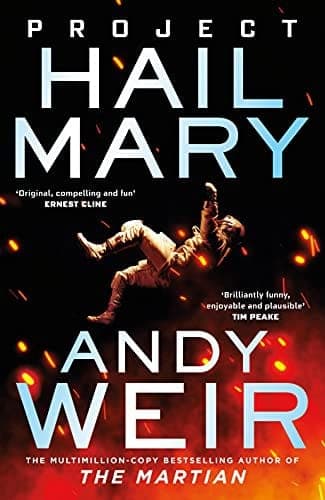 Project Hail MaryAndy Weir · 496 pagesCompetence, and a problem | they have never read science fiction | |
| 2 | 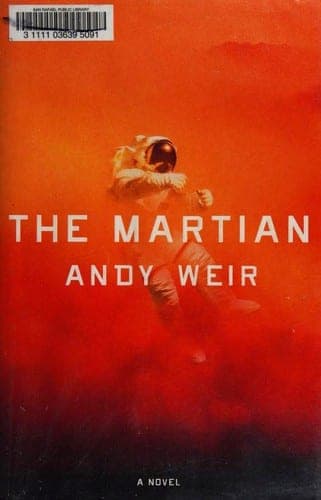 The MartianAndy Weir · 407 pagesThe same pleasure, smaller scale | they liked the film and want more of it | |
| 3 | 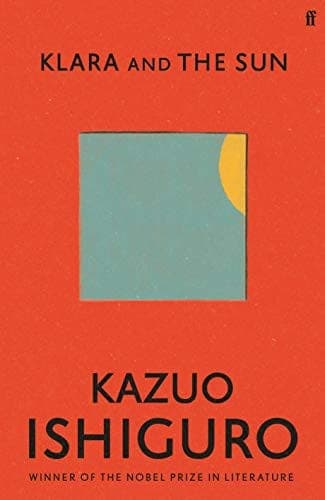 Klara and the SunKazuo Ishiguro · 334 pagesLiterary, and barely genre | they read literary fiction and are skeptical | |
| 4 | 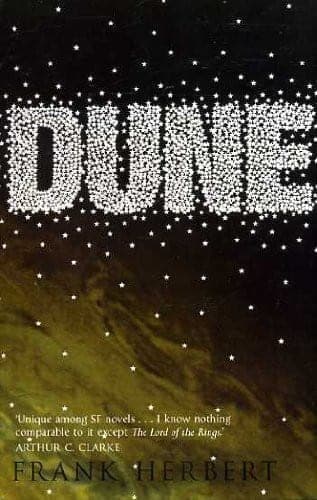 DuneFrank Herbert · 607 pagesThe world | they want total immersion and have the patience | |
| 5 | 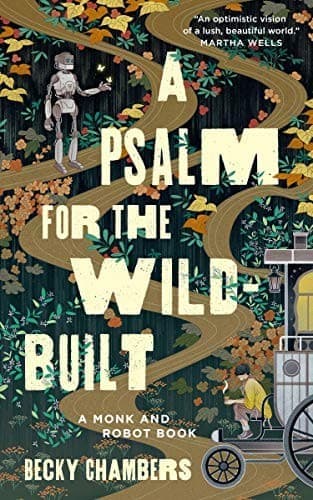 A Psalm for the Wild-BuiltBecky Chambers · 147 pagesCozy science fiction | they find most of the genre bleak | |
| 6 | 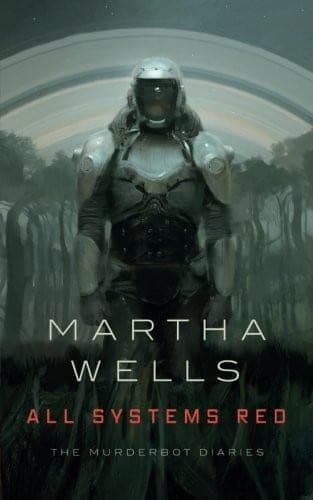 All Systems RedMartha Wells · 158 pagesFunny, and very short | they want to try the genre with minimal commitment | |
| 7 | 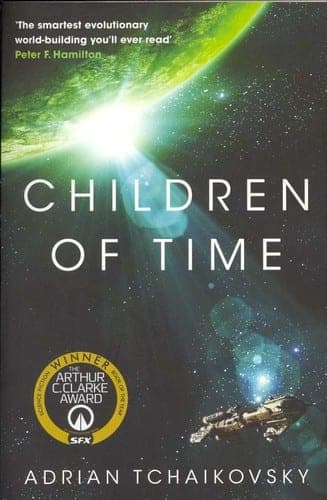 Children of TimeAdrian Tchaikovsky · 616 pagesThe big idea, followed all the way | they want an idea taken further than seems reasonable | |
| 8 | 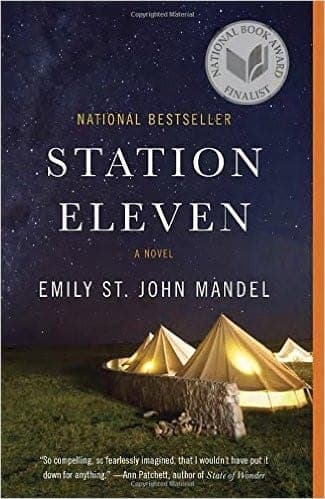 Station ElevenEmily St. John Mandel · 352 pagesAfter the world ends, quietly | they want people rather than plot | |
| 9 |  Never Let Me GoKazuo Ishiguro · 319 pagesThe one that hurts | they want the genre used for something sad and precise | |
| 10 | 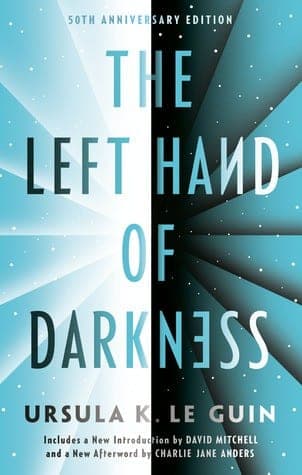 The Left Hand of DarknessUrsula K. Le Guin · 304 pagesThe genre as an argument | they want the canonical serious one |
#ad — buying through these links earns us a commission at no cost to you. Prices, where shown, come straight from Amazon’s product feed; the listing is always the final word.
Ten science fiction books, by what they offer
1. Competence, and a problem
Project Hail Mary
Andy Weir
Give this ifthey have never read science fiction
A man wakes on a spacecraft with no memory and a problem that ends the solar system if he cannot solve it. It is the best entry point in print: no prior genre knowledge, relentless pace, and the pleasure is watching someone think.
- Print length
- 496 pages
- First published
- 2021
- Formats
- print, Kindle and audio where the publisher offers them
#ad — how we’re funded · price as of October 24, 2026
2. The same pleasure, smaller scale
The Martian
Andy Weir
Give this ifthey liked the film and want more of it
An astronaut left behind on Mars keeps himself alive with botany, duct tape and arithmetic. It is funnier than the film and the problem-solving is the whole book.
- Print length
- 407 pages
- First published
- 2011
- Formats
- print, Kindle and audio where the publisher offers them
#ad — how we’re funded · price as of October 24, 2026
3. Literary, and barely genre
Klara and the Sun
Kazuo Ishiguro
Give this ifthey read literary fiction and are skeptical
An artificial friend in a shop window watches the street, and is bought. Nothing about it announces itself as science fiction, and the restraint is why it works: the reader understands the situation long before the narrator does.
- Print length
- 334 pages
- First published
- 2019
- Formats
- print, Kindle and audio where the publisher offers them
#ad — how we’re funded · price as of October 24, 2026
4. The world
Dune
Frank Herbert
Give this ifthey want total immersion and have the patience
A noble family is handed control of the only planet producing the substance interstellar travel depends on. It is the genre's most complete invented world, and the politics and ecology are the point rather than the spaceships.
One caveat: The first hundred pages are dense with invented vocabulary. It rewards persistence and it does demand it.
- Print length
- 607 pages
- First published
- 1965
- Formats
- print, Kindle and audio where the publisher offers them
#ad — how we’re funded · price as of October 24, 2026
5. Cozy science fiction
A Psalm for the Wild-Built
Becky Chambers
Give this ifthey find most of the genre bleak
A tea monk meets the first robot to approach humans in centuries, and it asks what people need. Around 160 pages, entirely gentle, and it is the clearest example of the optimistic turn the genre has taken.
- Print length
- 147 pages
- First published
- 2021
- Formats
- print, Kindle and audio where the publisher offers them
#ad — how we’re funded · price as of October 24, 2026
6. Funny, and very short
All Systems Red
Martha Wells
Give this ifthey want to try the genre with minimal commitment
A security android has hacked its own governor module and would much rather watch soap operas than talk to humans. About 150 pages, and the voice is the reason people finish the whole series.
- Print length
- 158 pages
- First published
- 2017
- Formats
- print, Kindle and audio where the publisher offers them
#ad — how we’re funded · price as of October 24, 2026
7. The big idea, followed all the way
Children of Time
Adrian Tchaikovsky
Give this ifthey want an idea taken further than seems reasonable
A terraforming experiment goes to the wrong species, and a civilization of spiders develops over millennia. It commits completely to its premise, which is the specific pleasure this genre offers and no other does.
- Print length
- 616 pages
- First published
- 2015
- Formats
- print, Kindle and audio where the publisher offers them
#ad — how we’re funded · price as of October 24, 2026
8. After the world ends, quietly
Station Eleven
Emily St. John Mandel
Give this ifthey want people rather than plot
A traveling Shakespeare company crosses the Great Lakes twenty years after a flu pandemic. It is about what survives culturally rather than about survival, which makes it unusually gentle for a post-collapse novel.
- Print length
- 352 pages
- First published
- 2014
- Formats
- print, Kindle and audio where the publisher offers them
#ad — how we’re funded · price as of October 24, 2026
9. The one that hurts
Never Let Me Go
Kazuo Ishiguro
Give this ifthey want the genre used for something sad and precise
Three friends at an English boarding school gradually learn what they were raised for. The science fiction is almost entirely in the background, which is what makes it land.
One caveat: Quietly devastating. Not a light gift.
- Print length
- 319 pages
- First published
- 2005
- Formats
- print, Kindle and audio where the publisher offers them
#ad — how we’re funded · price as of October 24, 2026
10. The genre as an argument
The Left Hand of Darkness
Ursula K. Le Guin
Give this ifthey want the canonical serious one
An envoy on a permanently frozen world whose inhabitants have no fixed sex. Published in 1969 and still the clearest demonstration that science fiction can run a thought experiment no other form can.
- Print length
- 304 pages
- First published
- 1969
- Formats
- print, Kindle and audio where the publisher offers them
#ad — how we’re funded · price as of October 24, 2026
Four pleasures under one label
| They want | Which is | Start with |
|---|---|---|
| A problem solved | Competence fiction | Project Hail Mary, The Martian |
| A world to live in | World-building | Dune, Children of Time |
| A person, seen strangely | Literary science fiction | Klara and the Sun, Never Let Me Go |
| Somewhere kind | Cozy or hopepunk | A Psalm for the Wild-Built, All Systems Red |
The mistake almost every recommendation makes is treating those as one audience. A reader who loved Klara and the Sun may well find Dune unreadable, and neither of them is wrong.
It is not really about technology
The most common reason people avoid the genre is a belief that it requires interest in spacecraft and physics. Very little of it does. The best science fiction takes one change to the world and follows it honestly to see what happens to people — which makes it a machine for thought experiments rather than a branch of engineering.
Never Let Me Go contains no technology on the page at all. The Left Hand of Darkness is about gender. Station Eleven is about what culture survives. If someone says they do not like science fiction, they usually mean they do not like spaceships, and there is a large amount of the genre with no spaceships in it.
What we would skip
A famous doorstop as a first book
The genre's most celebrated novels are frequently its densest, and handing someone a thousand pages of invented politics as an introduction produces a person who says science fiction is not for them. Start with Project Hail Mary or All Systems Red; the canon is not going anywhere.
Questions people ask
What is the best sci-fi book for a beginner?
Project Hail Mary. It needs no prior genre knowledge, the premise explains itself, and the pleasure is watching a competent person think. See sci-fi for beginners for more.
Do I need to like science to read science fiction?
No. Much of the genre uses one changed thing to examine people, with no technology on the page at all. Never Let Me Go and The Left Hand of Darkness are both examples.
Should I start with Dune?
Only if you want immersion and have patience for a dense opening. It is a magnificent world and a demanding first hundred pages; most readers do better starting elsewhere and arriving at it later.
What is cozy science fiction?
Low-stakes, optimistic science fiction where nothing terrible happens. A Psalm for the Wild-Built is the defining example, and it is one of the fastest-growing corners of the genre.
Sources
- Open Library Search API — First publication year, median print length and cover art for every book on this page. Queried 8 September 2026.
- Audible Premium Plus membership page — The only authoritative source for current Audible plans, prices and terms.
Read next
- Best Sci-Fi Books for Beginners
Six science fiction books that change one thing and explain everything else.
- Best Fantasy Books
Ten fantasy books sorted by the four things readers actually want from the genre.
- Best Book Gifts for Him
Seven books with forward pull, including the ones that convert people who say they do not read.
- Best Literary Fiction Books
Ten literary novels with what each is offering stated plainly, and no pretence about the label.
- By Genre
Nine genre guides, each with a starting point and the books that follow it.
- Best Space Opera Books
Eight space operas sorted by scale, from one android to an entire civilization.
- Best Sci-Fi Books of All Time
Eight science fiction books listed by what each one gave the genre.
- Best Dystopian Novels
Eight dystopian novels, sorted by the kind of control each one fears.
- Best Short Sci-Fi Books Under 300 Pages
Eight science fiction books under 300 pages, each a complete story you can finish in a weekend.
- Books Like Project Hail Mary
Eight science fiction novels for a Project Hail Mary reader: the science, the humor or the alien.
- Books Like Dune
Eight science fiction epics for a Dune reader, split by politics, religion and world.
- Books Like Ready Player One
Eight novels for a Ready Player One reader: virtual worlds, game quests and the humor.
- Best Science Fiction Audiobooks
Eight science fiction audiobooks with a strong narrating voice, from a first listen to an epic.