Genre
Best Nonfiction Books
Split three ways, because a story, an argument and an explanation are completely different reading experiences.
Updated September 2026 · By Sawyer V.
The short version
Nonfiction splits three ways. Narrative nonfiction tells a story and reads like a novel. Argument books have one thesis and spend three hundred pages on it. Explainers walk you through a subject. Readers who love one frequently cannot finish another.
Some links on this page are affiliate links. If you buy through one we earn a commission at no extra cost to you, and it does not change which books are here or the order they appear in. Read the full disclosure.
How we picked
We sorted by mode rather than by subject, because mode is what determines whether a reader finishes it. Every pick names which of the three it is. We have not read all ten.
What we do on every list: read the publisher’s own description rather than a summary of it, check print length and first publication year against library catalog data (last refreshed October 21, 2026), confirm the book is still sold in the format we suggest, and write the match line before the blurb. What we do not do is claim to have read every book here cover to cover. The full method is published, and it is written so anyone can check it.
The short answer
Who each book is for, at a glance. Select a row for the full write-up.
| # | Book | Give this if | Where to buy |
|---|---|---|---|
| 1 | 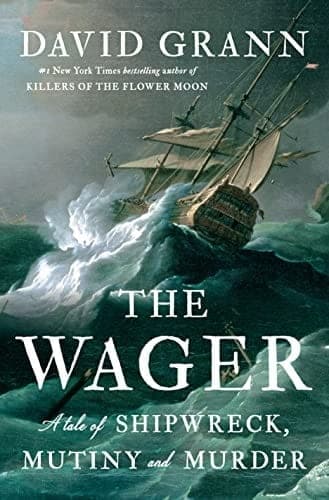 The WagerDavid Grann · 432 pagesNarrative — the best current example | they say most nonfiction is dull | |
| 2 | 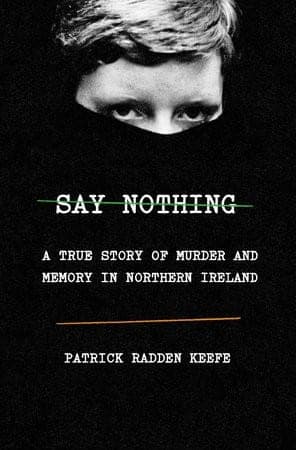 Say NothingPatrick Radden Keefe · 536 pagesNarrative — reporting as literature | they read long-form journalism | |
| 3 | 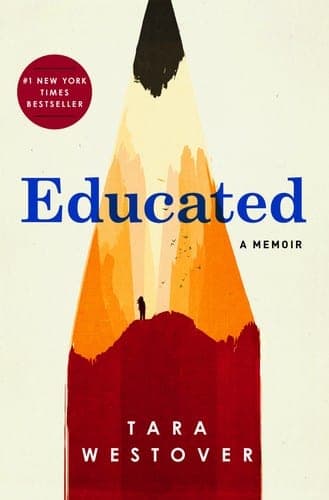 EducatedTara Westover · 388 pagesMemoir | they want one life told properly | |
| 4 | 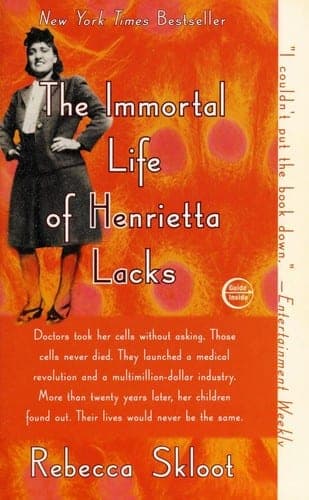 The Immortal Life of Henrietta LacksRebecca Skloot · 381 pagesNarrative science | they like science but not textbooks | |
| 5 |  An Immense WorldEd YongExplainer, at its best | they ask a lot of questions about animals | |
| 6 | 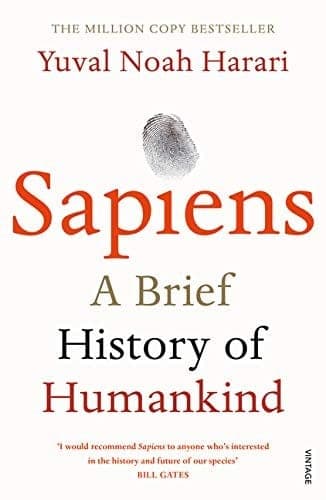 SapiensYuval Noah Harari · 456 pagesArgument, on the largest scale | they want one big idea about everything | |
| 7 | 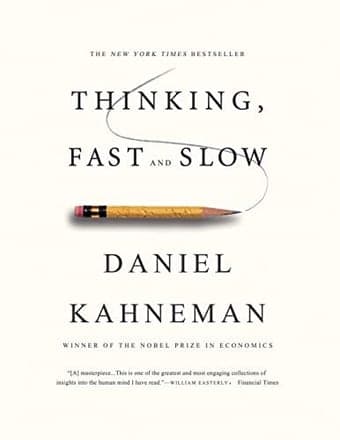 Thinking, Fast and SlowDaniel Kahneman · 528 pagesArgument, from the evidence | they want the research rather than the summary | |
| 8 | 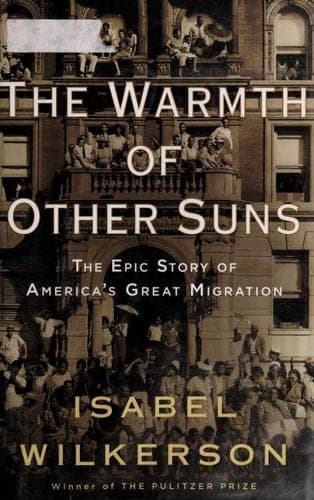 The Warmth of Other SunsIsabel Wilkerson · 635 pagesHistory through people | they want scale and intimacy together | |
| 9 | 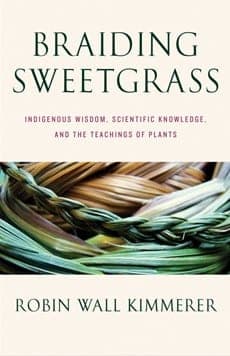 Braiding SweetgrassRobin Wall Kimmerer · 409 pagesFor reading slowly | they garden, walk, or have started noticing things | |
| 10 | 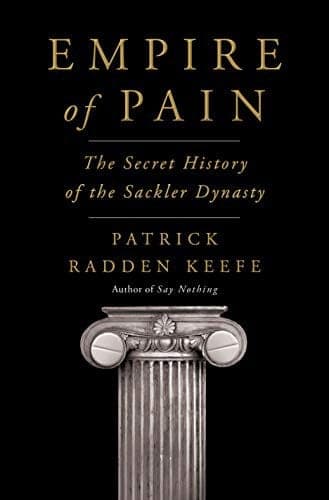 Empire of PainPatrick Radden Keefe · 720 pagesInvestigation | they like a book that names names |
#ad — buying through these links earns us a commission at no cost to you. Prices, where shown, come straight from Amazon’s product feed; the listing is always the final word.
Ten nonfiction books, by mode
1. Narrative — the best current example
The Wager
David Grann
Give this ifthey say most nonfiction is dull
An eighteenth-century shipwreck produces two sets of survivors and two irreconcilable accounts, and the book is about which one the Admiralty chose to believe. Fully sourced and paced like a thriller.
- Print length
- 432 pages
- First published
- 2023
- Formats
- print, Kindle and audio where the publisher offers them
#ad — how we’re funded · price as of October 24, 2026
2. Narrative — reporting as literature
Say Nothing
Patrick Radden Keefe
Give this ifthey read long-form journalism
A 1972 disappearance in Belfast used as the spine of a history of the Troubles. It is reported to an extraordinary standard and structured like a crime novel, and it is the book most often named by people who normally abandon history.
- Print length
- 536 pages
- First published
- 2018
- Formats
- print, Kindle and audio where the publisher offers them
#ad — how we’re funded · price as of October 24, 2026
3. Memoir
Educated
Tara Westover
Give this ifthey want one life told properly
A woman raised off-grid in Idaho with no schooling talks her way into a classroom and then into Cambridge. It is about the cost of that rather than the triumph of it, which is why it lasted.
- Print length
- 388 pages
- First published
- 2018
- Formats
- print, Kindle and audio where the publisher offers them
#ad — how we’re funded · price as of October 24, 2026
4. Narrative science
The Immortal Life of Henrietta Lacks
Rebecca Skloot
Give this ifthey like science but not textbooks
The woman whose cells were taken without consent in 1951 and are still used in laboratories worldwide. It braids a family's story with a scientific one and refuses to let either stand in for the other.
- Print length
- 381 pages
- First published
- 2009
- Formats
- print, Kindle and audio where the publisher offers them
#ad — how we’re funded · price as of October 24, 2026
5. Explainer, at its best
An Immense World
Ed Yong
Give this ifthey ask a lot of questions about animals
How other animals sense the world, from electric fields to echoes. It is the nonfiction book people most often read aloud to whoever is in the room, which is a fair proxy for how good an explainer is.
- First published
- 2022
- Formats
- print, Kindle and audio where the publisher offers them
#ad — how we’re funded · price as of October 24, 2026
6. Argument, on the largest scale
Sapiens
Yuval Noah Harari
Give this ifthey want one big idea about everything
A single-volume history of humans, arguing that shared fictions are what let large groups cooperate. It is contested by specialists and that is part of its value: it is an argument you can disagree with, clearly made.
One caveat: Historians dispute a good deal of it. Read it as a provocation rather than as a reference.
- Print length
- 456 pages
- First published
- 2011
- Formats
- print, Kindle and audio where the publisher offers them
7. Argument, from the evidence
Thinking, Fast and Slow
Daniel Kahneman
Give this ifthey want the research rather than the summary
Two systems of thought, and a career's worth of experiments showing how reliably the fast one misleads us. Some findings have not replicated well, which the reader should know, and the core case remains the clearest available.
One caveat: Long and dense in places. It is a book to read in sections, not in a weekend.
- Print length
- 528 pages
- First published
- 2011
- Formats
- print, Kindle and audio where the publisher offers them
#ad — how we’re funded · price as of October 24, 2026
8. History through people
The Warmth of Other Suns
Isabel Wilkerson
Give this ifthey want scale and intimacy together
The Great Migration told through three people who left the American South, drawn from more than a thousand interviews. It is long, and the structure is what makes the length work.
- Print length
- 635 pages
- First published
- 2010
- Formats
- print, Kindle and audio where the publisher offers them
#ad — how we’re funded · price as of October 24, 2026
9. For reading slowly
Braiding Sweetgrass
Robin Wall Kimmerer
Give this ifthey garden, walk, or have started noticing things
A botanist and Potawatomi citizen puts Indigenous knowledge and plant science in the same frame. It is designed to be read a chapter at a time over months, which is a different pleasure from finishing something.
- Print length
- 409 pages
- First published
- 2013
- Formats
- print, Kindle and audio where the publisher offers them
#ad — how we’re funded · price as of October 24, 2026
10. Investigation
Empire of Pain
Patrick Radden Keefe
Give this ifthey like a book that names names
Three generations of the Sackler family and the marketing of OxyContin. It is a family saga and an indictment at once, and the documentary evidence does the arguing.
- Print length
- 720 pages
- First published
- 2021
- Formats
- print, Kindle and audio where the publisher offers them
#ad — how we’re funded · price as of October 24, 2026
Three modes, and readers rarely like all three
| Mode | What it does | The reader who wants it |
|---|---|---|
| Narrative | Tells a true story with characters and a shape | Reads novels and wants a true one |
| Argument | Makes one case at length | Wants to be persuaded, or to argue back |
| Explainer | Walks you through a subject | Wants to understand something specific |
This is the most useful distinction in the category and almost nobody uses it. A reader who loves narrative nonfiction will abandon an argument book by chapter three, and a reader who wants the argument finds narrative slow. If you know which mode someone likes, you can buy for them almost blind.
Narrative nonfiction is the safest gift
If you are buying for someone and you do not know their mode, buy narrative. It is the only one of the three that works for a reader who wanted fiction: it has characters, a shape and an ending, and the true part is a bonus rather than the whole appeal.
It is also the mode most reliably finished. Our books for dad list is dominated by it for exactly that reason, and the flagship gift list uses it as the safe nonfiction option.
The most reliably narrative corner of the category is a single life told properly: the best biographies sorts eight of them by length, which in that genre is the decision a buyer is actually making.
What we would skip
A business book with one idea and three hundred pages
A large part of the shelf is a strong magazine article expanded to book length by an editor's contract rather than by need, and the padding is visible from chapter four. If a book's thesis fits in its subtitle and the rest is anecdotes supporting it, the reader has usually got the value by page eighty. Prefer books where the length is doing work.
Questions people ask
What is narrative nonfiction?
True writing structured like a novel — characters, a shape, an ending. The Wager and Say Nothing are the clearest current examples, and it is the mode most reliably finished by readers who usually read fiction.
What is the best nonfiction book to give as a gift?
Something narrative. It works for a reader who wanted fiction, which no other mode manages. The Wager is the most reliable single choice in print right now.
Are books like Sapiens reliable?
Sapiens is a provocation rather than a reference, and specialists dispute a good deal of it. That is not a reason to avoid it — it is a reason to read it as an argument you are allowed to disagree with.
Why do so many nonfiction books feel padded?
Because a strong magazine article expanded to book length is a common commercial shape. If the thesis fits in the subtitle and the rest is supporting anecdotes, you have usually got the value by page eighty.
Sources
- Open Library Search API — First publication year, median print length and cover art for every book on this page. Queried 8 September 2026.
- Audible Premium Plus membership page — The only authoritative source for current Audible plans, prices and terms.
Read next
- Best Books on AI
Eight AI books split by purpose, with the publication year on every one.
- Best Books for Dads
Seven books chosen to get past page fifty, for a reader with a stack he has not started.
- Best Historical Fiction Books
Nine historical novels spread across periods, with the tell for a good one.
- Books Like Atomic Habits
Eight books that extend or contest the argument, plus the genre's replication problem.
- By Genre
Nine genre guides, each with a starting point and the books that follow it.
- Best Self-Help Books
Nine self-help books that hold up, including two that argue against the rest of the shelf.
- Best History Books
Nine narrative histories sorted by scale, chosen for the thing history books fail at: being finished.
- Best Cookbooks
Eight cookbooks sorted by purpose, plus the ingredient-list test that predicts use.
- Best Personal Finance Books for Beginners
Eight personal finance books for beginners, sorted by the problem each one solves.
- Best Investing Books for Beginners
Eight investing books for beginners, from the case for index funds to the classic to save for later.
- Best Philosophy Books for Beginners
Eight philosophy books for beginners, in a sensible order, with the famous ones to leave for later.
- Best Books on Buddhism for Beginners
Eight books on Buddhism for beginners, each labeled with the tradition it opens.
- Best True Crime Books
Eight true crime books chosen for their reporting and for how they treat the victims.
- Books Like Educated
Eight memoirs for an Educated reader: hard childhoods, family reckonings and the way out.
- Books Like Sapiens
Eight big-history books for a Sapiens reader: the sweep, the argument and the pushback.
- Best Memoirs
Nine memoirs sorted by the kind of life they tell, with what each one costs to read.
- Best Science Books
Nine science books for non-scientists, sorted by field from animal senses to the biography of cancer.
- Best Psychology Books
Eight psychology books that survive scrutiny, plus the replication problem behind the genre.
- Best Nonfiction for Beginners
Eight true books that read like novels, sorted by how fast they move rather than how important they are.