By format
Best Coffee Table Books
A coffee table book has to survive being opened at random by someone who is not reading it. Most of them do not.
Updated November 2026 · By Sawyer V.

The short version
Humans of New York is the safest buy: portraits with the subjects' own words beside them, so anyone who picks it up starts reading rather than flipping. Atlas Obscura is the one that holds a room longest, and both sit in the cheapest band on this shelf. If the budget is real rather than nominal, Salgado's Amazonia is the object people remember.
Some links on this page are affiliate links. If you buy through one we earn a commission at no extra cost to you, and it does not change which books are here or the order they appear in. Read the full disclosure.
How we picked
One test: open it at a random page and see whether it rewards thirty seconds. That favors books built from self-contained pictures or short entries and rules out most photography monographs, which need their sequence. We also kept the price spread wide on purpose, because this shelf runs from the cost of a paperback to the cost of a week's groceries and the expensive ones are not always the better object. We have not handled every edition, and we do not claim to have compared print quality.
What we do on every list: read the publisher’s own description rather than a summary of it, check print length and first publication year against library catalog data (last refreshed November 21, 2026), confirm the book is still sold in the format we suggest, and write the match line before the blurb. What we do not do is claim to have read every book here cover to cover. The full method is published, and it is written so anyone can check it.
The short answer
Who each book is for, at a glance. Select a row for the full write-up.
| # | Book | Give this if | Where to buy |
|---|---|---|---|
| 1 | 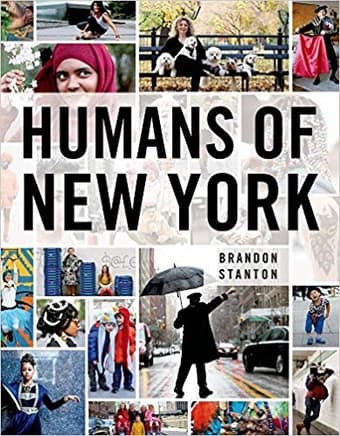 Humans of New YorkBrandon Stanton · 428 pagesThe safest buy | you know nothing about their taste beyond the fact that they have a sofa | |
| 2 | 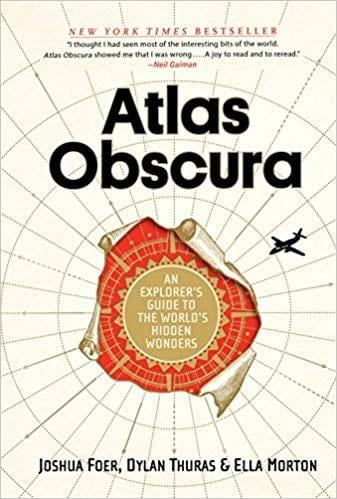 Atlas ObscuraJoshua Foer · 472 pagesThe one that holds a room | they travel, or wish they did | |
| 3 | 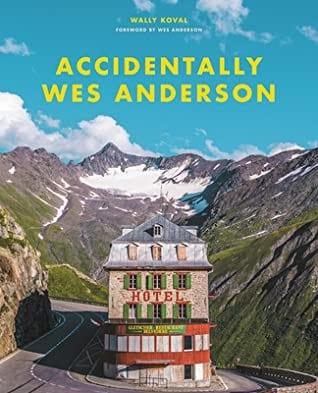 Accidentally Wes AndersonWally Koval · 368 pagesThe design one | their flat is deliberate and their bookshelf is arranged by color | |
| 4 | 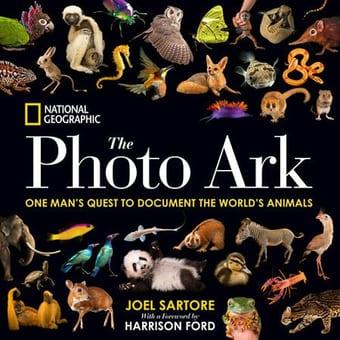 The Photo ArkJoel Sartore · 406 pagesFor a household with children | there are children who will take it off the table | |
| 5 | 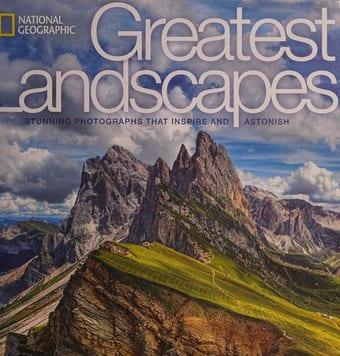 National Geographic Greatest LandscapesNational Geographic · 398 pagesThe straightforward one | you want big pictures and no concept | |
| 6 |  The Story of ArtE. H. Gombrich · 488 pagesThe one that gets read | they have said they wish they knew more about art | |
| 7 |  AmazoniaSebastiao Salgado · 528 pagesThe object they will remember | the budget is real and you want one thing that lands |
#ad — buying through these links earns us a commission at no cost to you. Prices, where shown, come straight from Amazon’s product feed; the listing is always the final word.
Seven worth leaving out
1. The safest buy
Humans of New York
Brandon Stanton
Give this ifyou know nothing about their taste beyond the fact that they have a sofa
Street portraits of New Yorkers alongside the short quotations the photographer collected while taking them. Around 428 pages. It passes the random-page test better than anything else here — every spread is a complete thing, and the quotations mean a visitor who does not look at photography still reads it. One of the two cheapest picks on the page, which makes it the low-risk choice as well as the safe one.
One caveat: The quotations are the point, so it is more of a reading book than a looking book. Anyone wanting photography as photography will find it slight.
- Print length
- 428 pages
- First published
- 2013
- Formats
- print, Kindle and audio where the publisher offers them
#ad — how we’re funded · price as of November 24, 2026
2. The one that holds a room
Atlas Obscura
Joshua Foer
Give this ifthey travel, or wish they did
An illustrated gazetteer of several hundred strange real places, from bone churches to glowing lakes, arranged by continent. About 472 pages of short entries, which is the ideal structure for a book that gets picked up for four minutes. It is also the one on this page most likely to start a conversation with someone else in the room.
One caveat: It is a reference book in a handsome jacket rather than a photographic one, and the pictures are small. Several editions exist and they are not identical.
- Print length
- 472 pages
- First published
- 2016
- Formats
- print, Kindle and audio where the publisher offers them
#ad — how we’re funded · price as of November 24, 2026
3. The design one
Accidentally Wes Anderson
Wally Koval
Give this iftheir flat is deliberate and their bookshelf is arranged by color
Real buildings and vehicles photographed by travelers that look like film sets, each with the history of the place. Around 368 pages of symmetrical, pastel, strangely calming images with a paragraph apiece. It is the most giftable book here for someone whose taste you know is visual.
One caveat: Entirely a single joke, executed four hundred times. A reader who does not already find the aesthetic funny will be bored by page fifty.
- Print length
- 368 pages
- First published
- 2020
- Formats
- print, Kindle and audio where the publisher offers them
#ad — how we’re funded · price as of November 24, 2026
4. For a household with children
The Photo Ark
Joel Sartore
Give this ifthere are children who will take it off the table
Studio portraits of animals from the National Geographic project to photograph every species in human care. About 406 pages, each animal shot against plain black or white so the subject is unmissable. Children go through it page by page, which almost no other book on this page can claim, and the conservation premise gives an adult something to say about it.
One caveat: The plain-background formula is relentless over four hundred pages, and the knowledge that many of these species are nearly gone makes it a heavier book than it looks.
- Print length
- 406 pages
- First published
- 2017
- Formats
- print, Kindle and audio where the publisher offers them
#ad — how we’re funded · price as of November 24, 2026
5. The straightforward one
National Geographic Greatest Landscapes
National Geographic
Give this ifyou want big pictures and no concept
Large-format landscape photographs drawn from the magazine's archive, with the story behind each location. Roughly 398 pages. There is no idea here beyond the quality of the photography, which is exactly right for a certain recipient — a relative who will like it immediately and does not want to be challenged by a book on a table.
One caveat: Generic by design, and it overlaps heavily with half a dozen other National Geographic compilations. Check they do not already own a near-identical one.
- Print length
- 398 pages
- First published
- 2016
- Formats
- print, Kindle and audio where the publisher offers them
#ad — how we’re funded · price as of November 24, 2026
6. The one that gets read
The Story of Art
E. H. Gombrich
Give this ifthey have said they wish they knew more about art
A single-volume history of art from cave painting onward, written in 1950 for readers with no background in the subject. About 488 pages. It is probably the best-selling art book ever written, and the prose is the reason: Gombrich explains what he is looking at, in order, without jargon. It is a coffee table book that turns out to be a real book.
One caveat: The canon is almost entirely Western and overwhelmingly male, which the later editions acknowledge and do not fix. The reproductions are small by modern standards.
- Print length
- 488 pages
- First published
- 1950
- Formats
- print, Kindle and audio where the publisher offers them
#ad — how we’re funded · price as of November 24, 2026
7. The object they will remember
Amazonia
Sebastiao Salgado
Give this ifthe budget is real and you want one thing that lands
Black-and-white photographs of the Brazilian Amazon and the people living in it, from seven years of travel in the forest. Around 528 pages, and it is the only book on this page that is an object before it is a book — the printing is the point, the scale is the point, and nobody who opens it puts it down politely. The most expensive pick on this page.
One caveat: It is heavy, it is costly, and Salgado's beautiful treatment of hard subjects is a long-running argument in photography. Also: multiple editions at wildly different sizes and prices, so check which one you are buying.
- Print length
- 528 pages
- First published
- 2021
- Formats
- print, Kindle and audio where the publisher offers them
#ad — how we’re funded · price as of November 24, 2026
The random-page test
A coffee table book is read standing up, by somebody else, in the four minutes before their host comes back with the drinks. That is a hard brief, and it is not the same brief as a photography monograph, which wants to be read in order and in silence. The books that work are built out of self-contained units.
- Short entries beat essays. Atlas Obscura and Accidentally Wes Anderson both give a paragraph per spread, which is the right unit.
- Pictures need to stand alone. The Photo Ark works because one animal per page needs no context. A sequenced documentary series does not.
- Words help more than people expect. Humans of New York is the most-read book on this page because the quotations give a visitor something to do.
- Size is a commitment. The largest format books are magnificent and they do not fit on a normal table or a normal shelf. Measure before buying the big Taschen.
What the money buys
This is the widest price range of any shelf on this site — the cheapest pick here costs less than a paperback thriller and the dearest costs more than everything else on the page put together. The difference is printing: paper weight, ink, binding and size. It is real, and it is also not what most recipients notice.
| Tier | What you get | From this page |
|---|---|---|
| Trade hardback | Standard printing, normal shelf size | Humans of New York, Atlas Obscura, Accidentally Wes Anderson |
| Large-format compilation | Bigger pages, heavier paper | The Photo Ark, National Geographic Greatest Landscapes |
| Reference | Thin paper, many plates, built to be read | The Story of Art |
| Art-press edition | Heavy stock, large trim, an object | Salgado's Amazonia |
One warning that applies to this whole shelf: the big art presses publish the same title in three or four sizes at three or four prices, and the listings look nearly identical. Read the edition line before buying, because the difference between the small hardback and the oversized one can be a factor of five.
Buying one for someone else
This shelf is bought as a present far more than it is bought for the buyer, and almost entirely in December, which creates one specific risk: a coffee table book is a public object. It sits out where visitors see it, so it says something about the person who owns it, and a mismatch is more visible than a novel nobody liked.
The safe move is the one with words in it. Humans of New York and The Story of Art both get read rather than displayed, which means the recipient is not stuck curating a book they did not choose. If you know their subject, go narrow instead — books for travelers and book gifts for artists are the subject-specific shelves, and the splurge list is where the other expensive gifts on this site live.
What we would skip
A blank-inside book bought as decoration
Interior shops sell stacked hardbacks by the color of the spine, sometimes with nothing printed inside, and they are not cheap. If the goal is genuinely a prop, that is a design purchase and not our business. But as a gift it is a strange thing to hand someone, and every book on this page works as decoration while also being a book — which is the version where the recipient gets something out of it after the first week.
Questions people ask
What is the best coffee table book?
Humans of New York, for most people: portraits with the subjects' own words beside them, so anyone who picks it up starts reading, and it is the cheapest pick here. Atlas Obscura holds a room longer if the recipient likes travel.
What makes a good coffee table book?
Self-contained pages. It gets opened at random by someone who is not really reading, so short entries and pictures that stand alone work, and a sequenced photographic essay does not. Words help more than people expect.
What is a good coffee table book for someone with children?
The Photo Ark. One animal per page against a plain background, which children go through methodically, and the National Geographic conservation premise gives the adults something to say about it.
Are expensive coffee table books worth it?
The printing difference is real — paper, ink, binding, size — and on an art-press edition like Salgado's Amazonia it is the whole point. But most recipients notice the subject rather than the stock, so a $20 book on the right subject usually beats a $60 one on the wrong subject.
Which coffee table book actually gets read?
The Story of Art, which is a real history of art that happens to be large, and Humans of New York, where the quotations do the work. Both avoid the usual fate of being admired once and then dusted.
How do I avoid buying the wrong edition?
Read the edition line, not the title. The big art presses publish the same book at several sizes and prices with nearly identical listings, and the difference between the standard and oversized editions can be fivefold. Our buy links go to the specific edition we checked.
Sources
- Open Library Search API — First publication year, median print length and cover art for every book on this page. Queried 8 September 2026.
Read next
- Splurge Gifts for Book Lovers
When the object is the point: which books earn a special edition and what to check first.
- Best Books for Travelers
Eight books about travel for someone who is always leaving, and why we left out the guidebook.
- Best Books for Artists
Eight books for an artist, from starting out and getting unstuck to two novels about painters.
- Best Travel Books
Eight travel books sorted by what they are for, with a straight note on which ones invented their encounters.
- Best Graphic Novels
Eight graphic novels from age seven to adult, split by reader rather than ranked, because the format spans three unrelated shelves.
- Best Nonfiction Books
Ten nonfiction books split by mode — narrative, argument or explainer.