Nonfiction
Best Books on AI
Sorted by what you want from them, with the publication date on every one, because this subject ages fast.
Updated September 2026 · By Sawyer V.
The short version
Decide first whether you want to understand the technology, use it, or think about what it means. Those are three different shelves, and the fast-moving one is the middle one — a practical AI book more than two years old is describing tools that have changed.
Some links on this page are affiliate links. If you buy through one we earn a commission at no extra cost to you, and it does not change which books are here or the order they appear in. Read the full disclosure.
How we picked
We split the list by purpose and show the first publication year on every pick, because this is the subject where a book's age matters most. Where a book is contested, we say so rather than presenting it as settled. We have not read all eight.
What we do on every list: read the publisher’s own description rather than a summary of it, check print length and first publication year against library catalog data (last refreshed October 21, 2026), confirm the book is still sold in the format we suggest, and write the match line before the blurb. What we do not do is claim to have read every book here cover to cover. The full method is published, and it is written so anyone can check it.
The short answer
Who each book is for, at a glance. Select a row for the full write-up.
| # | Book | Give this if | Where to buy |
|---|---|---|---|
| 1 | 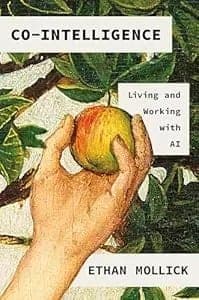 Co-IntelligenceEthan MollickUsing it | they want to work with these tools rather than theorize about them | |
| 2 | 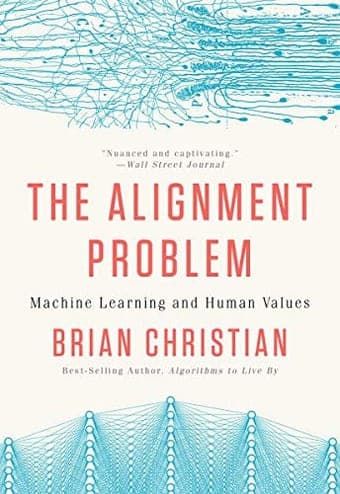 The Alignment ProblemBrian Christian · 356 pagesUnderstanding the actual difficulty | they want to know what the technical problem really is | |
| 3 | 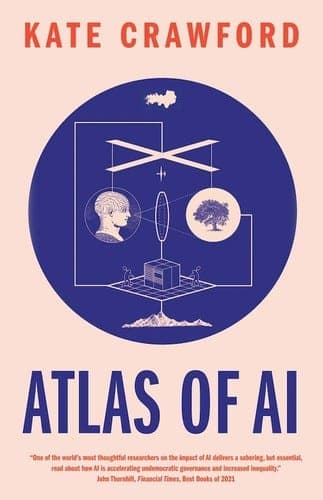 Atlas of AIKate Crawford · 288 pagesThe material argument | they are tired of hearing about AI as an abstraction | |
| 4 | 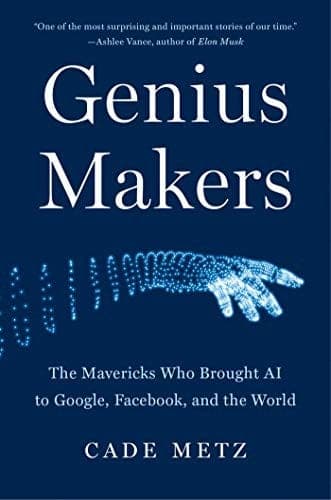 Genius MakersCade Metz · 360 pagesThe story of how we got here | they like narrative nonfiction and want the history | |
| 5 | 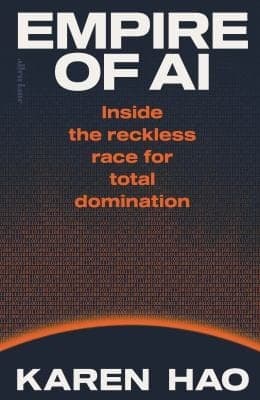 Empire of AIKaren Hao · 496 pagesThe recent investigation | they want current reporting rather than a framework | |
| 6 | 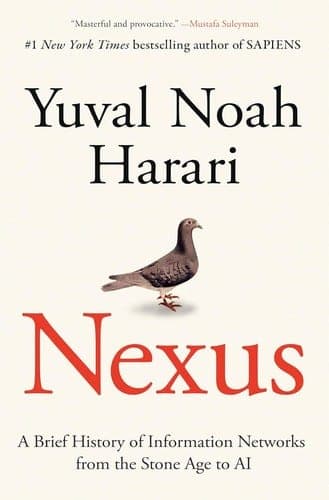 NexusYuval Noah Harari · 544 pagesThe long view | they liked Sapiens and want the same treatment applied here | |
| 7 | 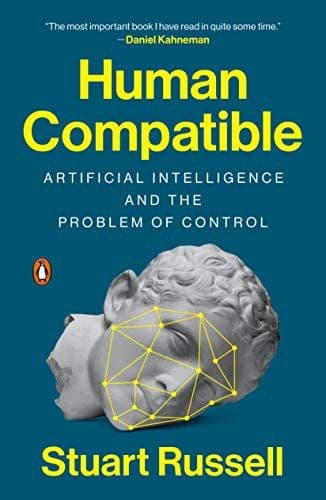 Human CompatibleStuart Russell · 349 pagesFrom the person who wrote the textbook | they want the academic case, made plainly | |
| 8 | 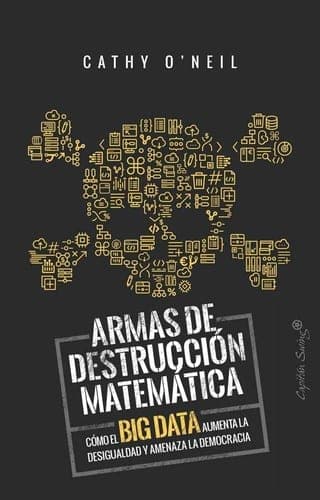 Weapons of Math DestructionCathy O'Neil · 278 pagesWhat is already happening | they care more about present harm than future risk |
#ad — buying through these links earns us a commission at no cost to you. Prices, where shown, come straight from Amazon’s product feed; the listing is always the final word.
Eight books on AI, by what you want from them
1. Using it
Co-Intelligence
Ethan Mollick
Give this ifthey want to work with these tools rather than theorize about them
A business professor's practical account of working with large language models, based on his own classroom experiments. It is the most useful book in the practical category, and it is honest that the tools will have moved by the time you read it.
One caveat: The most perishable book here by design. Specific model behavior dates quickly; the working method does not.
- First published
- 2024
- Formats
- print, Kindle and audio where the publisher offers them
#ad — how we’re funded · price as of October 24, 2026
2. Understanding the actual difficulty
The Alignment Problem
Brian Christian
Give this ifthey want to know what the technical problem really is
Reporting from inside machine-learning labs on the gap between what systems optimize and what we meant. It is the clearest explanation of why this is hard, written from the research rather than from the discourse.
- Print length
- 356 pages
- First published
- 2020
- Formats
- print, Kindle and audio where the publisher offers them
#ad — how we’re funded · price as of October 24, 2026
3. The material argument
Atlas of AI
Kate Crawford
Give this ifthey are tired of hearing about AI as an abstraction
AI as an industry made of mines, labor, data extraction and energy. It is the most useful corrective to writing that treats these systems as though they exist in the cloud rather than in the world.
- Print length
- 288 pages
- First published
- 2021
- Formats
- print, Kindle and audio where the publisher offers them
#ad — how we’re funded · price as of October 24, 2026
4. The story of how we got here
Genius Makers
Cade Metz
Give this ifthey like narrative nonfiction and want the history
A New York Times reporter's history of the deep-learning researchers who ended up running the field. It is a people story, which makes it the most readable entry point on this list.
- Print length
- 360 pages
- First published
- 2021
- Formats
- print, Kindle and audio where the publisher offers them
#ad — how we’re funded · price as of October 24, 2026
5. The recent investigation
Empire of AI
Karen Hao
Give this ifthey want current reporting rather than a framework
A 2025 investigation into OpenAI and the industry built around it, by a reporter who covered it from the start. It is the most recent book here, which on this subject counts for a great deal.
- Print length
- 496 pages
- First published
- 2025
- Formats
- print, Kindle and audio where the publisher offers them
#ad — how we’re funded · price as of October 24, 2026
6. The long view
Nexus
Yuval Noah Harari
Give this ifthey liked Sapiens and want the same treatment applied here
A history of information networks from writing to machine learning, and what happens when the network stops needing us. It is a big argument rather than a technical account, and it is contested in the same way Sapiens is.
One caveat: An argument, not a reference. Read it as a position to test rather than as settled history.
- Print length
- 544 pages
- First published
- 2024
- Formats
- print, Kindle and audio where the publisher offers them
#ad — how we’re funded · price as of October 24, 2026
7. From the person who wrote the textbook
Human Compatible
Stuart Russell
Give this ifthey want the academic case, made plainly
The author of the standard AI textbook argues that the field's founding definition of intelligence is the mistake. It carries more weight than most books in the safety conversation because of who is making the argument.
- Print length
- 349 pages
- First published
- 2019
- Formats
- print, Kindle and audio where the publisher offers them
#ad — how we’re funded · price as of October 24, 2026
8. What is already happening
Weapons of Math Destruction
Cathy O'Neil
Give this ifthey care more about present harm than future risk
A data scientist on scoring models in hiring, policing and credit, and who they quietly punish. Published before the current wave and more relevant for it, because the systems it describes are already deployed.
- Print length
- 278 pages
- First published
- 2016
- Formats
- print, Kindle and audio where the publisher offers them
#ad — how we’re funded · price as of October 24, 2026
Three shelves, and only one moves fast
| You want to | Read | How fast it dates |
|---|---|---|
| Use these tools well | Co-Intelligence | Fast. Specific behavior changes within a year |
| Understand how they work and why it is hard | The Alignment Problem, Human Compatible | Slowly. The problems are structural |
| Think about what it means | Atlas of AI, Nexus, Weapons of Math Destruction | Slowly. These are arguments, not bulletins |
The practical shelf is where the age of a book matters most, and where most gift buyers go first. A book about prompting or workflows written two years ago is describing tools that have changed underneath it, though the working habits usually survive.
Why we print the publication year
Every pick on this site shows its first publication year, taken from library catalog data. On most of our pages that is useful context. On this one it is the most important single fact about the book.
A 2014 book about machine superintelligence and a 2025 book about the industry are answering different questions in a different world, and a list that presents them as equivalent is not being helpful. Check the year before you buy, and weight it heavily if what you want is current.
What we would skip
Any book promising to explain what AI will do next
Prediction books on this subject have a poor record and a short shelf life. The forecasts made confidently five years ago read strangely now, and the ones being made confidently today will read strangely soon. Books that explain how something works, or report what actually happened, age far better than books that tell you what is coming.
Questions people ask
What is the best book about AI?
It depends what you want. Co-Intelligence to use the tools, The Alignment Problem to understand the difficulty, Atlas of AI or Weapons of Math Destruction to think about the consequences.
Are older AI books still worth reading?
The conceptual ones, yes — the problems are structural and have not been solved. The practical ones age fast, because they describe tools that have since changed.
What should I read to actually use AI at work?
Co-Intelligence is the most useful, with the caveat that specific model behavior dates quickly. The working method it describes has held up better than the examples.
Which AI book is best as a gift?
Genius Makers, if you do not know their view. It is narrative rather than argumentative, so it works whatever the recipient already thinks, and it does not read as a position being handed to them.
Sources
- Open Library Search API — First publication year, median print length and cover art for every book on this page. Queried 8 September 2026.
Read next
- Best Nonfiction Books
Ten nonfiction books split by mode — narrative, argument or explainer.
- Best Book Gifts for Him
Seven books with forward pull, including the ones that convert people who say they do not read.
- Books Like Atomic Habits
Eight books that extend or contest the argument, plus the genre's replication problem.
- Best Books of the 21st Century
Ten books from this century that already look permanent, with the uncertainty stated.
- By Genre
Nine genre guides, each with a starting point and the books that follow it.
- Best Books for Science Lovers
Eight books for a science lover, from a funny history of everything to genetics, physics and one novel.