After the film
Books vs Movies
Eight books worth reading after the credits roll, and an honest note on when the film is the better version.
Updated September 2026 · By Sawyer V.
The short version
The book is worth reading when it holds something the film could not carry: a narrator's interior voice, a subplot cut for time, or an ending the adaptation changed. Dune, The Shining and Ready Player One are the three widest gaps on this list. Where the film is the better experience, we say so on the pick.
Some links on this page are affiliate links. If you buy through one we earn a commission at no extra cost to you, and it does not change which books are here or the order they appear in. Read the full disclosure.
How we picked
We chose books whose adaptations are well known and easy to find, then asked one question of each: what does the book have that the film does not? Every pick names the specific thing, and every pick carries an honest reason you might skip it. We have not read all eight, and we are not film critics — where we describe what an adaptation changed, we are describing what is widely documented about it rather than judging the filmmaking.
What we do on every list: read the publisher’s own description rather than a summary of it, check print length and first publication year against library catalog data (last refreshed September 11, 2026), confirm the book is still sold in the format we suggest, and write the match line before the blurb. What we do not do is claim to have read every book here cover to cover. The full method is published, and it is written so anyone can check it.
What makes a book worth reading after the film
A film is not a shorter book. It is a different form with roughly two hours to work in, and four things routinely fall out in the move. Those four are what to look for when you are deciding whether the source is worth your evenings.
- An interior voice. A camera shows what a character does; a novel can tell you what they are thinking while they do it. Books built on private thought — Dune, The Martian, Perks — lose the most in adaptation and give the most back on the page.
- Cut subplots. Two hours forces choices. Whole characters, jobs, siblings and years disappear, and the book is where they still exist.
- A changed ending. Some adaptations rewrite the last act outright. When that happens, the book is not a repeat of the film; it is a different story with the same beginning.
- A changed point. The rarest and most interesting case: the plot survives but the meaning moves, because a film emphasizes what it can show.
If an adaptation is faithful and the book has none of those four, the honest answer is that you can skip it, and we say so on the picks where that applies. A book is not automatically the better version of a story — it is the longer, more interior one, which is a different claim.
The short answer
Who each book is for, at a glance. Select a row for the full write-up.
| # | Book | Give this if | Where to buy |
|---|---|---|---|
| 1 | 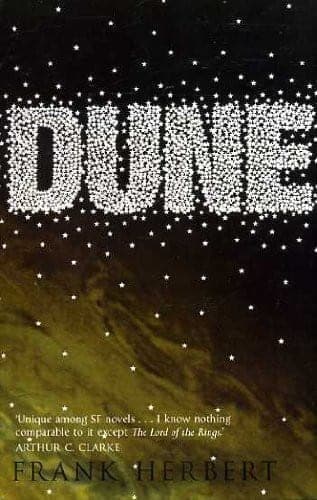 DuneFrank Herbert · 607 pagesThe widest gap | they loved the films and want the politics | |
| 2 | 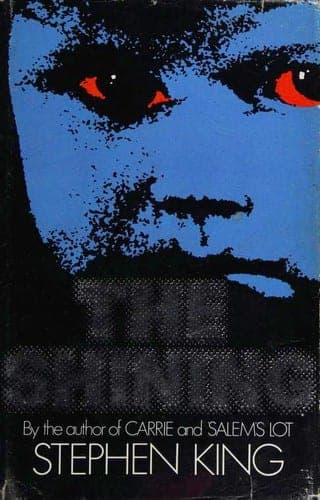 The ShiningStephen King · 506 pagesThe changed ending | they have only ever seen the Kubrick film | |
| 3 | 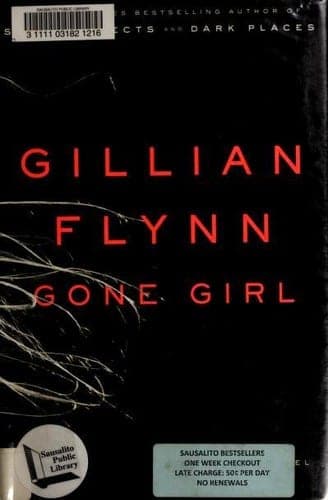 Gone GirlGillian Flynn · 475 pagesThe most faithful | they want the voice rather than a different story | |
| 4 | 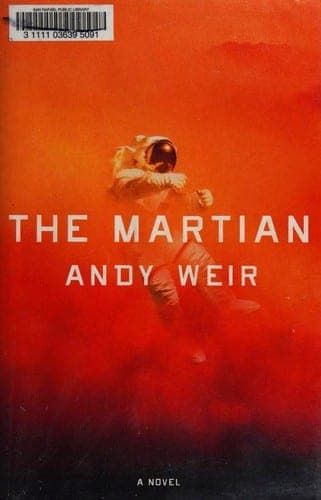 The MartianAndy Weir · 407 pagesThe one for the problem-solving | they liked watching him work it out | |
| 5 | 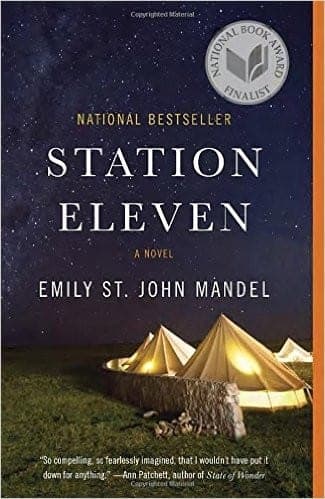 Station ElevenEmily St. John Mandel · 352 pagesThe adaptation that rewrote it | they watched the series and assume they know the book | |
| 6 | 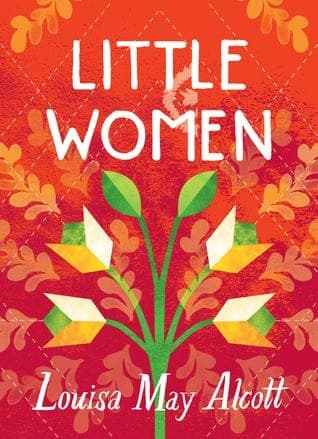 Little WomenLouisa May Alcott · 424 pagesThe one the film reordered | they loved the 2019 film | |
| 7 | 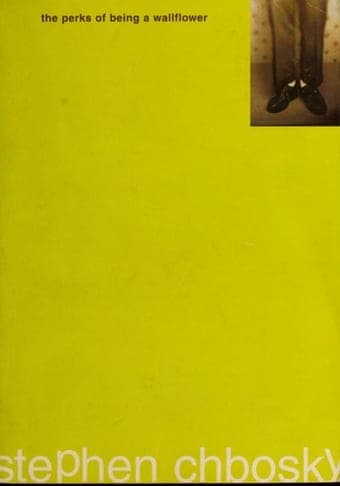 The Perks of Being a WallflowerStephen Chbosky · 231 pagesThe author's own film | they want to see how little changed | |
| 8 | 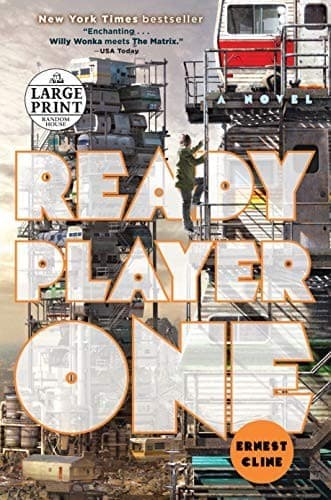 Ready Player OneErnest Cline · 462 pagesThe most changed | they want the puzzles the film swapped out |
#ad — buying through these links earns us a commission at no cost to you. No price is printed because we do not run a live price feed, and a remembered number would be a guess.
Eight, and what the film left out
1. The widest gap
Dune
Frank Herbert
Give this ifthey loved the films and want the politics
The recent films are faithful in plot and extraordinary to look at, and they leave out the thing the novel runs on: everybody's private thoughts. Frank Herbert writes the scheming from inside several heads at once, often within a single scene, so you always know what each character believes the others are planning. Read that way it is less a desert adventure than a book about how power is held, and the films simply cannot show it.
One caveat: A dense first hundred pages, and a glossary you will end up using.
- Print length
- 607 pages
- First published
- 1965
- Formats
- print, Kindle and audio where the publisher offers them
2. The changed ending
The Shining
Stephen King
Give this ifthey have only ever seen the Kubrick film
The 1980 film is a landmark and it is not this book. King's Jack Torrance is a recovering alcoholic whom the reader watches lose a fight he badly wants to win, the hotel itself is far more active, and the ending goes somewhere else entirely. King has said publicly for decades that he dislikes the adaptation, which makes this one of the few disagreements in popular culture you can settle for yourself over a few evenings.
One caveat: Long, and hard going on alcoholism and violence inside a family.
- Print length
- 506 pages
- First published
- 1977
- Formats
- print, Kindle and audio where the publisher offers them
3. The most faithful
Gone Girl
Gillian Flynn
Give this ifthey want the voice rather than a different story
Gillian Flynn wrote the screenplay herself, so the film keeps the structure, the twist and a great many of the lines. What a film cannot keep is the experience of reading two unreliable narrators in their own words, chapter after chapter, while you work out which one is lying to you and how long it has been going on. The passage everyone quotes is better on the page than on screen.
One caveat: If the film's plot is what they loved, the book holds few surprises for them.
- Print length
- 475 pages
- Formats
- print, Kindle and audio where the publisher offers them
4. The one for the problem-solving
The Martian
Andy Weir
Give this ifthey liked watching him work it out
The film keeps the jokes and trims the arithmetic. The novel is mostly Mark Watney's log, and much of its pleasure is watching him do the sums on water, calories and battery life before he does anything clever with them. It is also funnier than the film, because a log entry has room for a running commentary that a screenplay has to cut for pace.
One caveat: Long stretches of technical detail that some readers skim.
- Print length
- 407 pages
- First published
- 2011
- Formats
- print, Kindle and audio where the publisher offers them
5. The adaptation that rewrote it
Station Eleven
Emily St. John Mandel
Give this ifthey watched the series and assume they know the book
The television version is well regarded and it invents a great deal: characters make different choices, relationships are rearranged, and it does not end where the novel ends. Emily St. John Mandel's book is quieter and moves differently, circling one Hollywood actor's life through the people who knew him before a pandemic and the people performing Shakespeare after it.
One caveat: It is a pandemic novel, which not every reader wants now.
- Print length
- 352 pages
- First published
- 2014
- Formats
- print, Kindle and audio where the publisher offers them
6. The one the film reordered
Little Women
Louisa May Alcott
Give this ifthey loved the 2019 film
Greta Gerwig's adaptation cuts between the sisters' childhood and their adult lives, which is a filmmaker's answer to a book that runs straight forward in two parts. Alcott gives you what the film has to compress: the theatricals, the money worries, the long middle in which nothing dramatic happens and everything is quietly being decided. Read it and the film's structure looks like an argument about the ending.
One caveat: The moralizing chapters have dated badly.
- Print length
- 424 pages
- Formats
- print, Kindle and audio where the publisher offers them
7. The author's own film
The Perks of Being a Wallflower
Stephen Chbosky
Give this ifthey want to see how little changed
Stephen Chbosky wrote and directed the adaptation of his own novel, which makes it one of the closest film versions of a book there is. The book is still worth reading, because it is written as letters from a fifteen-year-old to a stranger he never names, and that voice — hesitant, over-explaining, missing things the reader can see — is the whole point of it.
One caveat: Deals with sexual abuse, suicide and drug use.
- Print length
- 231 pages
- First published
- 1999
- Formats
- print, Kindle and audio where the publisher offers them
8. The most changed
Ready Player One
Ernest Cline
Give this ifthey want the puzzles the film swapped out
The film keeps the premise and replaces most of the contest. The book's challenges are 1980s deep cuts — games, films and lines of dialogue that reward a reader who enjoys a footnote — and the adaptation trades them for set pieces that work better on screen. Read it for the hunt rather than the story, which is roughly the same either way.
One caveat: The reference-stacking is relentless and the prose is plain.
- Print length
- 462 pages
- Formats
- print, Kindle and audio where the publisher offers them
If you saw the film, read this
| If you saw | Read | Because |
|---|---|---|
| Dune | Dune | The scheming happens inside people's heads |
| The Shining | The Shining | A different Jack, and a different ending |
| The Martian | The Martian | The math the film trimmed, and more jokes |
| Station Eleven | Station Eleven | The series invents a great deal of it |
| Ready Player One | Ready Player One | Almost none of the book's puzzles are in the film |
When the film is the better experience
Plenty of readers prefer the adaptation, and on this list the clearest case is The Shining: the film is widely held to be one of the great horror films, and disliking it is not a requirement for loving the book. The two are best treated as separate works that share a hotel.
More generally, a film tends to win when the source was thin to begin with and a cast filled it in, when the pleasure of the story is mostly visual, or when the book's structure is repetitive in a way a screenplay tightens. None of that is a reason to skip the books here, but it is a reason to be suspicious of the rule that the book is always better. It is a habit, not a finding.
Read it before or after?
If you have already seen the film, read the book — that is the easy case, and on this list the differences are the whole point. Knowing the plot costs you less than people expect, because what you are reading for is the interior version of it.
If you have not seen it yet, the order depends on one question: do you care about the ending? Read first when you do, because an adaptation can spend its final twenty minutes overwriting it. Otherwise watch first, since a film almost always feels thinner to someone who has just finished the novel, and that is a poor way to spend an evening.
A story you already know is also the easiest kind of audiobook, because losing the thread for a minute costs nothing. Audiobooks for beginners covers that in more detail, and the subscription panel on this page explains which service suits a regular listener.
Where this fits
What to read next sorts more of these by the book someone already loved, books for people who do not read much is the right page for a film fan who says they never finish a novel, and books like Gone Girl and books like Ready Player One go further into two of the picks.
Two ways to read this list for less
If several books here appeal, a subscription usually beats buying them one at a time — but only for the right kind of reader. Here is who each one actually suits.
Audible Premium Plus
For anyone whose hands are busy
Driving, walking, cooking, cleaning. It converts hours that were never available for reading, which is a bigger effect than any discount. Books bought with a credit stay yours after you cancel — titles from the included catalog do not, and confusing the two is the most common complaint about the service.
See Audible plans and current pricingHow Audible actually works — credits, gifting and what happens when you cancel.
Kindle Unlimited
For fast readers who browse
It pays off from about three ebooks a month, in the genres the catalog covers well — romance, romantasy, cozy mystery, thriller, progression fantasy. It does not pay off if you are waiting on a specific new hardcover, because those are usually not included. Everything is borrowed, not owned.
See Kindle Unlimited terms and pricingIs Kindle Unlimited worth it? — the arithmetic, done on your own reading.
#ad — how we are funded. We print no subscription prices anywhere on this site, because they change and a stale figure sends you to a checkout expecting something that is not there. And if you read in silence in a chair, neither of these is for you — buy the book, or borrow it from your library.
What we would skip
The novelization
A novelization is a new book written from the screenplay, usually fast, and it is not the book the film came from. The giveaway is the author: if the cover shows the actors and the name is not the one you were looking for, you are holding a tie-in edition of the original at best and a novelization at worst. Check the author before you buy, especially secondhand.
Questions people ask
Is the book always better than the movie?
No. A faithful adaptation of a plot-driven book can leave little to discover, and a strong film can improve on thin source material. The book wins when it has an interior voice, cut subplots or a different ending.
Should I read the book before or after the film?
If you have already seen it, read the book. If you have not, watch first unless the ending matters to you, because a book read first tends to make the film feel thin.
Which book is most different from its film?
The Shining and Ready Player One. Both keep the premise and change most of what happens.
What is the difference between a novelization and a tie-in edition?
A tie-in edition is the original book with a film cover on it. A novelization is a new book written from the screenplay. Check the author's name before you buy.
Sources
- Open Library Search API — First publication year, median print length and cover art for every book on this page. Queried 8 September 2026.
- Audible Premium Plus membership page — The only authoritative source for current Audible plans, prices and terms.
Read next
- What to Read Next
Read-alike lists that name the element they match, plus the how-to-choose framework.
- Best Books for Someone Who Doesn't Like Reading
Seven books with a hook on page one, for someone whose aversion started at school.
- Books Like Gone Girl
Eight thrillers split by whether the reader loved the trick or the marriage.
- Books Like Ready Player One
Eight novels for a Ready Player One reader: virtual worlds, game quests and the humor.
- Best Sci-Fi Books
Ten science fiction books grouped by the four separate pleasures the genre offers.