Nonfiction
Best Investing Books for Beginners
The best beginner books mostly say the same unglamorous thing. That agreement is the point.
Updated September 2026 · By Sawyer V.

The short version
Start with the case for low-cost index funds, because the most recommended beginner books largely agree on it. The Little Book of Common Sense Investing and The Simple Path to Wealth make it briefly; A Random Walk Down Wall Street makes it thoroughly. The Intelligent Investor comes later, once the basics are settled.
Some links on this page are affiliate links. If you buy through one we earn a commission at no extra cost to you, and it does not change which books are here or the order they appear in. Read the full disclosure.
How we picked
We favored books whose advice holds up across decades and market cycles, and ordered them from first read to deeper study. We are not financial advisers, and nothing here is a recommendation to buy any investment. We have not read all eight.
What we do on every list: read the publisher’s own description rather than a summary of it, check print length and first publication year against library catalog data (last refreshed October 25, 2026), confirm the book is still sold in the format we suggest, and write the match line before the blurb. What we do not do is claim to have read every book here cover to cover. The full method is published, and it is written so anyone can check it.
The short answer
Who each book is for, at a glance. Select a row for the full write-up.
| # | Book | Give this if | Where to buy |
|---|---|---|---|
| 1 | 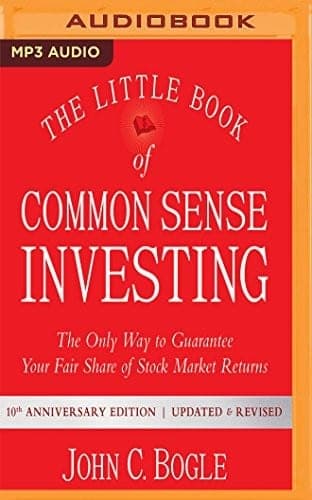 The Little Book of Common Sense InvestingJohn C. Bogle · 270 pagesThe first read | they have never invested and want the shortest sound argument | |
| 2 | 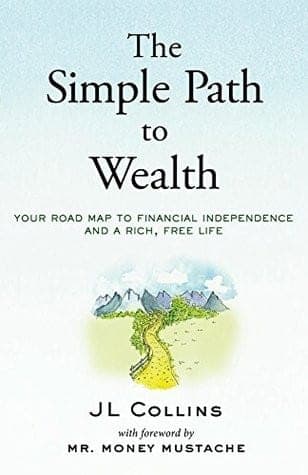 The Simple Path to WealthJL Collins · 289 pagesThe friendliest | they want investing explained like a letter from a relative | |
| 3 | 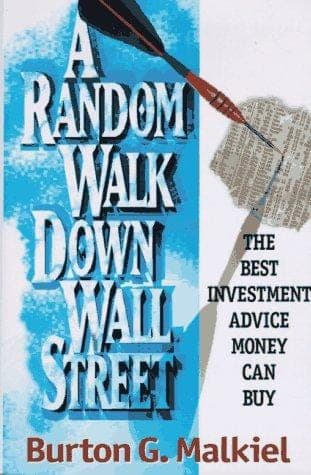 A Random Walk Down Wall StreetBurton G. Malkiel · 440 pagesThe thorough case | they want the evidence, not just the conclusion | |
| 4 | 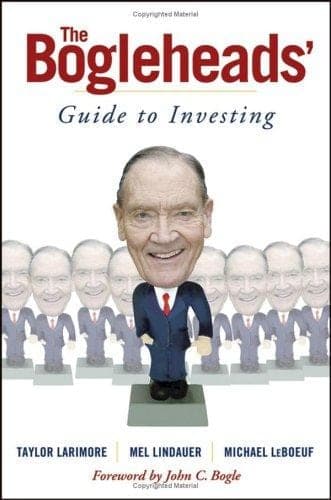 The Bogleheads' Guide to InvestingTaylor Larimore · 307 pagesThe practical manual | they have settled on index funds and want the how-to | |
| 5 | 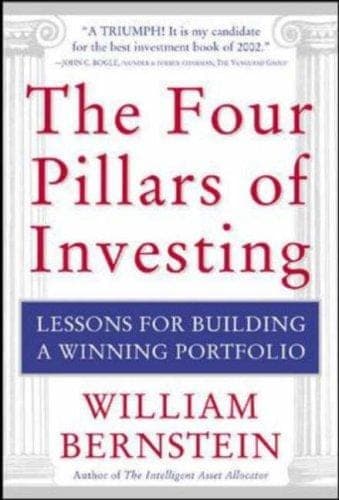 The Four Pillars of InvestingWilliam J. Bernstein · 316 pagesThe deeper understanding | they want to know why, not just what | |
| 6 | 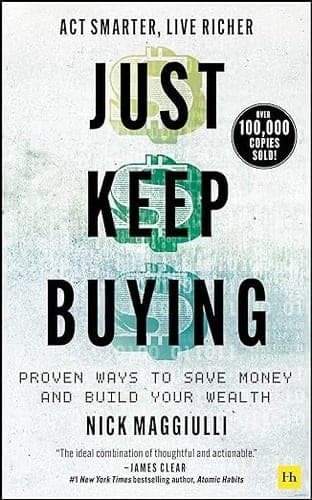 Just Keep BuyingNick MaggiulliThe data-driven one | they keep waiting for the right moment to start | |
| 7 | 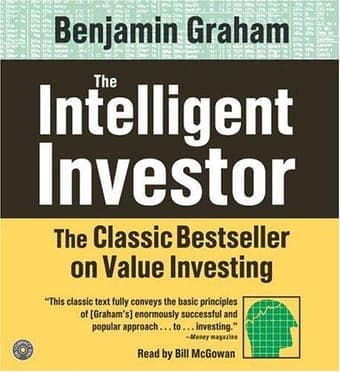 The Intelligent InvestorBenjamin Graham · 352 pagesThe classic, for later | they have the basics and want the foundational text | |
| 8 | 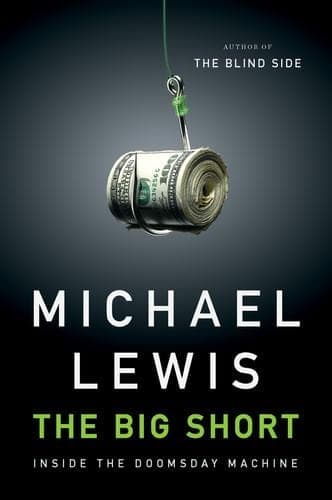 The Big ShortMichael Lewis · 291 pagesThe story | they learn better from a narrative than a manual |
#ad — buying through these links earns us a commission at no cost to you. Prices, where shown, come straight from Amazon’s product feed; the listing is always the final word.
Eight, from first read to deeper study
1. The first read
The Little Book of Common Sense Investing
John C. Bogle
Give this ifthey have never invested and want the shortest sound argument
The founder of Vanguard makes the case that low-cost index funds beat most attempts to pick winners, largely because of costs. Short, plain, and written by the person who brought the index fund to ordinary investors.
- Print length
- 270 pages
- First published
- 2007
- Formats
- print, Kindle and audio where the publisher offers them
#ad — how we’re funded · price as of October 25, 2026
2. The friendliest
The Simple Path to Wealth
JL Collins
Give this ifthey want investing explained like a letter from a relative
Investing advice that began as letters to the author's daughter, built around one broad, low-cost index fund. Warm, direct and very hard to misunderstand.
One caveat: Written from a US perspective, around US accounts.
- Print length
- 289 pages
- Formats
- print, Kindle and audio where the publisher offers them
#ad — how we’re funded · price as of October 25, 2026
3. The thorough case
A Random Walk Down Wall Street
Burton G. Malkiel
Give this ifthey want the evidence, not just the conclusion
The long-running argument that market prices are hard to predict and that indexing is the sensible default, updated through many editions. It walks through bubbles, theories and fashions, which makes it the book that inoculates against the next one.
- Print length
- 440 pages
- First published
- 1973
- Formats
- print, Kindle and audio where the publisher offers them
#ad — how we’re funded · price as of October 25, 2026
4. The practical manual
The Bogleheads' Guide to Investing
Taylor Larimore
Give this ifthey have settled on index funds and want the how-to
A practical guide to diversified, low-cost investing, written by members of the Bogleheads forum. Plain on account types, asset allocation and staying the course when markets fall.
- Print length
- 307 pages
- First published
- 2006
- Formats
- print, Kindle and audio where the publisher offers them
#ad — how we’re funded · price as of October 25, 2026
5. The deeper understanding
The Four Pillars of Investing
William J. Bernstein
Give this ifthey want to know why, not just what
Theory, history, psychology and the business of investing: the four things an investor needs to understand. More demanding than the books above, and more rewarding for someone who likes to understand a system before trusting it.
- Print length
- 316 pages
- First published
- 2002
- Formats
- print, Kindle and audio where the publisher offers them
#ad — how we’re funded · price as of October 25, 2026
6. The data-driven one
Just Keep Buying
Nick Maggiulli
Give this ifthey keep waiting for the right moment to start
A guide to saving and investing built on data rather than rules of thumb, and on the argument that buying steadily beats waiting for a dip. It answers the questions beginners actually ask, one short chapter at a time.
- First published
- 2022
- Formats
- print, Kindle and audio where the publisher offers them
#ad — how we’re funded · price as of October 25, 2026
7. The classic, for later
The Intelligent Investor
Benjamin Graham
Give this ifthey have the basics and want the foundational text
The 1949 classic on value investing, and on the difference between investing and speculating. Its most durable lessons are about temperament: protecting yourself from your own worst instincts.
One caveat: Dense. An edition with modern commentary makes it far more readable.
- Print length
- 352 pages
- First published
- 1949
- Formats
- print, Kindle and audio where the publisher offers them
#ad — how we’re funded · price as of October 25, 2026
8. The story
The Big Short
Michael Lewis
Give this ifthey learn better from a narrative than a manual
The handful of investors who saw the 2008 housing collapse coming and bet against it. Not a how-to, but it explains leverage, risk and the herd more memorably than most textbooks, and it reads like a thriller.
- Print length
- 291 pages
- Formats
- print, Kindle and audio where the publisher offers them
#ad — how we’re funded · price as of October 25, 2026
The best beginner books agree
Investing looks like a field of competing strategies, but the books most often recommended to beginners converge on the same unglamorous advice: keep costs low, diversify broadly, and stay invested through downturns. That agreement is the most useful thing a beginner can learn.
The disagreements come later — how much in stocks versus bonds, whether to pick individual companies, how to think about value. A beginner does not need to settle those to start.
The order to read them
- One short book first. The Little Book of Common Sense Investing or The Simple Path to Wealth — either is enough to start.
- One thorough book second. A Random Walk Down Wall Street, for the evidence behind the advice.
- One practical manual. The Bogleheads' Guide, when it is time to open accounts.
- The classic last. The Intelligent Investor, once the basics are second nature.
What these books are not
They are books, not advice about anyone's money. Account types, tax rules and contribution limits change, and several of these books describe the US system as it stood when they were written. Read for principles, check current rules before acting, and consider a fee-only adviser for anything complicated.
If the person has not yet dealt with debt and saving, personal finance for beginners comes first. For someone investing in their own business instead, see books for entrepreneurs. The narrative picks work well in audio, and the subscription panel on this page explains who that suits.
Two ways to read this list for less
If several books here appeal, a subscription usually beats buying them one at a time — but only for the right kind of reader. Here is who each one actually suits.
Audible Premium Plus
For anyone whose hands are busy
Driving, walking, cooking, cleaning. It converts hours that were never available for reading, which is a bigger effect than any discount. Books bought with a credit stay yours after you cancel — titles from the included catalog do not, and confusing the two is the most common complaint about the service.
See Audible plans and current pricingHow Audible actually works — credits, gifting and what happens when you cancel.
Kindle Unlimited
For fast readers who browse
It pays off from about three ebooks a month, in the genres the catalog covers well — romance, romantasy, cozy mystery, thriller, progression fantasy. It does not pay off if you are waiting on a specific new hardcover, because those are usually not included. Everything is borrowed, not owned.
See Kindle Unlimited terms and pricingIs Kindle Unlimited worth it? — the arithmetic, done on your own reading.
#ad — how we are funded. We print no subscription prices anywhere on this site, because they change and a stale figure sends you to a checkout expecting something that is not there. And if you read in silence in a chair, neither of these is for you — buy the book, or borrow it from your library.
What we would skip
Day-trading and get-rich-quick trading books
Books promising a system for beating the market through frequent trading are the wrong starting point for a beginner, whatever their reviews say. Frequent trading adds costs and mistakes, and the beginner books above largely agree that time in the market matters more than timing it. Start there; the trading shelf will still be there later.
Questions people ask
What is the best investing book for beginners?
The Little Book of Common Sense Investing is the shortest sound starting point. The Simple Path to Wealth covers the same ground more warmly.
Should a beginner read The Intelligent Investor first?
Usually not. It is dense and assumes some background. Read one of the short index-fund books first and come back to it.
Do these books recommend specific investments?
They argue for approaches — low costs, broad diversification, patience — rather than particular funds. Check current products and rules before acting.
Is The Big Short useful for investors?
Not as a how-to, but as a story it explains leverage, risk and herd behavior more memorably than most manuals.
Sources
- Open Library Search API — First publication year, median print length and cover art for every book on this page. Queried 8 September 2026.
- Audible Premium Plus membership page — The only authoritative source for current Audible plans, prices and terms.
Read next
- Best Nonfiction Books
Ten nonfiction books split by mode — narrative, argument or explainer.
- Best Personal Finance Books for Beginners
Eight personal finance books for beginners, sorted by the problem each one solves.
- Best Books for Entrepreneurs
Eight books for someone starting a business, sorted by the stage they have reached.
- Best Books for Someone Who Just Retired
Seven books for the first stretch of real reading time in decades, including the long one.
- Best Books to Give as Graduation Gifts
Seven books for a week when everyone else is handing out advice.