Head to head
Atomic Habits vs The 7 Habits of Highly Effective People
Both are sold as self-improvement. One is about mechanics, the other about direction, and buying the wrong one wastes the money and the week.
Updated September 2026 · By Sawyer V.

The short version
Buy Atomic Habits if you know what you want to do and cannot get yourself to do it: it is a practical manual for the mechanics of behavior. Buy The 7 Habits of Highly Effective People if you are busy and productive but suspect you are working on the wrong things: it is a framework for priorities and character, not a set of techniques.
Some links on this page are affiliate links. If you buy through one we earn a commission at no extra cost to you, and it does not change which books are here or the order they appear in. Read the full disclosure.
How we picked
We compared what each book is actually trying to do, then named the reader each one fits. Both have sold in the millions, so the question is never quality — it is which problem you are trying to solve. Two adjacent picks are included for readers whose problem is neither. We have not read all four.
What we do on every list: read the publisher’s own description rather than a summary of it, check print length and first publication year against library catalog data (last refreshed September 24, 2026), confirm the book is still sold in the format we suggest, and write the match line before the blurb. What we do not do is claim to have read every book here cover to cover. The full method is published, and it is written so anyone can check it.
Where they actually differ
Both sit on the same shelf and answer different questions. Atomic Habits is about the gap between intention and behavior. The 7 Habits is about whether the intention is the right one.
| Atomic Habits | The 7 Habits | |
|---|---|---|
| Question it answers | How do I actually do this? | What should I be doing? |
| Unit of advice | A specific tactic | A principle to reason from |
| Reading experience | Short chapters, fast, concrete | Longer, abstract, dated examples |
| Best age to read it | Whenever a habit is stuck | At a crossroads or a promotion |
| Weakness | Says little about direction | Says little about implementation |
There is also a difference in how they are used. Atomic Habits is a reference: people return to the section on environment or habit stacking and act on it that day. The 7 Habits is a reframe — you read it once, argue with it, and notice months later that a couple of its ideas changed how you triage your week.
The short answer
Who each book is for, at a glance. Select a row for the full write-up.
| # | Book | Give this if | Where to buy |
|---|---|---|---|
| 1 | 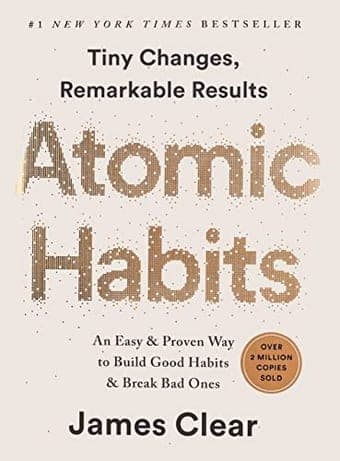 Atomic HabitsJames Clear · 323 pagesThe mechanics of doing the thing | they keep starting and stopping | |
| 2 | 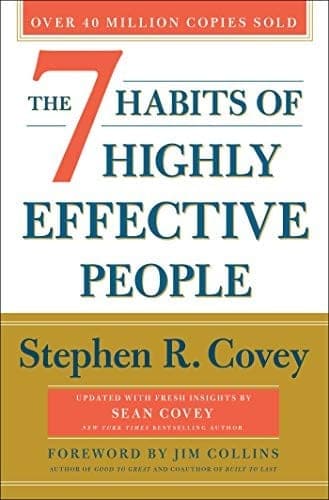 The 7 Habits of Highly Effective PeopleStephen R. Covey · 374 pagesDeciding what deserves the effort | they are effective at things that do not matter | |
| 3 | 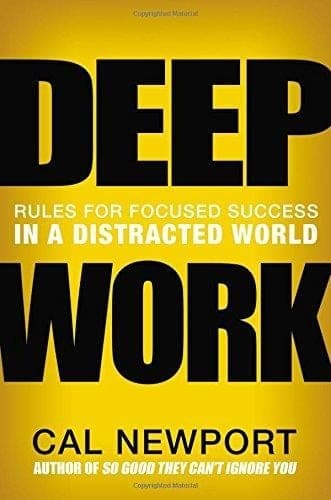 Deep WorkCal Newport · 303 pagesIf the real problem is attention | they have the habits and still cannot concentrate | |
| 4 | 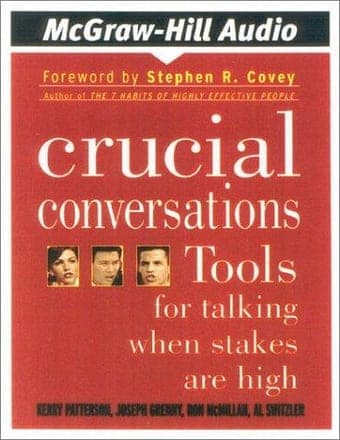 Crucial ConversationsKerry Patterson · 272 pagesIf the real problem is other people | the blocker is a conversation they keep avoiding |
#ad — buying through these links earns us a commission at no cost to you. Prices, where shown, come straight from Amazon’s product feed; the listing is always the final word.
The two, and two for a different problem
1. The mechanics of doing the thing
Atomic Habits
James Clear
Give this ifthey keep starting and stopping
How habits form and how to design an environment where the behavior you want is the easy one. Short chapters, concrete instructions, and an argument that systems beat willpower. The most useful book here for anyone under thirty-five who wants to change something this month.
One caveat: Light on why you might want a given habit in the first place.
- Print length
- 323 pages
- Formats
- print, Kindle and audio where the publisher offers them
#ad — how we’re funded · price as of September 27, 2026
2. Deciding what deserves the effort
The 7 Habits of Highly Effective People
Stephen R. Covey
Give this ifthey are effective at things that do not matter
A framework built on character rather than technique: be proactive, start from the end you want, put first things first, look for outcomes that work for both sides. Older, more abstract, and better than anything modern at the question of direction.
One caveat: From 1989, and its examples and corporate voice show it.
- Print length
- 374 pages
- First published
- 1989
- Formats
- print, Kindle and audio where the publisher offers them
#ad — how we’re funded · price as of September 27, 2026
3. If the real problem is attention
Deep Work
Cal Newport
Give this ifthey have the habits and still cannot concentrate
An argument that sustained concentration is both rare and economically valuable, with a set of ways to protect it. The right book when the failure is not motivation but interruption.
- Print length
- 303 pages
- First published
- 2016
- Formats
- print, Kindle and audio where the publisher offers them
#ad — how we’re funded · price as of September 27, 2026
4. If the real problem is other people
Crucial Conversations
Kerry Patterson
Give this ifthe blocker is a conversation they keep avoiding
How to hold the high-stakes conversation that everything else is waiting on. The practical companion to the interpersonal half of The 7 Habits, and much more specific about what to say.
- Print length
- 272 pages
- Formats
- print, Kindle and audio where the publisher offers them
#ad — how we’re funded · price as of September 27, 2026
Which one, by who is buying
| If they | Buy | Because |
|---|---|---|
| Want to exercise, write or read more | Atomic Habits | The problem is behavior, and this is the manual |
| Just got their first management job | The 7 Habits | It is about priorities and people, which the job now is |
| Read a lot of self-help already | The 7 Habits | Most modern books are downstream of it |
| Have never finished a self-help book | Atomic Habits | Short chapters and immediate payoff |
| Are organized but unhappy with the results | The 7 Habits | Efficiency is not the constraint; direction is |
As a gift, Atomic Habits is the safer object: it is recent, it is short, and it does not read as a comment on the recipient's character. The 7 Habits given unprompted can land as advice, which is the fastest way for a book to stay unopened.
Where this fits
If they have read one and want the next step rather than the rival, books like Atomic Habits covers that path. Self-help is the wider shelf, self-help audiobooks covers the format that suits a commute, and gifts for new managers is the page to use if this is a work present rather than a personal purchase.
What we would skip
Buying both at once
It is the obvious move and it reliably ends with neither finished. These two books ask for different things — one asks you to change a daily routine, the other to rethink what you are aiming at — and doing both in the same month means doing neither. Read the one that matches this year's problem, and buy the other when it becomes the problem.
Questions people ask
Which is better, Atomic Habits or The 7 Habits?
Neither is better; they answer different questions. Atomic Habits is how to change a behavior, The 7 Habits is how to decide which behaviors matter.
Is The 7 Habits still worth reading?
Yes, on direction and priorities. The examples and the corporate tone are from 1989, and most modern productivity books borrow from it without improving on that part.
Which should I read first?
Atomic Habits if something specific is stuck. The 7 Habits if you are doing plenty and are not sure it is the right plenty.
Which is the better gift?
Atomic Habits. It is current, short, and does not read as commentary on the recipient.
Sources
- Open Library Search API — First publication year, median print length and cover art for every book on this page. Queried 8 September 2026.
- Audible Premium Plus membership page — The only authoritative source for current Audible plans, prices and terms.
Read next
- What to Read Next
Read-alike lists that name the element they match, plus the how-to-choose framework.
- Books Like Atomic Habits
Eight books that extend or contest the argument, plus the genre's replication problem.
- Best Self-Help Books
Nine self-help books that hold up, including two that argue against the rest of the shelf.
- Best Self-Help Audiobooks
Eight self-help audiobooks whose audio adds something, from habits to how you treat people.
- Best Books for New Managers
Eight practical books for someone newly promoted to manager, from feedback to hard conversations.