Nonfiction
Best Self-Help Books
Nine that hold up — including two that argue the whole project is the problem.
Updated September 2026 · By Sawyer V.

The short version
Read these for frameworks, not for facts. A way of thinking about habits survives scrutiny; a specific percentage from a single psychology experiment often does not, and this genre repeats those numbers more confidently than the research supports.
Some links on this page are affiliate links. If you buy through one we earn a commission at no extra cost to you, and it does not change which books are here or the order they appear in. Read the full disclosure.
How we picked
We chose books whose central idea holds up independently of any single study, flagged the ones resting on research that has not replicated well, and deliberately included two books that contradict the rest of the list. We have not read all nine.
What we do on every list: read the publisher’s own description rather than a summary of it, check print length and first publication year against library catalog data (last refreshed October 21, 2026), confirm the book is still sold in the format we suggest, and write the match line before the blurb. What we do not do is claim to have read every book here cover to cover. The full method is published, and it is written so anyone can check it.
The short answer
Who each book is for, at a glance. Select a row for the full write-up.
| # | Book | Give this if | Where to buy |
|---|---|---|---|
| 1 | 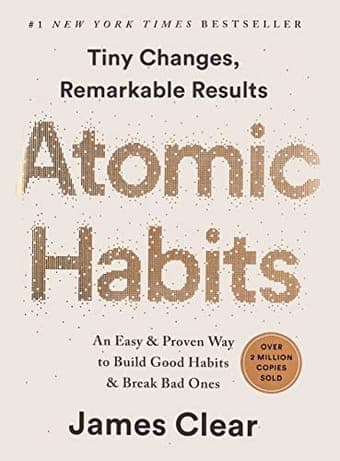 Atomic HabitsJames Clear · 323 pagesThe one people actually finish | they want a system and will use one | |
| 2 | 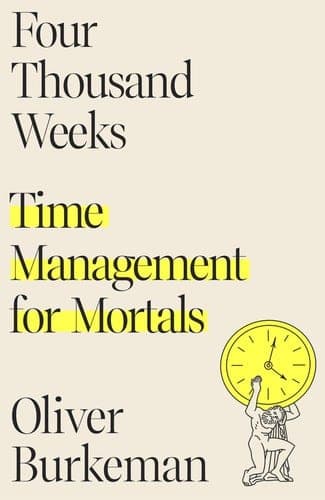 Four Thousand WeeksOliver Burkeman · 280 pagesThe book that argues back | they are starting to feel like a project | |
| 3 | 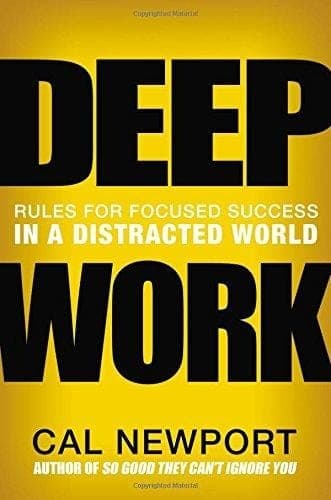 Deep WorkCal Newport · 303 pagesThe strongest single lever | their problem is fragmentation, not motivation | |
| 4 | 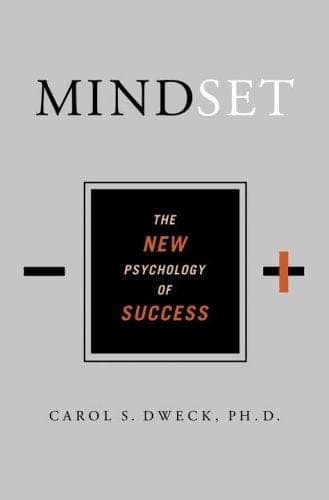 MindsetCarol S. Dweck · 288 pagesThe idea underneath a lot of the rest | they want the source rather than the summary | |
| 5 | 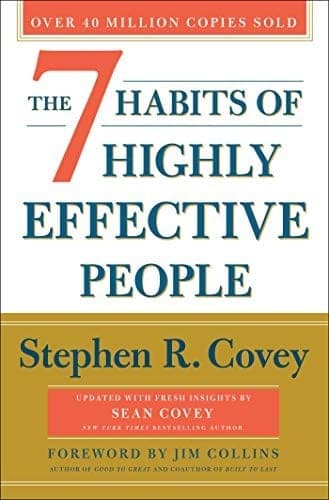 The 7 Habits of Highly Effective PeopleStephen R. Covey · 374 pagesThe framework everything else answers | they like structure and have never read it | |
| 6 | 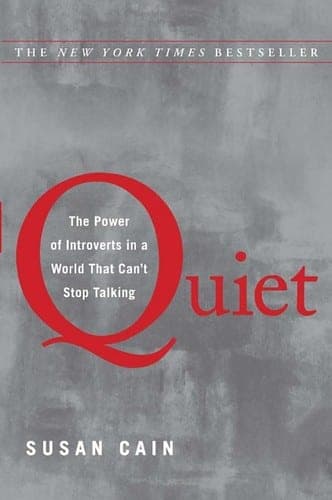 QuietSusan Cain · 368 pagesEnvironment over willpower | they suspect the problem is their surroundings | |
| 7 | 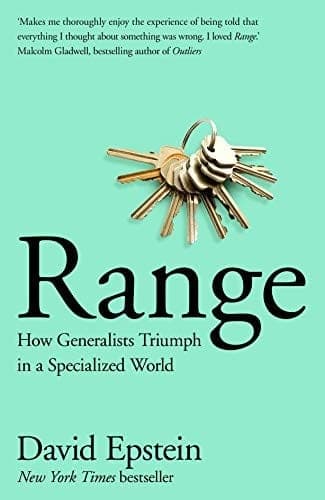 RangeDavid Epstein · 352 pagesThe other argument back | they are anxious about not having specialized | |
| 8 | 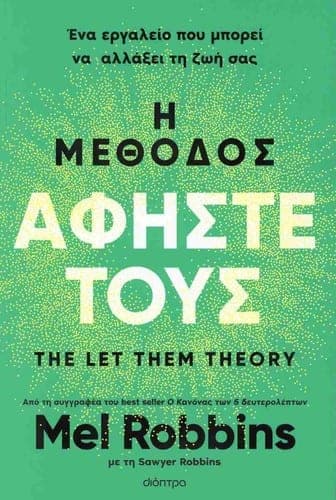 The Let Them TheoryMel Robbins · 284 pagesThe current one | they want what everybody is reading right now | |
| 9 | 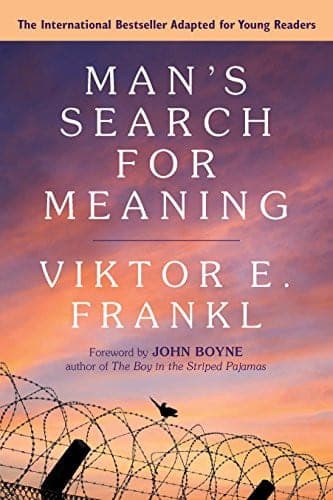 Man's Search for MeaningViktor E. Frankl · 192 pagesThe one that outlasts the genre | they are working something out |
#ad — buying through these links earns us a commission at no cost to you. Prices, where shown, come straight from Amazon’s product feed; the listing is always the final word.
Nine, including the ones that argue back
1. The one people actually finish
Atomic Habits
James Clear
Give this ifthey want a system and will use one
Habits built by changing the environment and the identity rather than relying on willpower. It is the most-recommended book in the category because the core mechanism — make it obvious, easy and satisfying — survives being simplified, which most of this shelf does not.
- Print length
- 323 pages
- Formats
- print, Kindle and audio where the publisher offers them
#ad — how we’re funded · price as of October 25, 2026
2. The book that argues back
Four Thousand Weeks
Oliver Burkeman
Give this ifthey are starting to feel like a project
A time-management book arguing that the problem is finitude and no system fixes it. It is the most useful counterweight to the entire genre, and it takes the genre seriously rather than sneering at it.
- Print length
- 280 pages
- First published
- 2021
- Formats
- print, Kindle and audio where the publisher offers them
#ad — how we’re funded · price as of October 25, 2026
3. The strongest single lever
Deep Work
Cal Newport
Give this iftheir problem is fragmentation, not motivation
The case for long uninterrupted concentration as a rare and increasingly valuable skill. It is narrower than most books here, which is exactly why it is more actionable.
- Print length
- 303 pages
- First published
- 2016
- Formats
- print, Kindle and audio where the publisher offers them
#ad — how we’re funded · price as of October 25, 2026
4. The idea underneath a lot of the rest
Mindset
Carol S. Dweck
Give this ifthey want the source rather than the summary
The distinction between believing ability is fixed and believing it is developed, and what each does to effort. A great deal of later writing about learning and performance is downstream of it.
One caveat: Some of the classroom-intervention findings have replicated weakly. The core distinction holds up better than the headline effect sizes do.
- Print length
- 288 pages
- First published
- 2006
- Formats
- print, Kindle and audio where the publisher offers them
#ad — how we’re funded · price as of October 25, 2026
5. The framework everything else answers
The 7 Habits of Highly Effective People
Stephen R. Covey
Give this ifthey like structure and have never read it
The 1989 book most later productivity writing is either extending or arguing with. It is dated in tone and unusually durable in substance, and reading it explains where a lot of familiar language came from.
- Print length
- 374 pages
- First published
- 1989
- Formats
- print, Kindle and audio where the publisher offers them
#ad — how we’re funded · price as of October 25, 2026
6. Environment over willpower
Quiet
Susan Cain
Give this ifthey suspect the problem is their surroundings
The case that Western workplaces are built for extroverts and lose a great deal by it. It shares Atomic Habits' central insight — change the environment, not the person — applied to a different problem.
- Print length
- 368 pages
- First published
- 2012
- Formats
- print, Kindle and audio where the publisher offers them
#ad — how we’re funded · price as of October 25, 2026
7. The other argument back
Range
David Epstein
Give this ifthey are anxious about not having specialized
The case that generalists, late specializers and people with wide interests outperform in complex fields. It contradicts the optimize-one-thing instinct directly, and argues from evidence rather than encouragement.
- Print length
- 352 pages
- First published
- 2019
- Formats
- print, Kindle and audio where the publisher offers them
#ad — how we’re funded · price as of October 25, 2026
8. The current one
The Let Them Theory
Mel Robbins
Give this ifthey want what everybody is reading right now
A single rule — let them do what they are going to do — argued out across a book. It was the most-shelved self-help release of its year by a wide margin, and its narrowness is the point rather than a shortcoming.
- Print length
- 284 pages
- First published
- 2024
- Formats
- print, Kindle and audio where the publisher offers them
#ad — how we’re funded · price as of October 25, 2026
9. The one that outlasts the genre
Man's Search for Meaning
Viktor E. Frankl
Give this ifthey are working something out
A psychiatrist's account of the camps, and the school of therapy he built from it. It is short, requested by name more than almost any other book of its kind, and it has not dated.
One caveat: The first half is an account of Auschwitz. Know your recipient before wrapping it.
- Print length
- 192 pages
- First published
- 2017
- Formats
- print, Kindle and audio where the publisher offers them
#ad — how we’re funded · price as of October 25, 2026
The replication problem, stated plainly
A large amount of popular behavior writing rests on psychology research from the 2000s and 2010s, and a meaningful portion of that research has not replicated well since. Several famous studies quoted confidently in books that sold millions of copies have failed to reproduce.
That does not make the books worthless. It does mean a specific study cited in a bestseller is not a fact you should build on, and where we know a widely cited claim is disputed we say so on the pick rather than passing it along because it makes a tidier recommendation.
One warning about giving these
Books in this category are read as diagnoses when they arrive unrequested. A book about discipline given to somebody who is struggling is a comment however kindly it was meant, and the recipient will read it as one.
The exception is when they named it themselves, which is common with Atomic Habits specifically — people ask for it by title. If they did not, give them something else and let them buy this for themselves. Our gift guides cover the alternatives, and books like Atomic Habits covers where to go next if they already have it.
If they are only going to read two
Atomic Habits and Four Thousand Weeks, in that order. The first gives a working method; the second asks whether the method is the point. Read together they cancel out the worst tendency of the genre, which is the quiet suggestion that a sufficiently optimized person would have no problems left.
Two ways to read this list for less
If several books here appeal, a subscription usually beats buying them one at a time — but only for the right kind of reader. Here is who each one actually suits.
Audible Premium Plus
For anyone whose hands are busy
Driving, walking, cooking, cleaning. It converts hours that were never available for reading, which is a bigger effect than any discount. Books bought with a credit stay yours after you cancel — titles from the included catalog do not, and confusing the two is the most common complaint about the service.
See Audible plans and current pricingHow Audible actually works — credits, gifting and what happens when you cancel.
Kindle Unlimited
For fast readers who browse
It pays off from about three ebooks a month, in the genres the catalog covers well — romance, romantasy, cozy mystery, thriller, progression fantasy. It does not pay off if you are waiting on a specific new hardcover, because those are usually not included. Everything is borrowed, not owned.
See Kindle Unlimited terms and pricingIs Kindle Unlimited worth it? — the arithmetic, done on your own reading.
#ad — how we are funded. We print no subscription prices anywhere on this site, because they change and a stale figure sends you to a checkout expecting something that is not there. And if you read in silence in a chair, neither of these is for you — buy the book, or borrow it from your library.
What we would skip
The eighth book that says the same thing
This genre has a repetition problem: a large number of titles restate the same handful of findings with different anecdotes, and after three of them you are paying for packaging. The diminishing returns are steep and the shelf never argues with itself, which is why two of the picks above are deliberately counterarguments.
Questions people ask
What is the best self-help book?
Atomic Habits is the one people actually finish and apply. Four Thousand Weeks is the more useful second book, and almost nobody recommends it alongside the first.
Are self-help books based on real research?
Partly, and a meaningful portion of the psychology they cite has not replicated well. Read them for frameworks rather than for specific statistics.
Is there a self-help book that disagrees with the others?
Four Thousand Weeks argues the problem is finitude and no system fixes it; Range contradicts the optimize-one-thing instinct. Both take the genre seriously rather than mocking it.
Is a self-help book a good gift?
Only if they asked for it by name. Unrequested, it reads as a comment on how they are doing, which is the opposite of what a gift should do.
Sources
- Open Library Search API — First publication year, median print length and cover art for every book on this page. Queried 8 September 2026.
- Audible Premium Plus membership page — The only authoritative source for current Audible plans, prices and terms.
Read next
- Best Nonfiction Books
Ten nonfiction books split by mode — narrative, argument or explainer.
- Books Like Atomic Habits
Eight books that extend or contest the argument, plus the genre's replication problem.
- Best Books for College Students
Seven books for someone already buried in assigned reading, with nothing improving on the list.
- Best Books to Give as Graduation Gifts
Seven books for a week when everyone else is handing out advice.
- Best History Books
Nine narrative histories sorted by scale, chosen for the thing history books fail at: being finished.
- Best Books on Buddhism for Beginners
Eight books on Buddhism for beginners, each labeled with the tradition it opens.
- Best Self-Help Audiobooks
Eight self-help audiobooks whose audio adds something, from habits to how you treat people.
- Best Psychology Books
Eight psychology books that survive scrutiny, plus the replication problem behind the genre.
- Atomic Habits vs The 7 Habits of Highly Effective People
One is the mechanics of behavior, the other is direction. Which to buy, by the problem you have.
- Best Nonfiction for Beginners
Eight true books that read like novels, sorted by how fast they move rather than how important they are.