Head to head
Dune vs Foundation
One is a desert planet you live inside for six hundred pages. The other is an idea, told in episodes, and it is short.
Updated September 2026 · By Sawyer V.
The short version
Start with Dune if you want immersion: ecology, religion and politics on one planet, dense but repaying the effort, and the most influential novel in the genre. Start with Foundation if you want ideas at speed — it is short, episodic and about the collapse of an empire predicted by mathematics, with almost no interest in character.
Some links on this page are affiliate links. If you buy through one we earn a commission at no extra cost to you, and it does not change which books are here or the order they appear in. Read the full disclosure.
How we picked
Both are recommended as the place to start with classic science fiction, and they suit opposite readers. We compared density, length and what each book is actually interested in, and we say plainly where each one has aged. Two adjacent picks cover readers who want something modern. We have not read all four.
What we do on every list: read the publisher’s own description rather than a summary of it, check print length and first publication year against library catalog data (last refreshed September 24, 2026), confirm the book is still sold in the format we suggest, and write the match line before the blurb. What we do not do is claim to have read every book here cover to cover. The full method is published, and it is written so anyone can check it.
What each book is actually about
They are usually named in the same breath as the two pillars of the genre, and they have almost nothing in common as reading experiences.
| Dune | Foundation | |
|---|---|---|
| Scope | One planet, one family, one decade | A galaxy, across centuries |
| Interest | Ecology, religion, power | History as a predictable system |
| Characters | Deep, and the plot turns on them | Functional, and interchangeable |
| Length and density | Long and demanding | Short and brisk |
| Has it aged? | The politics feel current | The 1950s show, especially in who appears |
For a reader who wants to understand why the genre matters, Dune is the better investment: almost everything since is in conversation with it. For a reader who wants to be entertained tonight, Foundation is two hundred pages of clever and done.
The short answer
Who each book is for, at a glance. Select a row for the full write-up.
| # | Book | Give this if | Where to buy |
|---|---|---|---|
| 1 | 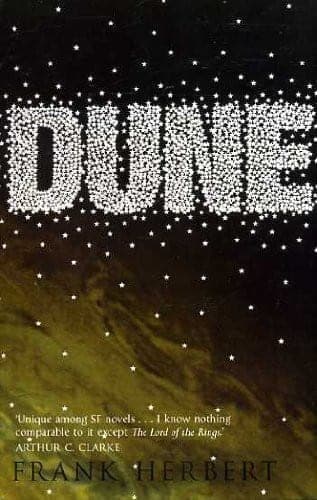 DuneFrank Herbert · 607 pagesThe immersive one | they want a world to live in | |
| 2 | 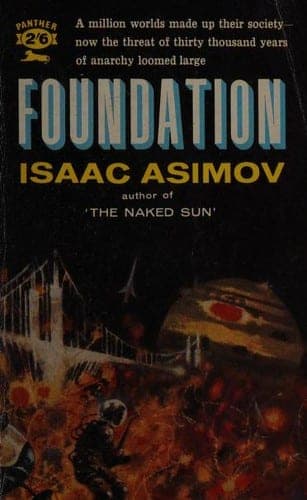 FoundationIsaac Asimov · 240 pagesThe fast one | they want the idea without the commitment | |
| 3 | 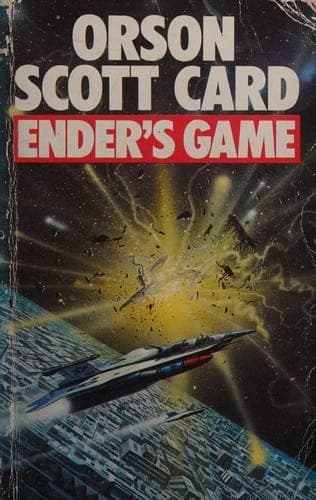 Ender's GameOrson Scott Card · 330 pagesThe easiest classic | they want one weekend and a strong hook | |
| 4 | 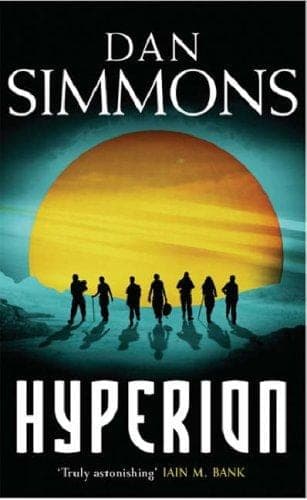 HyperionDan Simmons · 481 pagesFor the modern epic | they want scale written later |
#ad — buying through these links earns us a commission at no cost to you. Prices, where shown, come straight from Amazon’s product feed; the listing is always the final word.
Both, and two easier ways in
1. The immersive one
Dune
Frank Herbert
Give this ifthey want a world to live in
A noble family takes control of the only planet producing the substance that makes interstellar travel possible, and the son becomes something the desert culture has been waiting for. Ecology, religion and imperial politics, all working at once.
One caveat: Dense, with invented vocabulary and appendices. The first hundred pages ask for patience.
- Print length
- 607 pages
- First published
- 1965
- Formats
- print, Kindle and audio where the publisher offers them
#ad — how we’re funded · price as of September 27, 2026
2. The fast one
Foundation
Isaac Asimov
Give this ifthey want the idea without the commitment
A mathematician predicts the fall of a galactic empire and sets up an institution to shorten the dark age that follows. Told as linked episodes across centuries, so it reads quickly and covers enormous ground.
One caveat: Characters are functions of the plot, and the 1950s attitudes show. Almost no women.
- Print length
- 240 pages
- First published
- 1951
- Formats
- print, Kindle and audio where the publisher offers them
#ad — how we’re funded · price as of September 27, 2026
3. The easiest classic
Ender's Game
Orson Scott Card
Give this ifthey want one weekend and a strong hook
A gifted child is trained in zero-gravity war games to fight an alien enemy. Fast, propulsive and the most reliably finished older science fiction novel for a new reader.
- Print length
- 330 pages
- First published
- 1985
- Formats
- print, Kindle and audio where the publisher offers them
#ad — how we’re funded · price as of September 27, 2026
4. For the modern epic
Hyperion
Dan Simmons
Give this ifthey want scale written later
Seven pilgrims travel to a distant world and each tells their story on the way, in a different register. The best argument that the genre's big canvas did not stop with the 1960s.
One caveat: The story continues in the sequel rather than resolving.
- Print length
- 481 pages
- First published
- 1989
- Formats
- print, Kindle and audio where the publisher offers them
#ad — how we’re funded · price as of September 27, 2026
Which one, by who is reading
| If they | Start with | Because |
|---|---|---|
| Loved the recent films | Dune | The novel has far more than the films can carry |
| Have little reading time | Foundation | Episodes finish; nothing is lost to interruption |
| Want characters | Dune | Foundation is not interested in them |
| Read mostly nonfiction | Foundation | It reads like a thought experiment |
| Have bounced off classics before | Ender's Game | The most reliably finished of the three |
On format: Dune works well as an audiobook because the invented vocabulary is easier heard than parsed, and the full-cast recording is well regarded. Foundation is better on the page, where the episode breaks are visible.
Where this fits
Books like Dune covers the next epic, science fiction of all time is the canon list, space opera is the subgenre Foundation founded, and hard science fiction is the other tradition entirely. For a reader who wants one book and no series, see standalone science fiction.
What we would skip
The later books in either series, at first
Both series continue well past their best volume, and both take sharp turns that lose most readers. Dune's sequels become increasingly interior and strange; Foundation's later entries stitch themselves to Asimov's other series. Read the first book, decide whether you want more of that specific thing, and ignore anyone who tells you the fourth one is essential.
Questions people ask
Should I read Dune or Foundation first?
Dune if you want immersion and influence. Foundation if you want a short, idea-driven book you can finish quickly.
Is Dune hard to read?
The first hundred pages are, because of the invented vocabulary. After that it moves, and the glossary is there if you want it.
Has Foundation aged badly?
In places. The prose is plain, characters are functional, and there are almost no women in it. The central idea still works.
Which is better on audio?
Dune, where hearing the invented words helps. Foundation is clearer on the page.
Sources
- Open Library Search API — First publication year, median print length and cover art for every book on this page. Queried 8 September 2026.
- Audible Premium Plus membership page — The only authoritative source for current Audible plans, prices and terms.
Read next
- What to Read Next
Read-alike lists that name the element they match, plus the how-to-choose framework.
- Books Like Dune
Eight science fiction epics for a Dune reader, split by politics, religion and world.
- Best Sci-Fi Books of All Time
Eight science fiction books listed by what each one gave the genre.
- Best Space Opera Books
Eight space operas sorted by scale, from one android to an entire civilization.
- Best Standalone Sci-Fi Novels
Eight science fiction novels that finish — no trilogy, no cliffhanger, nothing to buy after.