Sci-fi
Best Sci-Fi Books of All Time
Influence, not sales. Each of these gave the genre something it still uses.
Updated September 2026 · By Sawyer V.
The short version
Measure an all-time science fiction list by influence. Frankenstein is often called the first science fiction novel, The War of the Worlds invented the alien invasion, Foundation and Dune built the galactic epic, and Neuromancer gave the world cyberspace. Each is a claim you can check by reading what came after.
Some links on this page are affiliate links. If you buy through one we earn a commission at no extra cost to you, and it does not change which books are here or the order they appear in. Read the full disclosure.
How we picked
We chose on durability and influence, as on [our all-time thriller list](/genres/thriller/of-all-time), and say what each book contributed instead of ranking them. We favored books a modern reader can still enjoy, and flag the ones that have dated. We have not read all eight.
What we do on every list: read the publisher’s own description rather than a summary of it, check print length and first publication year against library catalog data (last refreshed October 25, 2026), confirm the book is still sold in the format we suggest, and write the match line before the blurb. What we do not do is claim to have read every book here cover to cover. The full method is published, and it is written so anyone can check it.
The short answer
Who each book is for, at a glance. Select a row for the full write-up.
| # | Book | Give this if | Where to buy |
|---|---|---|---|
| 1 | 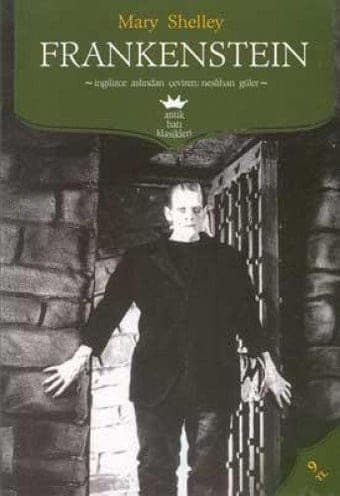 FrankensteinMary Shelley · 240 pagesThe first | they want to read where it all began | |
| 2 | 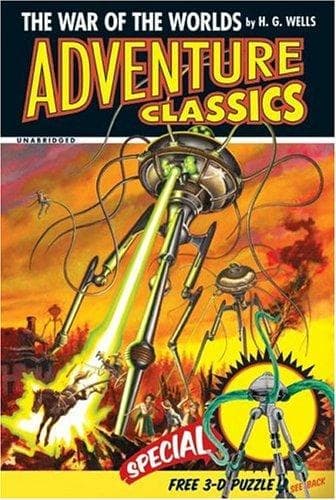 The War of the WorldsH. G. Wells · 206 pagesThe alien invasion | they like a story told at ground level | |
| 3 | 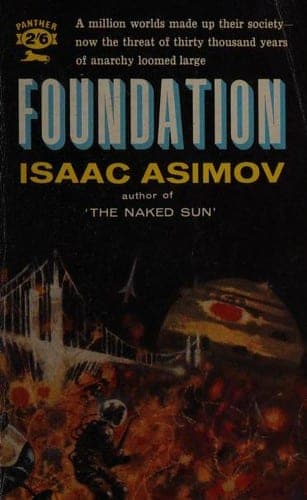 FoundationIsaac Asimov · 240 pagesThe galactic epic | they like big ideas more than big battles | |
| 4 | 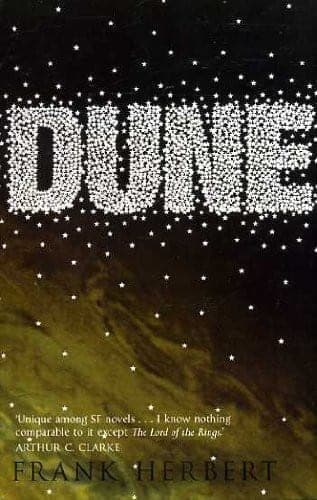 DuneFrank Herbert · 607 pagesThe world-building benchmark | they want a whole universe to get lost in | |
| 5 | 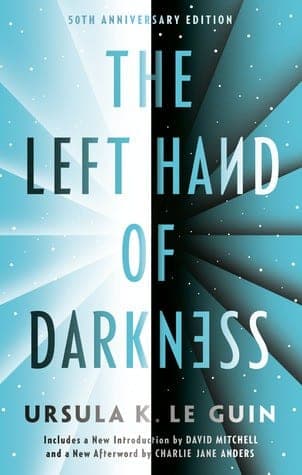 The Left Hand of DarknessUrsula K. Le Guin · 304 pagesThe thought experiment | they want science fiction that asks questions about people | |
| 6 | 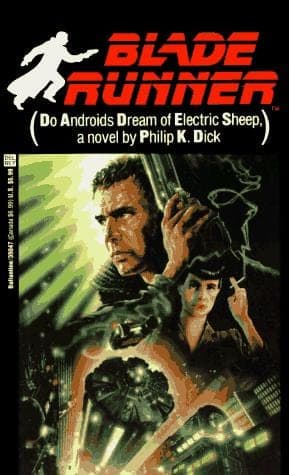 Do Androids Dream of Electric Sheep?Philip K. Dick · 224 pagesWhat makes us human | they loved Blade Runner | |
| 7 | 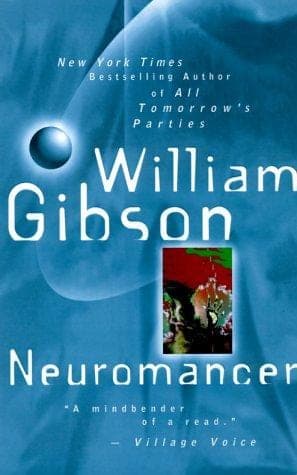 NeuromancerWilliam Gibson · 317 pagesThe birth of cyberpunk | they work in technology | |
| 8 | 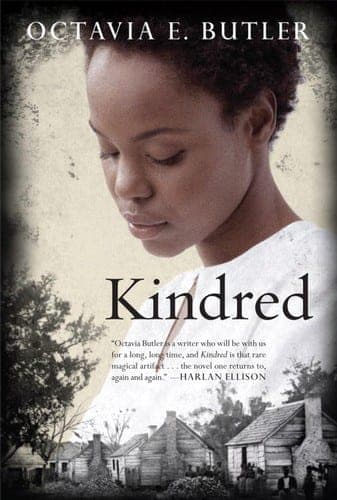 KindredOctavia E. Butler · 287 pagesTime travel with a conscience | they want science fiction about history |
#ad — buying through these links earns us a commission at no cost to you. Prices, where shown, come straight from Amazon’s product feed; the listing is always the final word.
Eight books that gave science fiction its shape
1. The first
Frankenstein
Mary Shelley
Give this ifthey want to read where it all began
A young scientist builds a living creature and abandons it, and the creature tells its own side. Often called the first science fiction novel: the scientist whose creation escapes him has been a template ever since.
- Print length
- 240 pages
- First published
- 1818
- Formats
- print, Kindle and audio where the publisher offers them
#ad — how we’re funded · price as of October 25, 2026
2. The alien invasion
The War of the Worlds
H. G. Wells
Give this ifthey like a story told at ground level
Martians land in the English countryside and begin to conquer Earth, seen through the eyes of one fleeing witness. Every alien invasion story since has borrowed its shape, and it is short and still gripping.
- Print length
- 206 pages
- Formats
- print, Kindle and audio where the publisher offers them
#ad — how we’re funded · price as of October 25, 2026
3. The galactic epic
Foundation
Isaac Asimov
Give this ifthey like big ideas more than big battles
A mathematician predicts the fall of a galactic empire and sets up a foundation to shorten the dark age that follows. Built from linked stories spanning centuries, it made the galaxy a stage for ideas about history.
One caveat: Thin on character by modern standards.
- Print length
- 240 pages
- First published
- 1951
- Formats
- print, Kindle and audio where the publisher offers them
#ad — how we’re funded · price as of October 25, 2026
4. The world-building benchmark
Dune
Frank Herbert
Give this ifthey want a whole universe to get lost in
A young nobleman's family takes control of a desert planet that holds the most valuable substance in the universe, and is betrayed. Ecology, religion and politics are woven together so thoroughly that it remains the benchmark for science fiction world-building.
- Print length
- 607 pages
- First published
- 1965
- Formats
- print, Kindle and audio where the publisher offers them
#ad — how we’re funded · price as of October 25, 2026
5. The thought experiment
The Left Hand of Darkness
Ursula K. Le Guin
Give this ifthey want science fiction that asks questions about people
An envoy visits a frozen planet whose inhabitants have no fixed sex. Le Guin used science fiction to question gender in a way the genre had rarely attempted, and it still reads as fresh.
- Print length
- 304 pages
- First published
- 1969
- Formats
- print, Kindle and audio where the publisher offers them
#ad — how we’re funded · price as of October 25, 2026
6. What makes us human
Do Androids Dream of Electric Sheep?
Philip K. Dick
Give this ifthey loved Blade Runner
A bounty hunter in a ruined San Francisco is assigned to retire six escaped androids who are nearly indistinguishable from humans. Stranger and sadder than the film it inspired, and the source of a question the genre keeps asking.
- Print length
- 224 pages
- First published
- 1968
- Formats
- print, Kindle and audio where the publisher offers them
#ad — how we’re funded · price as of October 25, 2026
7. The birth of cyberpunk
Neuromancer
William Gibson
Give this ifthey work in technology
A washed-up computer hacker is hired for one last job in cyberspace, the word this novel made famous. It defined the look and feel of cyberpunk, and much of how people imagined the internet before it arrived.
One caveat: Dense and fast; the first chapters demand attention.
- Print length
- 317 pages
- First published
- 1984
- Formats
- print, Kindle and audio where the publisher offers them
#ad — how we’re funded · price as of October 25, 2026
8. Time travel with a conscience
Kindred
Octavia E. Butler
Give this ifthey want science fiction about history
A Black woman in 1976 California is repeatedly pulled back in time to a Maryland plantation before the Civil War. Butler uses a science fiction premise to make slavery immediate in a way a history book cannot.
One caveat: Unflinching about violence.
- Print length
- 287 pages
- First published
- 1979
- Formats
- print, Kindle and audio where the publisher offers them
#ad — how we’re funded · price as of October 25, 2026
Why influence rather than best
Best ever is a matter of taste; influence can be traced. The invasion story, the galactic epic, the android who might be human and the network you can enter all begin with specific books, and you can see them reused in everything from bestsellers to blockbusters.
So each pick names what it contributed. We publish no scores and no rating markup anywhere on the site — the method is here.
How the classics have aged
The oldest books here are from the nineteenth century, and some mid-century science fiction has dated in its technology, its pacing and its treatment of women. Foundation is thin on character, and older books can read as lectures. That is worth knowing, not a reason to skip them.
For a modern entry point that does the same jobs, science fiction for beginners and space opera start from more recent books.
Where to go next
Dystopian novels follow the genre's darkest thread, short science fiction collects classics you can finish in a weekend, and books for science lovers crosses into nonfiction. Classic science fiction also makes very good listening, and the subscription panel on this page explains who that suits.
Two ways to read this list for less
If several books here appeal, a subscription usually beats buying them one at a time — but only for the right kind of reader. Here is who each one actually suits.
Audible Premium Plus
For anyone whose hands are busy
Driving, walking, cooking, cleaning. It converts hours that were never available for reading, which is a bigger effect than any discount. Books bought with a credit stay yours after you cancel — titles from the included catalog do not, and confusing the two is the most common complaint about the service.
See Audible plans and current pricingHow Audible actually works — credits, gifting and what happens when you cancel.
Kindle Unlimited
For fast readers who browse
It pays off from about three ebooks a month, in the genres the catalog covers well — romance, romantasy, cozy mystery, thriller, progression fantasy. It does not pay off if you are waiting on a specific new hardcover, because those are usually not included. Everything is borrowed, not owned.
See Kindle Unlimited terms and pricingIs Kindle Unlimited worth it? — the arithmetic, done on your own reading.
#ad — how we are funded. We print no subscription prices anywhere on this site, because they change and a stale figure sends you to a checkout expecting something that is not there. And if you read in silence in a chair, neither of these is for you — buy the book, or borrow it from your library.
What we would skip
An all-time list that stops in the 1960s
Many all-time science fiction lists are dominated by a handful of mid-century writers and miss what the genre became. We included Le Guin, Gibson and Butler because its range widened enormously from the late 1960s onward, and a canon that ignores that is a museum rather than a list.
Questions people ask
What is the best science fiction book of all time?
We do not rank them, because best ever is not measurable. Dune is the most frequent answer, and Frankenstein is often called the first science fiction novel.
What was the first science fiction novel?
Frankenstein is the most commonly cited answer, though earlier works have been proposed.
Is Foundation worth reading today?
Yes, for its ideas about history and power, though its characters are thin by modern standards.
Is Do Androids Dream of Electric Sheep like Blade Runner?
Loosely. The novel is stranger and sadder, with whole threads the film leaves out.
Sources
- Open Library Search API — First publication year, median print length and cover art for every book on this page. Queried 8 September 2026.
- Audible Premium Plus membership page — The only authoritative source for current Audible plans, prices and terms.
Read next
- Best Sci-Fi Books
Ten science fiction books grouped by the four separate pleasures the genre offers.
- Best Dystopian Novels
Eight dystopian novels, sorted by the kind of control each one fears.
- Best Short Sci-Fi Books Under 300 Pages
Eight science fiction books under 300 pages, each a complete story you can finish in a weekend.
- Best Books of All Time
Ten durable books with what each still offers a reader now, rather than why it is important.
- Best Thriller Books of All Time
Eight thrillers ranked by what they invented, not by what they sold.
- Dune vs Foundation
Immersion against ideas: which of the two founding science fiction epics to read first.