Reading order
Narnia Books in Order
Two orders, and for once the choice genuinely changes the book. The numbers on the spines are not the ones to follow.
Updated October 2026 · By Sawyer V.
The short version
Read them in publication order, starting with The Lion, the Witch and the Wardrobe and leaving The Magician's Nephew sixth. The numbers printed on modern spines are chronological and put the origin story first, which turns two of the series' best reveals into information you already had. Both orders are defensible; only one of them is a first read.
Some links on this page are affiliate links. If you buy through one we earn a commission at no extra cost to you, and it does not change which books are here or the order they appear in. Read the full disclosure.
How we picked
This is a seven-book series with a contested order, so the page is mostly argument rather than selection — the picks below are the seven books themselves, listed the way we think they should be read. Publication years come from the catalog record for each title and agree with the published series run of 1950 to 1956. The 1957 letter and the renumbering were researched for this page; where sources disagree about when the books were renumbered, and they disagree by over a decade, we give both rather than pick one. We have not read all seven.
What we do on every list: read the publisher’s own description rather than a summary of it, check print length and first publication year against library catalog data (last refreshed November 8, 2026), confirm the book is still sold in the format we suggest, and write the match line before the blurb. What we do not do is claim to have read every book here cover to cover. The full method is published, and it is written so anyone can check it.
The two orders, side by side
Lewis published the seven books one a year between 1950 and 1956. He did not write them in the order the stories happen, and the gap between those two sequences is the whole of this argument.
| # | Publication order (what we recommend) | Chronological order (what the spines say) |
|---|---|---|
| 1 | The Lion, the Witch and the Wardrobe (1950) | The Magician's Nephew |
| 2 | Prince Caspian (1951) | The Lion, the Witch and the Wardrobe |
| 3 | The Voyage of the Dawn Treader (1952) | The Horse and His Boy |
| 4 | The Silver Chair (1953) | Prince Caspian |
| 5 | The Horse and His Boy (1954) | The Voyage of the Dawn Treader |
| 6 | The Magician's Nephew (1955) | The Silver Chair |
| 7 | The Last Battle (1956) | The Last Battle |
Only the last book is in the same place in both. Everything else moves, and two books move a long way: the origin story travels from sixth to first, and the side-story from fifth to third.
The short answer
Who each book is for, at a glance. Select a row for the full write-up.
| # | Book | Give this if | Where to buy |
|---|---|---|---|
| 1 | 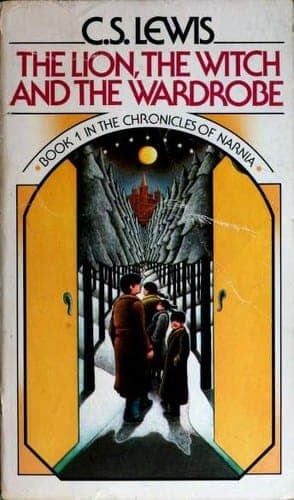 The Lion, the Witch and the WardrobeC. S. Lewis · 186 pagesStart here | they have never read any of it | |
| 2 | 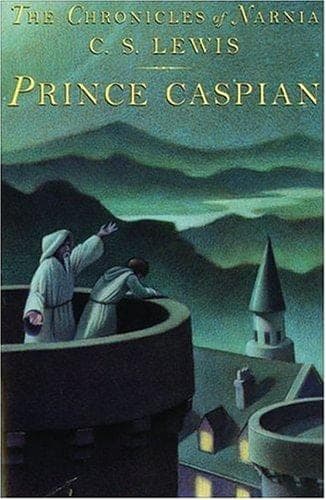 Prince CaspianC. S. Lewis · 216 pagesThe return | they finished the first and want to know what happened to Narnia | |
| 3 | 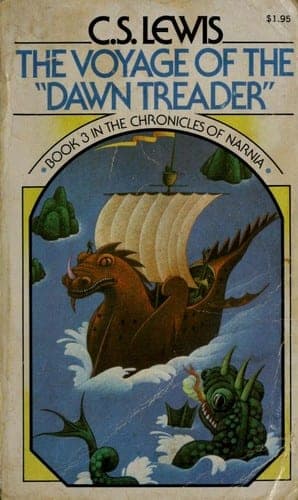 The Voyage of the Dawn TreaderC. S. Lewis · 224 pagesThe best one | they want the book readers remember longest | |
| 4 | 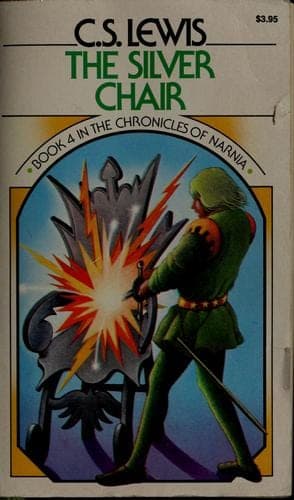 The Silver ChairC. S. Lewis · 217 pagesThe dark one | they liked the series and want it colder | |
| 5 | 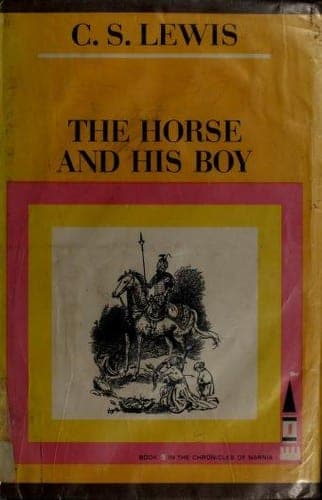 The Horse and His BoyC. S. Lewis · 208 pagesThe odd one out | they are enjoying the world and want more of it | |
| 6 | 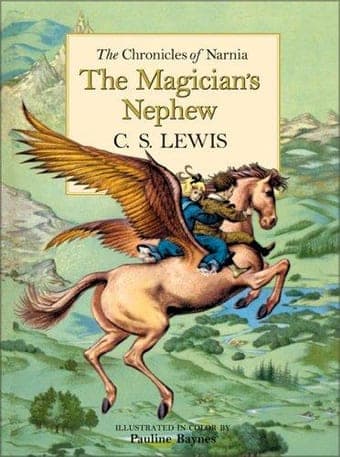 The Magician's NephewC. S. Lewis · 186 pagesThe origin story, read sixth | they have read the first five and want to know where it all came from | |
| 7 | 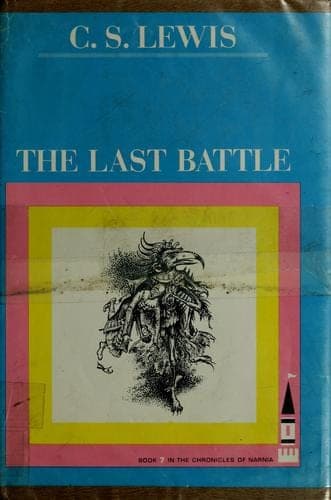 The Last BattleC. S. Lewis · 192 pagesRead last, whichever order you choose | they have finished the other six |
#ad — buying through these links earns us a commission at no cost to you. Prices, where shown, come straight from Amazon’s product feed; the listing is always the final word.
The seven, in publication order
1. Start here
The Lion, the Witch and the Wardrobe
C. S. Lewis
Give this ifthey have never read any of it
Four children evacuated to a professor's house find a country behind a wardrobe held under a hundred years of winter with no Christmas. It is the best door into the series precisely because it is a door — you discover Narnia at the same moment the children do, which is the experience the chronological order spends first.
One caveat: The Christian allegory is not subtle, and the second half turns on it. Some adult readers cannot unsee it once they have seen it.
- Print length
- 186 pages
- First published
- 1950
- Formats
- print, Kindle and audio where the publisher offers them
#ad — how we’re funded · price as of November 9, 2026
2. The return
Prince Caspian
C. S. Lewis
Give this ifthey finished the first and want to know what happened to Narnia
The children are pulled back to find that centuries have passed, the Talking Beasts are in hiding and the ruins of their own castle are an archaeological site. The strongest idea in the series — that you cannot go back to a place without it having moved on — is the whole engine of this one.
One caveat: The middle is a long march through woods with a lot of disagreement in it, and it is the book children most often find slow.
- Print length
- 216 pages
- First published
- 1951
- Formats
- print, Kindle and audio where the publisher offers them
#ad — how we’re funded · price as of November 9, 2026
3. The best one
The Voyage of the Dawn Treader
C. S. Lewis
Give this ifthey want the book readers remember longest
Two of the children and their thoroughly unpleasant cousin are pulled through a painting onto a ship sailing east past the last charted island. Episodic, strange and the most purely imaginative thing Lewis wrote — each island is its own short story, and the end of the world is genuinely moving.
One caveat: Almost no plot in the conventional sense. A reader who wants a quest with a villain will find it drifts.
- Print length
- 224 pages
- First published
- 1952
- Formats
- print, Kindle and audio where the publisher offers them
#ad — how we’re funded · price as of November 9, 2026
4. The dark one
The Silver Chair
C. S. Lewis
Give this ifthey liked the series and want it colder
Two children are sent to find a prince who vanished years before, guided by a marsh-dweller who expects every plan to fail and is wonderful company. Underground for much of its length, and the scene where the villain argues that Narnia was never real is the cleverest passage in the seven.
One caveat: The school-bullying framing at either end has dated badly, and the tone is bleaker than anything before it.
- Print length
- 217 pages
- First published
- 1953
- Formats
- print, Kindle and audio where the publisher offers them
#ad — how we’re funded · price as of November 9, 2026
5. The odd one out
The Horse and His Boy
C. S. Lewis
Give this ifthey are enjoying the world and want more of it
A boy in the south and a talking horse ride north for Narnia. It is the only book set entirely inside the reign the first novel ends on, which is why it reads as a side-story rather than a sequel, and the chase across the desert is the best action in the series.
One caveat: Its portrayal of the southern nation of Calormen leans on orientalist clichés, and that is worth knowing before handing it to a child without comment.
- Print length
- 208 pages
- First published
- 1954
- Formats
- print, Kindle and audio where the publisher offers them
#ad — how we’re funded · price as of November 9, 2026
6. The origin story, read sixth
The Magician's Nephew
C. S. Lewis
Give this ifthey have read the first five and want to know where it all came from
Two children pushed between worlds by a reckless uncle are present at the making of Narnia, and at the arrival of the thing that spoils it. Read here it answers questions the earlier books raised — the lamp-post, the wardrobe, the professor. Read first it simply supplies facts nobody was wondering about yet.
One caveat: This is the book the whole order argument is about. Modern spines number it 1; we think that is the single thing to ignore on this page.
- Print length
- 186 pages
- First published
- 1955
- Formats
- print, Kindle and audio where the publisher offers them
#ad — how we’re funded · price as of November 9, 2026
7. Read last, whichever order you choose
The Last Battle
C. S. Lewis
Give this ifthey have finished the other six
A false Aslan is paraded in front of the Narnians by those who profit from him, and the country comes to its end. Both orders agree this goes last, and it is the only book in the seven that assumes you care about everything that came before.
One caveat: The ending divides readers permanently, and one character's exclusion from it has been argued about for seventy years. Not a comfortable finish.
- Print length
- 192 pages
- First published
- 1956
- Formats
- print, Kindle and audio where the publisher offers them
#ad — how we’re funded · price as of November 9, 2026
Where the chronological numbering came from
It is not arbitrary, and the people who prefer it are not ignoring Lewis. In 1957 an American boy wrote to him having argued with his mother about the order — the boy wanted chronological, his mother publication. Lewis wrote back saying he agreed more with the boy than with the mother. His stepson, Douglas Gresham, is generally credited with pressing for the renumbering afterwards, citing that letter.
The case against rests on the rest of the same letter. Lewis also wrote that the order does not matter very much, which is a long way from an instruction, and he never renumbered the books himself in the years he had left. A reply to one child agreeing that his preference was reasonable is thin ground for resequencing a series permanently — that is the objection, and it is a fair one.
What the chronological order actually costs
Most reading-order arguments are about tidiness. This one is about two specific effects that only work in one sequence, which is why it is worth having an opinion rather than shrugging.
- The wardrobe stops being a discovery. In publication order you walk into Narnia alongside a child who has no idea what it is. Opening with the creation of the world instead means the reader arrives already briefed, and the single most famous scene in children's literature becomes a confirmation rather than a surprise.
- The lamp-post stops being an answer. The origin story explains several objects and people the earlier books left hanging. Read sixth, that is a payoff. Read first, it is set-up for questions the reader has not thought to ask.
- The weakest opening. The Magician's Nephew is a fine sixth book and a strange first one — it is about adults, it spends its early chapters in London, and Narnia does not exist for much of it.
The honest counter-argument: on a reread, chronological is genuinely interesting. You know where everything goes, so watching the world assemble in sequence is a different and rewarding experience. That is the order's real home — second time through, not first.
Buying these, and what age they suit
- A child who has read none of it. The Lion, the Witch and the Wardrobe on its own. Roughly seven to eleven, and it reads aloud beautifully to younger than that.
- A child who is already in. Whichever comes next in publication order — and the individual paperbacks cost a fraction of a boxed set.
- Somebody rereading as an adult. This is the one case for the chronological set, and they will know why.
- A boxed set as a present. Fine, with one caveat: tell them to start with book two of the numbering. That single sentence is worth more than the wrapping.
For the wider age-banded lists, book gifts for kids and for tweens sort by reading age. A child who finishes Narnia and wants the next thing is usually after either the mythology or the portal, and books like Percy Jackson covers the first of those; fantasy for beginners covers the second.
In audio the series is unusually well served, because it was written to be read aloud: audiobooks for kids has the shelf, and a car is where most families get through all seven.
Two ways to read this list for less
If several books here appeal, a subscription usually beats buying them one at a time — but only for the right kind of reader. Here is who each one actually suits.
Audible Premium Plus
For anyone whose hands are busy
Driving, walking, cooking, cleaning. It converts hours that were never available for reading, which is a bigger effect than any discount. Books bought with a credit stay yours after you cancel — titles from the included catalog do not, and confusing the two is the most common complaint about the service.
See Audible plans and current pricingHow Audible actually works — credits, gifting and what happens when you cancel.
Kindle Unlimited
For fast readers who browse
It pays off from about three ebooks a month, in the genres the catalog covers well — romance, romantasy, cozy mystery, thriller, progression fantasy. It does not pay off if you are waiting on a specific new hardcover, because those are usually not included. Everything is borrowed, not owned.
See Kindle Unlimited terms and pricingIs Kindle Unlimited worth it? — the arithmetic, done on your own reading.
#ad — how we are funded. We print no subscription prices anywhere on this site, because they change and a stale figure sends you to a checkout expecting something that is not there. And if you read in silence in a chair, neither of these is for you — buy the book, or borrow it from your library.
What we would skip
Trusting the numbers printed on the spines
Modern sets are numbered in chronological order, which puts The Magician's Nephew first and The Horse and His Boy third. A buyer picking up a boxed set reasonably assumes the publisher knows the right order, starts with the origin story, and spends two of the series' best moments before they can land — the first sight of Narnia through a wardrobe, and the late explanation of where the lamp-post and the wardrobe came from. The numbering is a defensible editorial decision with a real argument behind it, covered below. It is still not the order to read them in the first time.
Questions people ask
What order should you read the Narnia books in?
Publication order: The Lion, the Witch and the Wardrobe, Prince Caspian, The Voyage of the Dawn Treader, The Silver Chair, The Horse and His Boy, The Magician's Nephew, and The Last Battle. That is not the order printed on modern spines, which is chronological.
Why are the Narnia books numbered differently to the order they were written?
Modern editions number them in the order the stories happen rather than the order Lewis published them. The change is usually credited to his stepson Douglas Gresham, citing a 1957 letter in which Lewis told a young reader he agreed with reading them chronologically — while also saying the order does not matter very much.
Should I read The Magician's Nephew first?
Not on a first read. It explains the lamp-post, the wardrobe and the professor, which is a payoff if you have met them and merely set-up if you have not — and it spends the first sight of Narnia, which is the thing the opening book is built around. On a reread it is a genuinely good place to start.
How many Narnia books are there?
Seven, published one a year from 1950 to 1956. Unlike most long series the count is not disputed — there are no companion volumes or later additions to argue about.
What age are the Narnia books for?
Roughly seven to eleven for independent reading, and younger as a read-aloud. The later books darken — The Silver Chair and The Last Battle are bleaker than the first — so a child who starts at seven will meet the hardest material a year or two on.
Which Narnia book is the best?
The Voyage of the Dawn Treader is the one most readers name, and it is the most imaginative of the seven. It is also the one with the least conventional plot, which is why some readers prefer the first book or The Silver Chair.
Sources
- Open Library Search API — First publication year, median print length and cover art for every book on this page. Queried 8 September 2026.
- C. S. Lewis's 1957 letter on Narnia reading order — The exchange with an American reader, Lewis's reply, and the publication-order case against the renumbering. Lewis's own words include that the order 'does not matter very much'.
- Audible Premium Plus membership page — The only authoritative source for current Audible plans, prices and terms.
Read next
- Best Fantasy Books for Beginners
Seven fantasy books with no map, no glossary and no nine-book commitment.
- Best Book Gifts for Kids
Eight books by age band, chosen on whether they survive the fortieth reading aloud.
- Best Books for Tweens
Eight books for the gap between the children's shelf and the teen shelf, ages ten to thirteen.
- Books Like Percy Jackson
Eight books for a young Percy Jackson fan: new mythologies, funny narrators and classic quests.
- Best Audiobooks for Kids
Seven children's audiobooks by listening age, and why the narrator matters most.