Head to head
Sapiens vs Guns, Germs, and Steel
Both explain humanity in one volume. One is a tour with opinions; the other is a thesis with evidence. Both have been argued with, hard.
Updated September 2026 · By Sawyer V.

The short version
Read Sapiens if you want the more enjoyable book: a fast, opinionated tour from the cognitive revolution to the present, strongest on the idea that money, nations and religions are shared fictions. Read Guns, Germs, and Steel if you want a single argument made carefully — that geography, crops and domesticable animals, not innate difference, explain why some societies conquered others.
Some links on this page are affiliate links. If you buy through one we earn a commission at no extra cost to you, and it does not change which books are here or the order they appear in. Read the full disclosure.
How we picked
Both books are recommended as the one big-history read, so we compared method, reading difficulty and the criticism each has attracted, because a reader who does not know a book is contested is not getting the whole recommendation. Two adjacent picks cover the next step. We have not read all four.
What we do on every list: read the publisher’s own description rather than a summary of it, check print length and first publication year against library catalog data (last refreshed September 24, 2026), confirm the book is still sold in the format we suggest, and write the match line before the blurb. What we do not do is claim to have read every book here cover to cover. The full method is published, and it is written so anyone can check it.
Two different kinds of book
Sapiens is a synthesis with a voice: it moves fast, generalizes freely, and is interested in how ideas organize people. Guns, Germs, and Steel is a thesis: one question, asked in the first chapter, answered with evidence for the rest of the book.
| Sapiens | Guns, Germs, and Steel | |
|---|---|---|
| Shape | A tour of everything | One question, one answer |
| Voice | Confident, aphoristic | Methodical, occasionally dry |
| Strongest on | Shared fictions: money, states, religion | Geography, crops, domestication, disease |
| Main criticism | Overreach and compression | Environmental determinism |
| Reading effort | Low; it moves | Moderate; it accumulates |
If you only read one, Sapiens will be the more memorable evening and Guns, Germs, and Steel the more defensible position. Reading them in that order works well, because Diamond supplies the mechanisms Harari waves at.
The short answer
Who each book is for, at a glance. Select a row for the full write-up.
| # | Book | Give this if | Where to buy |
|---|---|---|---|
| 1 | 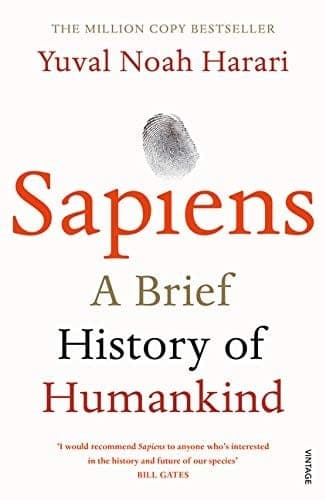 SapiensYuval Noah Harari · 456 pagesThe more enjoyable one | they want big ideas at speed | |
| 2 |  Guns, Germs, and SteelJared Diamond · 528 pagesThe stronger single argument | they want evidence rather than aphorisms | |
| 3 |  1491Charles C. Mann · 632 pagesThe corrective | they finished Diamond and wanted the other side | |
| 4 | 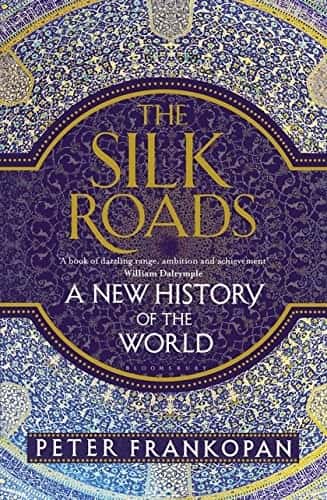 The Silk RoadsPeter FrankopanFor the world without Europe at the center | they want the sweep and a different axis |
#ad — buying through these links earns us a commission at no cost to you. Prices, where shown, come straight from Amazon’s product feed; the listing is always the final word.
Both, and two that answer them
1. The more enjoyable one
Sapiens
Yuval Noah Harari
Give this ifthey want big ideas at speed
The whole human story in one volume, organized around three revolutions and the claim that our defining trick is believing in things that exist only because we agree they do. Genuinely thrilling to read, and quotable on every other page.
One caveat: Historians dispute a good deal of it, particularly the agricultural and cognitive sections. Read it as an argument, not a textbook.
- Print length
- 456 pages
- First published
- 2011
- Formats
- print, Kindle and audio where the publisher offers them
2. The stronger single argument
Guns, Germs, and Steel
Jared Diamond
Give this ifthey want evidence rather than aphorisms
Why Eurasian societies developed the technologies and diseases that let them dominate others, argued from crops, animals, latitude and geography rather than from anything about the people. Dry in places and much more careful than Sapiens.
One caveat: Criticized for environmental determinism and for flattening the agency of the societies it describes.
- Print length
- 528 pages
- First published
- 1997
- Formats
- print, Kindle and audio where the publisher offers them
#ad — how we’re funded · price as of September 27, 2026
3. The corrective
1491
Charles C. Mann
Give this ifthey finished Diamond and wanted the other side
The Americas before Columbus, reconstructed as populous, engineered and agriculturally sophisticated. The best answer to any story that treats pre-contact societies as a blank space waiting for history to happen to them.
- Print length
- 632 pages
- First published
- 2005
- Formats
- print, Kindle and audio where the publisher offers them
#ad — how we’re funded · price as of September 27, 2026
4. For the world without Europe at the center
The Silk Roads
Peter Frankopan
Give this ifthey want the sweep and a different axis
World history told from the trade routes of central Asia rather than from the Atlantic, which rearranges most of what a Western reader assumes about who mattered when.
One caveat: Long, and it moves fast through centuries.
- First published
- 2015
- Formats
- print, Kindle and audio where the publisher offers them
#ad — how we’re funded · price as of September 27, 2026
Which one, by who is reading
| If they | Read | Because |
|---|---|---|
| Rarely read nonfiction | Sapiens | It reads like a novel with opinions |
| Studied history | Guns, Germs, and Steel | There is a method to argue with |
| Want to understand inequality between nations | Guns, Germs, and Steel | That is the actual question it asks |
| Want ideas for conversation | Sapiens | Quotable, and everyone has read it |
| Have read either already | 1491 | It complicates both, usefully |
Where this fits
Books like Sapiens covers the wider big-ideas shelf, history is the genre home, and history audiobooks covers the format, which suits this material better than most. For a reader starting nonfiction from scratch, nonfiction for beginners is the gentler door.
What we would skip
Treating either one as settled history
Both books are arguments, and both have been contested in detail by specialists in the fields they cross. That is normal for big-history writing and it is not a reason to avoid them — it is a reason to read them as a strong case rather than a verdict. Anyone quoting either as established fact in an argument is overreaching, and the books themselves are more careful than their fans.
Questions people ask
Which should I read first, Sapiens or Guns, Germs, and Steel?
Sapiens for enjoyment, then Guns, Germs, and Steel for the mechanisms behind the sweep.
Is Sapiens accurate?
It is an argument, and specialists dispute parts of it, especially on agriculture and cognition. Read it as a strong case rather than a textbook.
Is Guns, Germs, and Steel outdated?
Its thesis is still taught and still argued with. The main criticism is that geography does too much of the explaining.
What should I read after both?
1491, which reconstructs the pre-Columbian Americas and complicates the story both books tell.
Sources
- Open Library Search API — First publication year, median print length and cover art for every book on this page. Queried 8 September 2026.
- Audible Premium Plus membership page — The only authoritative source for current Audible plans, prices and terms.
Read next
- What to Read Next
Read-alike lists that name the element they match, plus the how-to-choose framework.
- Books Like Sapiens
Eight big-history books for a Sapiens reader: the sweep, the argument and the pushback.
- Best History Books
Nine narrative histories sorted by scale, chosen for the thing history books fail at: being finished.
- Best History Audiobooks
Eight narrative history audiobooks, from an easy start to the long biographies.
- Best Nonfiction for Beginners
Eight true books that read like novels, sorted by how fast they move rather than how important they are.