Read-alikes
Books Like Sapiens
The whole human story in one book, with an argument you can take to dinner.
Updated September 2026 · By Sawyer V.

The short version
Sapiens readers loved the sweep, the big argument, or both. Guns, Germs, and Steel is the classic it is most often paired with, The Dawn of Everything the argument against that kind of story, The Silk Roads a different center for world history, and Nexus is Yuval Noah Harari's own latest book.
Some links on this page are affiliate links. If you buy through one we earn a commission at no extra cost to you, and it does not change which books are here or the order they appear in. Read the full disclosure.
How we picked
Each pick names which element it matches: the sweep of history, the argument about how we got here, or the science underneath. Several of these books disagree with each other, which is part of the fun. We have not read all eight.
What we do on every list: read the publisher’s own description rather than a summary of it, check print length and first publication year against library catalog data (last refreshed October 25, 2026), confirm the book is still sold in the format we suggest, and write the match line before the blurb. What we do not do is claim to have read every book here cover to cover. The full method is published, and it is written so anyone can check it.
The short answer
Who each book is for, at a glance. Select a row for the full write-up.
| # | Book | Give this if | Where to buy |
|---|---|---|---|
| 1 |  Guns, Germs, and SteelJared Diamond · 528 pagesThe classic pairing | they want the book that defined this genre | |
| 2 |  The Dawn of EverythingDavid Graeber · 704 pagesThe counterargument | they want a book that argues with Sapiens | |
| 3 |  The Silk RoadsPeter FrankopanThe sweep, recentered | they want world history from a different center | |
| 4 |  1491Charles C. Mann · 632 pagesMatches the rethinking | they loved having assumptions overturned | |
| 5 |  Why Nations FailDaron Acemoglu · 529 pagesMatches the big question | they want an answer to why some countries are rich | |
| 6 |  NexusYuval Noah Harari · 544 pagesSame author | they want Harari's latest | |
| 7 | 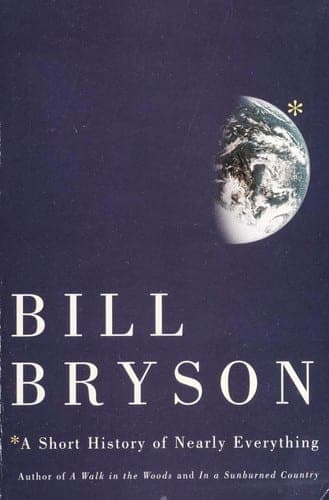 A Short History of Nearly EverythingBill Bryson · 592 pagesThe science underneath | they want the universe, not just humans | |
| 8 | 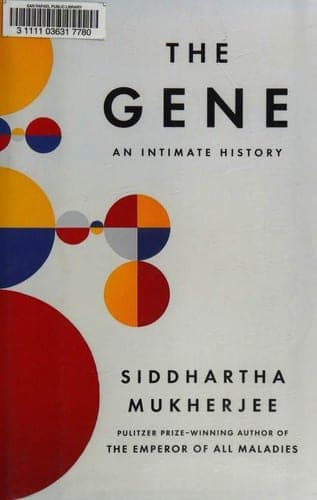 The GeneSiddhartha Mukherjee · 605 pagesMatches the biology | they loved the chapters on evolution |
#ad — buying through these links earns us a commission at no cost to you. Prices, where shown, come straight from Amazon’s product feed; the listing is always the final word.
Eight, by which element they match
1. The classic pairing
Guns, Germs, and Steel
Jared Diamond
Give this ifthey want the book that defined this genre
A geographer's argument that the fates of human societies were shaped by geography, crops and animals rather than by any difference between peoples. It won the Pulitzer Prize and is still widely debated.
- Print length
- 528 pages
- First published
- 1997
- Formats
- print, Kindle and audio where the publisher offers them
#ad — how we’re funded · price as of October 26, 2026
2. The counterargument
The Dawn of Everything
David Graeber
Give this ifthey want a book that argues with Sapiens
An anthropologist and an archaeologist argue that early human societies were far more varied and experimental than the standard story of progress allows. Long, combative and full of surprises.
- Print length
- 704 pages
- First published
- 2021
- Formats
- print, Kindle and audio where the publisher offers them
#ad — how we’re funded · price as of October 26, 2026
3. The sweep, recentered
The Silk Roads
Peter Frankopan
Give this ifthey want world history from a different center
A history of the world told from the lands between Europe and China, where trade routes carried goods, religions and ideas for two thousand years.
- First published
- 2015
- Formats
- print, Kindle and audio where the publisher offers them
#ad — how we’re funded · price as of October 26, 2026
4. Matches the rethinking
1491
Charles C. Mann
Give this ifthey loved having assumptions overturned
A journalist's account of how much more populous and sophisticated the Americas were before Columbus than most histories assumed.
- Print length
- 632 pages
- First published
- 2005
- Formats
- print, Kindle and audio where the publisher offers them
#ad — how we’re funded · price as of October 26, 2026
5. Matches the big question
Why Nations Fail
Daron Acemoglu
Give this ifthey want an answer to why some countries are rich
Two economists argue that nations prosper or fail because of their political and economic institutions, not their geography or culture. Both authors shared the 2024 Nobel Prize in economics.
- Print length
- 529 pages
- First published
- 2012
- Formats
- print, Kindle and audio where the publisher offers them
#ad — how we’re funded · price as of October 26, 2026
6. Same author
Nexus
Yuval Noah Harari
Give this ifthey want Harari's latest
A history of information networks from writing to machine learning, and what happens when the network stops needing us. The same sweep, pointed at the future.
- Print length
- 544 pages
- First published
- 2024
- Formats
- print, Kindle and audio where the publisher offers them
#ad — how we’re funded · price as of October 26, 2026
7. The science underneath
A Short History of Nearly Everything
Bill Bryson
Give this ifthey want the universe, not just humans
A travel writer sets out to understand how science explains everything from the Big Bang to the rise of humans, and explains it with humor.
- Print length
- 592 pages
- First published
- 2003
- Formats
- print, Kindle and audio where the publisher offers them
#ad — how we’re funded · price as of October 26, 2026
8. Matches the biology
The Gene
Siddhartha Mukherjee
Give this ifthey loved the chapters on evolution
A physician's history of the gene, from Mendel's peas to gene editing, woven with his own family's history of mental illness.
- Print length
- 605 pages
- First published
- 2016
- Formats
- print, Kindle and audio where the publisher offers them
#ad — how we’re funded · price as of October 26, 2026
The sweep or the argument
Sapiens tells the whole human story in one volume and makes a series of provocative arguments along the way, about farming, money, religion and happiness. Readers usually loved one of those two things more.
- The sweep: The Silk Roads or A Short History of Nearly Everything.
- The argument: Guns, Germs, and Steel or Why Nations Fail.
- The pushback: The Dawn of Everything or 1491.
Where this fits
History books sorts the shelf by era, books for science lovers and books for dad are where this list most often becomes a gift, and books on AI suits a reader who went on to Nexus. Big-history books are long, and many readers find them easier in audio; the subscription panel on this page explains who that suits.
Two ways to read this list for less
If several books here appeal, a subscription usually beats buying them one at a time — but only for the right kind of reader. Here is who each one actually suits.
Audible Premium Plus
For anyone whose hands are busy
Driving, walking, cooking, cleaning. It converts hours that were never available for reading, which is a bigger effect than any discount. Books bought with a credit stay yours after you cancel — titles from the included catalog do not, and confusing the two is the most common complaint about the service.
See Audible plans and current pricingHow Audible actually works — credits, gifting and what happens when you cancel.
Kindle Unlimited
For fast readers who browse
It pays off from about three ebooks a month, in the genres the catalog covers well — romance, romantasy, cozy mystery, thriller, progression fantasy. It does not pay off if you are waiting on a specific new hardcover, because those are usually not included. Everything is borrowed, not owned.
See Kindle Unlimited terms and pricingIs Kindle Unlimited worth it? — the arithmetic, done on your own reading.
#ad — how we are funded. We print no subscription prices anywhere on this site, because they change and a stale figure sends you to a checkout expecting something that is not there. And if you read in silence in a chair, neither of these is for you — buy the book, or borrow it from your library.
What we would skip
Treating Sapiens as the last word
Sapiens is a brilliant synthesis, and historians and scientists have criticized parts of it for presenting speculation as settled fact. That is not a reason to avoid it, but it is a reason to give a reader something that pushes back. The Dawn of Everything is the obvious choice.
Questions people ask
What should I read after Sapiens?
Guns, Germs, and Steel for the classic it is paired with, or The Dawn of Everything for a book that argues with it.
What did Yuval Noah Harari write after Sapiens?
Homo Deus and 21 Lessons for the 21st Century, and more recently Nexus, a history of information networks.
Is Guns, Germs, and Steel like Sapiens?
Yes. Both tell the long story of human societies, and Guns, Germs, and Steel came first.
What is a readable big-history book for a beginner?
A Short History of Nearly Everything, which covers the science of the universe with humor.
Sources
- Open Library Search API — First publication year, median print length and cover art for every book on this page. Queried 8 September 2026.
- Audible Premium Plus membership page — The only authoritative source for current Audible plans, prices and terms.
Read next
- What to Read Next
Read-alike lists that name the element they match, plus the how-to-choose framework.
- Best History Books
Nine narrative histories sorted by scale, chosen for the thing history books fail at: being finished.
- Best Books for Science Lovers
Eight books for a science lover, from a funny history of everything to genetics, physics and one novel.
- Books Like Atomic Habits
Eight books that extend or contest the argument, plus the genre's replication problem.
- Books Like Educated
Eight memoirs for an Educated reader: hard childhoods, family reckonings and the way out.
- Sapiens vs Guns, Germs, and Steel
A sweeping tour against a single geographic thesis — and the criticisms of both.