Nonfiction
Best Philosophy Books for Beginners
Start with the questions, not the canon. The famous originals come second.
Updated September 2026 · By Sawyer V.

The short version
Start with a book about the questions rather than an original text. What Does It All Mean? or A Little History of Philosophy for a first read, then one genuinely approachable original — Meditations, or The Republic for a patient reader — and then a book on whichever thinkers caught their interest.
Some links on this page are affiliate links. If you buy through one we earn a commission at no extra cost to you, and it does not change which books are here or the order they appear in. Read the full disclosure.
How we picked
We chose introductions written for readers with no background, plus two originals that reward a beginner, and put them in a sensible order. We left out the famous texts that defeat most first-time readers, and say which. We have not read all eight.
What we do on every list: read the publisher’s own description rather than a summary of it, check print length and first publication year against library catalog data (last refreshed October 25, 2026), confirm the book is still sold in the format we suggest, and write the match line before the blurb. What we do not do is claim to have read every book here cover to cover. The full method is published, and it is written so anyone can check it.
The short answer
Who each book is for, at a glance. Select a row for the full write-up.
| # | Book | Give this if | Where to buy |
|---|---|---|---|
| 1 | 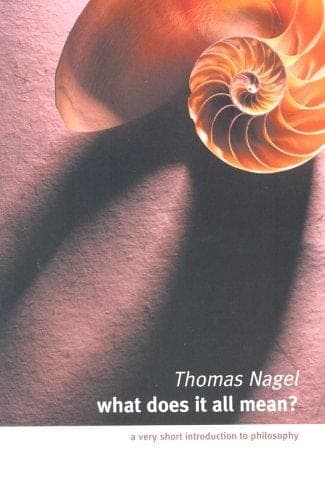 What Does It All Mean?Thomas Nagel · 101 pagesThe shortest start | they want to try philosophy in an evening | |
| 2 | 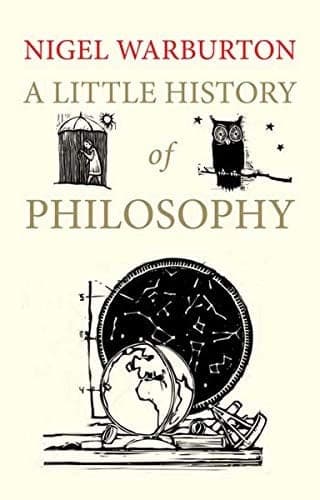 A Little History of PhilosophyNigel Warburton · 272 pagesThe history | they want the story from Socrates onward | |
| 3 | 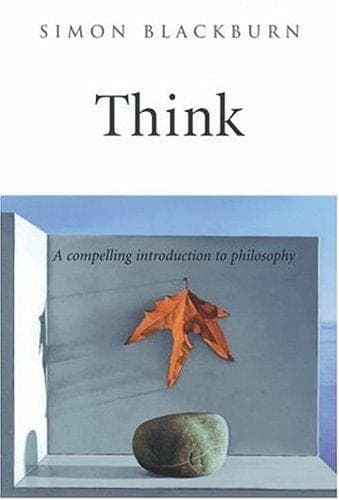 ThinkSimon Blackburn · 315 pagesThe fuller introduction | they want to go further than a first taste | |
| 4 | 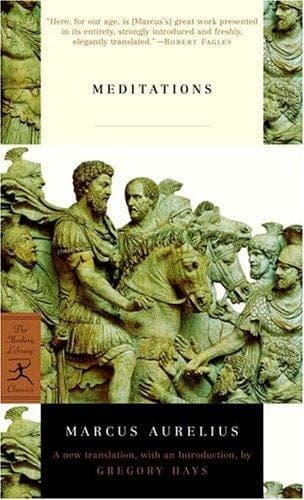 MeditationsMarcus Aurelius · 203 pagesThe first original | they want to read an actual philosopher | |
| 5 |  The RepublicPlatoThe foundational text | they want the book the rest of philosophy argues with | |
| 6 |  The Consolations of PhilosophyAlain de Botton · 264 pagesPhilosophy for real life | they want philosophy that helps with ordinary problems | |
| 7 |  At the Existentialist CaféSarah Bakewell · 448 pagesThe existentialists | they are drawn to Sartre, Camus or Beauvoir | |
| 8 |  Man's Search for MeaningViktor E. Frankl · 192 pagesPhilosophy tested | they want ideas that were lived, not just argued |
#ad — buying through these links earns us a commission at no cost to you. Prices, where shown, come straight from Amazon’s product feed; the listing is always the final word.
Eight, in a sensible order
1. The shortest start
What Does It All Mean?
Thomas Nagel
Give this ifthey want to try philosophy in an evening
A very short introduction to the central problems of philosophy — knowledge, other minds, free will, right and wrong, death, meaning — written without names or jargon. It teaches how to think about the questions rather than who said what.
- Print length
- 101 pages
- First published
- 1987
- Formats
- print, Kindle and audio where the publisher offers them
#ad — how we’re funded · price as of October 25, 2026
2. The history
A Little History of Philosophy
Nigel Warburton
Give this ifthey want the story from Socrates onward
Western philosophy told in forty short chapters, each built around one thinker and one idea. Written for readers starting from nothing, and easy to read a chapter at a time.
- Print length
- 272 pages
- First published
- 2011
- Formats
- print, Kindle and audio where the publisher offers them
#ad — how we’re funded · price as of October 25, 2026
3. The fuller introduction
Think
Simon Blackburn
Give this ifthey want to go further than a first taste
An introduction to the big questions — knowledge, mind, free will, God, reasoning — that shows how philosophers actually argue. More demanding than the two above, and the natural next step.
- Print length
- 315 pages
- First published
- 1999
- Formats
- print, Kindle and audio where the publisher offers them
#ad — how we’re funded · price as of October 25, 2026
4. The first original
Meditations
Marcus Aurelius
Give this ifthey want to read an actual philosopher
The private notebooks of a Roman emperor on duty, mortality and keeping his temper, never meant for publication. Short entries and plain advice make it one of the most approachable ancient texts there is.
One caveat: Choose a modern translation. Older ones are much harder going.
- Print length
- 203 pages
- Formats
- print, Kindle and audio where the publisher offers them
#ad — how we’re funded · price as of October 25, 2026
5. The foundational text
The Republic
Plato
Give this ifthey want the book the rest of philosophy argues with
Plato's dialogue on justice and the ideal city, including the allegory of the cave. It is long, but it is a conversation rather than a treatise, and a good translation with notes makes it manageable for a patient beginner.
One caveat: Long. Read the opening books and the cave before deciding.
- Formats
- print, Kindle and audio where the publisher offers them
#ad — how we’re funded · price as of October 25, 2026
6. Philosophy for real life
The Consolations of Philosophy
Alain de Botton
Give this ifthey want philosophy that helps with ordinary problems
Six philosophers applied to six ordinary troubles, from unpopularity and money worries to a broken heart. Light, witty and a good way to see why philosophy is useful rather than merely difficult.
- Print length
- 264 pages
- First published
- 2000
- Formats
- print, Kindle and audio where the publisher offers them
#ad — how we’re funded · price as of October 25, 2026
7. The existentialists
At the Existentialist Café
Sarah Bakewell
Give this ifthey are drawn to Sartre, Camus or Beauvoir
The existentialists told as a group biography — their friendships, feuds and ideas — from Paris cafés to the postwar world. It makes a famously difficult movement vivid and human.
- Print length
- 448 pages
- Formats
- print, Kindle and audio where the publisher offers them
#ad — how we’re funded · price as of October 25, 2026
8. Philosophy tested
Man's Search for Meaning
Viktor E. Frankl
Give this ifthey want ideas that were lived, not just argued
A psychiatrist's account of surviving the Nazi camps, and the view of meaning he built from it. Not philosophy in the academic sense, but it answers the question beginners most often bring to philosophy.
One caveat: The first half is an account of Auschwitz.
- Print length
- 192 pages
- First published
- 2017
- Formats
- print, Kindle and audio where the publisher offers them
#ad — how we’re funded · price as of October 25, 2026
Start with the questions, not the canon
The instinct is to start with the famous originals, and it usually backfires. Most classic philosophy was written for readers who already knew the arguments it was answering, and without that background even great books read as puzzles.
So a good first philosophy book introduces the questions — what can we know, what should we do, what is a mind — and shows how people have argued about them. Once the questions are clear, the originals become conversations rather than walls.
A sensible order
- One very short introduction. What Does It All Mean? or A Little History of Philosophy.
- One fuller introduction. Think, which shows philosophers at work.
- One approachable original. Meditations first; The Republic if they are patient.
- Then follow their interest. The existentialists, ethics, the Stoics — whatever made them curious.
A note on Stoicism
Stoicism has had a large revival, much of it through books that repackage it as self-help. Meditations is the original and the better gift: short, humane and free of the productivity framing. If they already read the self-help versions, it is the natural next step, and our self-help list covers the rest of that shelf.
Adjacent lists
Buddhism for beginners covers a tradition that overlaps with philosophy in many places, history books suits a reader who likes ideas in context, and books for college students is the gift shelf where philosophy is most often requested. Philosophy works surprisingly well in audio, and the subscription panel on this page explains who that suits.
Two ways to read this list for less
If several books here appeal, a subscription usually beats buying them one at a time — but only for the right kind of reader. Here is who each one actually suits.
Audible Premium Plus
For anyone whose hands are busy
Driving, walking, cooking, cleaning. It converts hours that were never available for reading, which is a bigger effect than any discount. Books bought with a credit stay yours after you cancel — titles from the included catalog do not, and confusing the two is the most common complaint about the service.
See Audible plans and current pricingHow Audible actually works — credits, gifting and what happens when you cancel.
Kindle Unlimited
For fast readers who browse
It pays off from about three ebooks a month, in the genres the catalog covers well — romance, romantasy, cozy mystery, thriller, progression fantasy. It does not pay off if you are waiting on a specific new hardcover, because those are usually not included. Everything is borrowed, not owned.
See Kindle Unlimited terms and pricingIs Kindle Unlimited worth it? — the arithmetic, done on your own reading.
#ad — how we are funded. We print no subscription prices anywhere on this site, because they change and a stale figure sends you to a checkout expecting something that is not there. And if you read in silence in a chair, neither of these is for you — buy the book, or borrow it from your library.
What we would skip
Starting with Kant, Hegel or Heidegger
The Critique of Pure Reason, the Phenomenology of Spirit and Being and Time are among the most important books in philosophy and among the worst places to begin. They assume years of background, and a beginner who starts there usually concludes that philosophy is not for them. Come to them after the introductions, with a guide.
Questions people ask
What is the best philosophy book for beginners?
What Does It All Mean? for the shortest start, or A Little History of Philosophy for a guided tour from Socrates onward.
Should a beginner read Plato first?
Not first. Read a short introduction, then Meditations or The Republic once the questions are familiar.
Is Meditations good for beginners?
Yes, in a modern translation. It is short, plain and one of the most approachable original texts in philosophy.
Which philosophy books should beginners avoid?
Kant's Critique of Pure Reason, Hegel's Phenomenology of Spirit and Heidegger's Being and Time. Important, but written for readers with years of background.
Sources
- Open Library Search API — First publication year, median print length and cover art for every book on this page. Queried 8 September 2026.
- Audible Premium Plus membership page — The only authoritative source for current Audible plans, prices and terms.
Read next
- Best Nonfiction Books
Ten nonfiction books split by mode — narrative, argument or explainer.
- Best Books on Buddhism for Beginners
Eight books on Buddhism for beginners, each labeled with the tradition it opens.
- Best Self-Help Books
Nine self-help books that hold up, including two that argue against the rest of the shelf.
- Best Books for College Students
Seven books for someone already buried in assigned reading, with nothing improving on the list.
- Best History Books
Nine narrative histories sorted by scale, chosen for the thing history books fail at: being finished.