Nonfiction
Best Books on Buddhism for Beginners
Different traditions, different doors. Each book here says which one it opens.
Updated September 2026 · By Sawyer V.

The short version
Start with a clear account of the core teachings — What the Buddha Taught or The Heart of the Buddha's Teaching — then follow the tradition that draws them: Zen Mind, Beginner's Mind for Zen, When Things Fall Apart for the Tibetan tradition, Buddhism Without Beliefs for a secular approach.
Some links on this page are affiliate links. If you buy through one we earn a commission at no extra cost to you, and it does not change which books are here or the order they appear in. Read the full disclosure.
How we picked
We chose books written for newcomers, labeled the tradition each comes from, and included secular and scientific approaches alongside traditional ones. We are not teachers in any tradition, and we have not read all eight.
What we do on every list: read the publisher’s own description rather than a summary of it, check print length and first publication year against library catalog data (last refreshed October 25, 2026), confirm the book is still sold in the format we suggest, and write the match line before the blurb. What we do not do is claim to have read every book here cover to cover. The full method is published, and it is written so anyone can check it.
The short answer
Who each book is for, at a glance. Select a row for the full write-up.
| # | Book | Give this if | Where to buy |
|---|---|---|---|
| 1 | 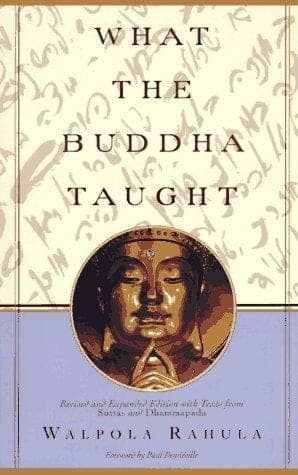 What the Buddha TaughtWalpola Rahula · 151 pagesThe core teachings | they want the essentials, clearly stated | |
| 2 | 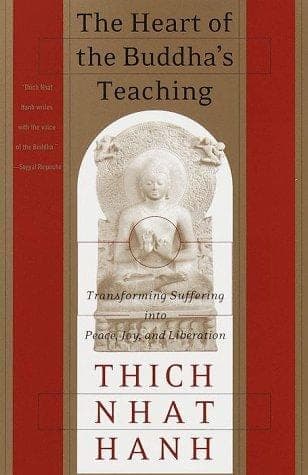 The Heart of the Buddha's TeachingThich Nhat Hanh · 279 pagesThe gentle introduction | they want the teachings explained warmly | |
| 3 | 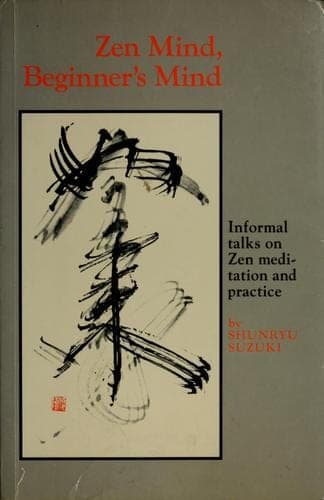 Zen Mind, Beginner's MindShunryu Suzuki · 146 pagesZen | they are drawn to meditation practice itself | |
| 4 | 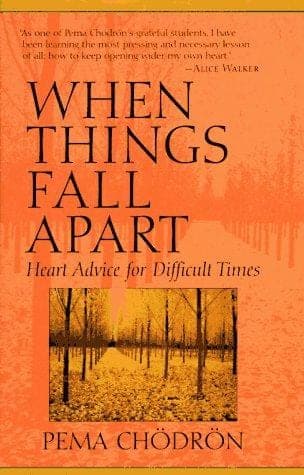 When Things Fall ApartPema Chödrön · 187 pagesFor hard times | they are going through something difficult | |
| 5 | 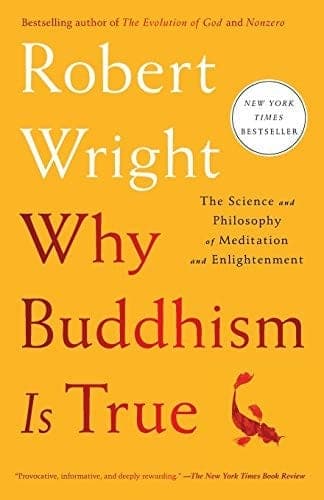 Why Buddhism Is TrueRobert Wright · 336 pagesThe scientific case | they are skeptical and like evidence | |
| 6 | 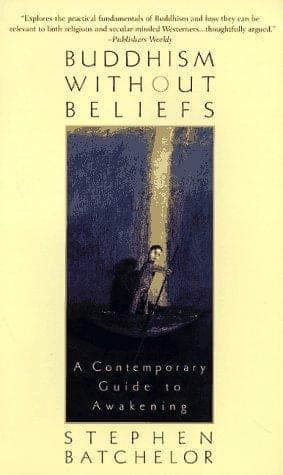 Buddhism Without BeliefsStephen Batchelor · 136 pagesThe secular approach | they want the practice without the religion | |
| 7 | 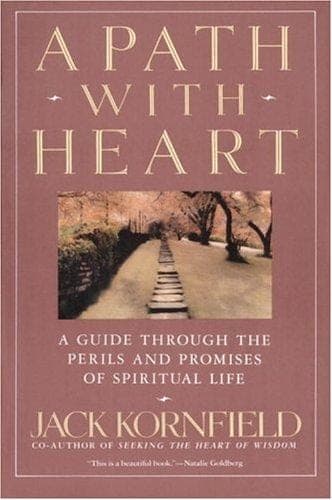 A Path with HeartJack Kornfield · 363 pagesBringing it into daily life | they meditate and want guidance beyond the cushion | |
| 8 | 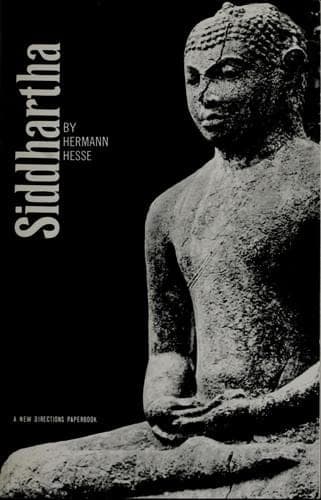 SiddharthaHermann Hesse · 140 pagesThe novel | they would rather meet the ideas in a story |
#ad — buying through these links earns us a commission at no cost to you. Prices, where shown, come straight from Amazon’s product feed; the listing is always the final word.
Eight, with the tradition each opens
1. The core teachings
What the Buddha Taught
Walpola Rahula
Give this ifthey want the essentials, clearly stated
A Sri Lankan monk's concise account of the Four Noble Truths, the Eightfold Path and related teachings, with passages translated from early texts. First published in 1959 and still one of the clearest short introductions. Theravada tradition.
- Print length
- 151 pages
- First published
- 1959
- Formats
- print, Kindle and audio where the publisher offers them
#ad — how we’re funded · price as of October 25, 2026
2. The gentle introduction
The Heart of the Buddha's Teaching
Thich Nhat Hanh
Give this ifthey want the teachings explained warmly
The Four Noble Truths, the Noble Eightfold Path and related teachings, explained by a Vietnamese Zen teacher in plain, kind language. Less austere than Rahula, with more on applying the teachings to daily life.
- Print length
- 279 pages
- First published
- 1998
- Formats
- print, Kindle and audio where the publisher offers them
#ad — how we’re funded · price as of October 25, 2026
3. Zen
Zen Mind, Beginner's Mind
Shunryu Suzuki
Give this ifthey are drawn to meditation practice itself
Informal talks on Zen practice from the founder of the San Francisco Zen Center. Short, simple on the surface and deep underneath — a book that rewards rereading.
- Print length
- 146 pages
- First published
- 1970
- Formats
- print, Kindle and audio where the publisher offers them
#ad — how we’re funded · price as of October 25, 2026
4. For hard times
When Things Fall Apart
Pema Chödrön
Give this ifthey are going through something difficult
Talks by an American nun in the Tibetan tradition on staying present with fear, loss and difficulty. Many readers turn to it in a crisis, and it is gentle enough to give to someone who is struggling.
- Print length
- 187 pages
- First published
- 1997
- Formats
- print, Kindle and audio where the publisher offers them
#ad — how we’re funded · price as of October 25, 2026
5. The scientific case
Why Buddhism Is True
Robert Wright
Give this ifthey are skeptical and like evidence
A science writer argues that evolutionary psychology supports Buddhism's account of how the mind works, and describes his own meditation practice along the way. Aimed squarely at the skeptical Western reader.
- Print length
- 336 pages
- First published
- 2017
- Formats
- print, Kindle and audio where the publisher offers them
#ad — how we’re funded · price as of October 25, 2026
6. The secular approach
Buddhism Without Beliefs
Stephen Batchelor
Give this ifthey want the practice without the religion
A former monk's case for Buddhism as something you do rather than something you believe. Short, clear and useful for readers who are wary of anything that asks for faith.
- Print length
- 136 pages
- First published
- 1997
- Formats
- print, Kindle and audio where the publisher offers them
#ad — how we’re funded · price as of October 25, 2026
7. Bringing it into daily life
A Path with Heart
Jack Kornfield
Give this ifthey meditate and want guidance beyond the cushion
A meditation teacher who trained as a monk in Southeast Asia on bringing practice into ordinary life, relationships and work. Practical, humane and candid about how practice actually goes wrong.
- Print length
- 363 pages
- First published
- 1993
- Formats
- print, Kindle and audio where the publisher offers them
#ad — how we’re funded · price as of October 25, 2026
8. The novel
Siddhartha
Hermann Hesse
Give this ifthey would rather meet the ideas in a story
A young man in the Buddha's time leaves home in search of enlightenment and finds it by his own route. A short novel rather than a teaching — its hero is not the Buddha — but a lovely way into the spirit of the tradition.
One caveat: Fiction, and a Western writer's view. Read it alongside, not instead.
- Print length
- 140 pages
- First published
- 1922
- Formats
- print, Kindle and audio where the publisher offers them
#ad — how we’re funded · price as of October 25, 2026
Which tradition?
Buddhism is not one thing. The major traditions share the core teachings but differ in emphasis, practice and texts, and a beginner's book usually comes from one of them. Knowing which helps you choose.
- Theravada, strongest in Sri Lanka and Southeast Asia, stays closest to the early texts. What the Buddha Taught is the classic introduction.
- Zen, which developed in China and Japan, centers on sitting meditation and direct experience. Zen Mind, Beginner's Mind is the standard first book.
- Tibetan Buddhism is the tradition behind When Things Fall Apart.
- Secular approaches treat Buddhism as a practice without religious belief. Buddhism Without Beliefs is the clearest statement.
Reading versus practice
Nearly every teacher on this list would say the same thing: reading about Buddhism is not the same as practicing it. The books are a way in, and most of them point toward meditation rather than away from it.
If the person you are buying for is more interested in meditation than doctrine, Zen Mind, Beginner's Mind and A Path with Heart are the most practical choices. Books that began as spoken talks translate naturally to audio, and the subscription panel on this page explains who that suits.
Giving a book about a religion
A book about Buddhism is a good gift for someone who has already shown an interest, and a presumptuous one otherwise. If they are curious about meditation or mindfulness rather than Buddhism itself, a secular book is the more respectful choice.
For someone going through a hard time, When Things Fall Apart is gentle enough to give, though books for someone who is grieving covers that situation more broadly. Philosophy for beginners and the self-help list are the adjacent shelves.
Two ways to read this list for less
If several books here appeal, a subscription usually beats buying them one at a time — but only for the right kind of reader. Here is who each one actually suits.
Audible Premium Plus
For anyone whose hands are busy
Driving, walking, cooking, cleaning. It converts hours that were never available for reading, which is a bigger effect than any discount. Books bought with a credit stay yours after you cancel — titles from the included catalog do not, and confusing the two is the most common complaint about the service.
See Audible plans and current pricingHow Audible actually works — credits, gifting and what happens when you cancel.
Kindle Unlimited
For fast readers who browse
It pays off from about three ebooks a month, in the genres the catalog covers well — romance, romantasy, cozy mystery, thriller, progression fantasy. It does not pay off if you are waiting on a specific new hardcover, because those are usually not included. Everything is borrowed, not owned.
See Kindle Unlimited terms and pricingIs Kindle Unlimited worth it? — the arithmetic, done on your own reading.
#ad — how we are funded. We print no subscription prices anywhere on this site, because they change and a stale figure sends you to a checkout expecting something that is not there. And if you read in silence in a chair, neither of these is for you — buy the book, or borrow it from your library.
What we would skip
Zen and the Art of Motorcycle Maintenance, as a book about Buddhism
It is a fine and famous book, and it is not about Zen Buddhism in any meaningful sense — the author says as much in his opening note. As a first book on Buddhism it will confuse more than it teaches. Give it to someone who likes philosophy and motorcycles instead.
Questions people ask
What is the best book on Buddhism for beginners?
What the Buddha Taught for a clear, compact account of the core teachings, or The Heart of the Buddha's Teaching for a warmer one.
What is a good book on Zen for beginners?
Zen Mind, Beginner's Mind, a collection of informal talks from the founder of the San Francisco Zen Center.
Is there a secular book on Buddhism?
Buddhism Without Beliefs presents it as a practice rather than a religion, and Why Buddhism Is True makes a scientific case for its account of the mind.
Is Siddhartha about the Buddha?
No. It is a novel about a different young man of the Buddha's time who seeks enlightenment in his own way — a good companion to the teachings, not a substitute.
Sources
- Open Library Search API — First publication year, median print length and cover art for every book on this page. Queried 8 September 2026.
- Audible Premium Plus membership page — The only authoritative source for current Audible plans, prices and terms.
Read next
- Best Nonfiction Books
Ten nonfiction books split by mode — narrative, argument or explainer.
- Best Philosophy Books for Beginners
Eight philosophy books for beginners, in a sensible order, with the famous ones to leave for later.
- Best Self-Help Books
Nine self-help books that hold up, including two that argue against the rest of the shelf.
- Best Books for Someone Who Is Grieving
Six books that describe grief rather than prescribing a way through it.
- Books Like Atomic Habits
Eight books that extend or contest the argument, plus the genre's replication problem.