Serious and true
Best Science Books
Sorted by field, because the reader who wants octopuses does not want particle physics.
Updated September 2026 · By Sawyer V.

The short version
A Short History of Nearly Everything is the general starting point. After that, sort by field: An Immense World and The Soul of an Octopus for animals, The Gene and The Emperor of All Maladies for biology and medicine, Astrophysics for People in a Hurry and Cosmos for space, and Entangled Life for the strangest book on the shelf.
Some links on this page are affiliate links. If you buy through one we earn a commission at no extra cost to you, and it does not change which books are here or the order they appear in. Read the full disclosure.
How we picked
We chose books written for readers rather than colleagues, by writers who either do the science or report it closely, and we favored the ones that stay readable at the point where the subject gets hard. Where a book is dated in its detail, we say so. We have not read all nine.
What we do on every list: read the publisher’s own description rather than a summary of it, check print length and first publication year against library catalog data (last refreshed September 24, 2026), confirm the book is still sold in the format we suggest, and write the match line before the blurb. What we do not do is claim to have read every book here cover to cover. The full method is published, and it is written so anyone can check it.
The short answer
Who each book is for, at a glance. Select a row for the full write-up.
| # | Book | Give this if | Where to buy |
|---|---|---|---|
| 1 | 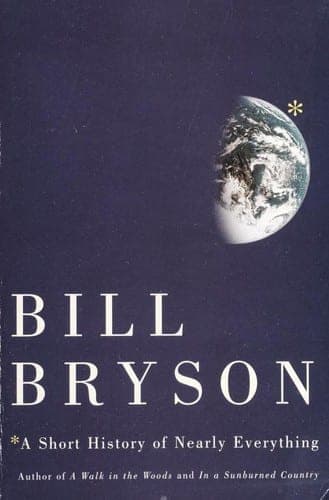 A Short History of Nearly EverythingBill Bryson · 592 pagesThe general start | they have not read science since school | |
| 2 |  An Immense WorldEd YongAnimals and senses | they will tell everyone about it afterward | |
| 3 | 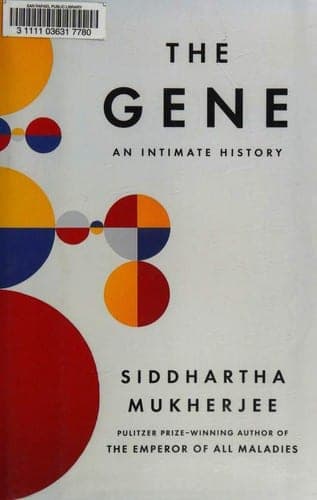 The GeneSiddhartha Mukherjee · 605 pagesBiology | they want the big one | |
| 4 | 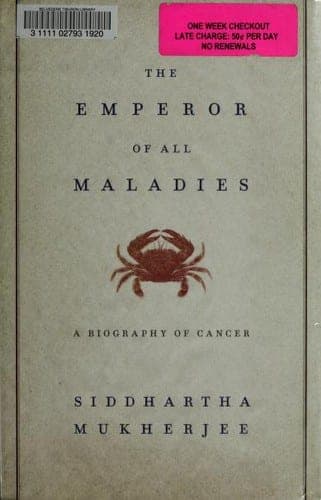 The Emperor of All MaladiesSiddhartha Mukherjee · 582 pagesMedicine | cancer has touched them and they want to understand it | |
| 5 | 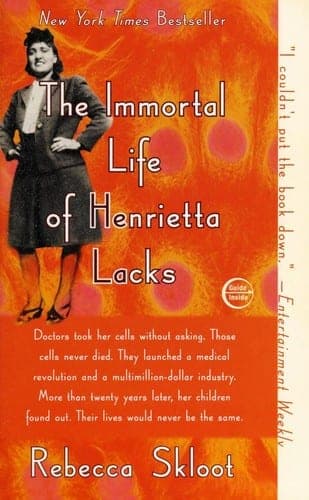 The Immortal Life of Henrietta LacksRebecca Skloot · 381 pagesThe ethics | they want science with people in it | |
| 6 | 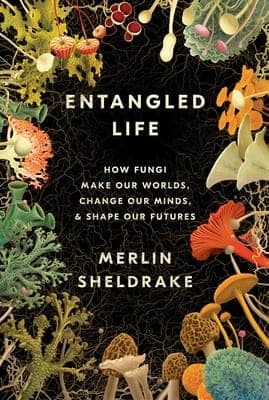 Entangled LifeMerlin Sheldrake · 368 pagesThe strange one | they think they are not interested in fungi | |
| 7 | 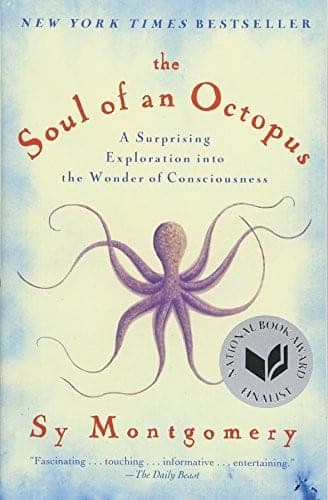 The Soul of an OctopusSy Montgomery · 272 pagesAnimal minds | they loved the octopus documentaries | |
| 8 | 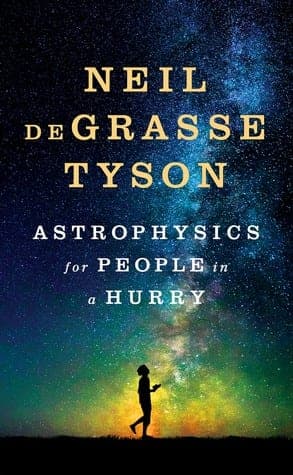 Astrophysics for People in a HurryNeil deGrasse Tyson · 209 pagesSpace, briefly | they want it in an evening | |
| 9 | 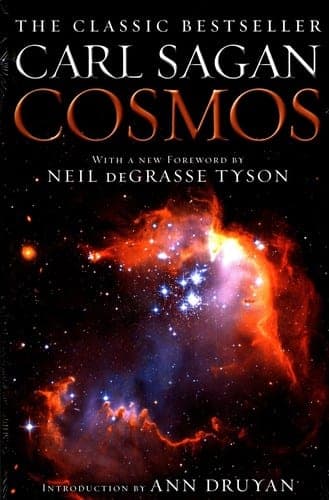 CosmosCarl Sagan · 354 pagesThe classic | they want awe rather than information |
#ad — buying through these links earns us a commission at no cost to you. Prices, where shown, come straight from Amazon’s product feed; the listing is always the final word.
Nine, by field
1. The general start
A Short History of Nearly Everything
Bill Bryson
Give this ifthey have not read science since school
A travel writer sets out to understand how science knows what it claims, from the Big Bang to the rise of humans, and reports back with the questions a normal person would ask. Funny about scientists as people.
One caveat: Twenty years old; the frontier chapters have moved on.
- Print length
- 592 pages
- First published
- 2003
- Formats
- print, Kindle and audio where the publisher offers them
#ad — how we’re funded · price as of September 24, 2026
2. Animals and senses
An Immense World
Ed Yong
Give this ifthey will tell everyone about it afterward
Ed Yong on how other animals perceive the world — bats hearing shape, birds sensing magnetism, mantis shrimp seeing colors we cannot name. The best recent popular science book on this list.
- First published
- 2022
- Formats
- print, Kindle and audio where the publisher offers them
#ad — how we’re funded · price as of September 24, 2026
3. Biology
The Gene
Siddhartha Mukherjee
Give this ifthey want the big one
A physician's history of the gene from Mendel's peas to editing, threaded through his own family's history of mental illness. Long, humane and clear about what is known and what is claimed.
One caveat: Long, and dense in the middle.
- Print length
- 605 pages
- First published
- 2016
- Formats
- print, Kindle and audio where the publisher offers them
#ad — how we’re funded · price as of September 24, 2026
4. Medicine
The Emperor of All Maladies
Siddhartha Mukherjee
Give this ifcancer has touched them and they want to understand it
A biography of cancer, from ancient descriptions to modern treatment, by an oncologist treating it as he writes. It won the Pulitzer Prize and is the rare medical history that reads like narrative.
One caveat: Detailed about illness and death.
- Print length
- 582 pages
- First published
- 2010
- Formats
- print, Kindle and audio where the publisher offers them
#ad — how we’re funded · price as of September 24, 2026
5. The ethics
The Immortal Life of Henrietta Lacks
Rebecca Skloot
Give this ifthey want science with people in it
The story of the woman whose cells were taken without consent in 1951 and became the most used cell line in research, and of the family who learned about it decades later. A science book that is really about power.
- Print length
- 381 pages
- First published
- 2009
- Formats
- print, Kindle and audio where the publisher offers them
#ad — how we’re funded · price as of September 24, 2026
6. The strange one
Entangled Life
Merlin Sheldrake
Give this ifthey think they are not interested in fungi
A biologist on fungi: the networks under forests, the organisms that digest the dead, the ones that alter minds. It changes what a walk in the woods looks like, which is the highest compliment for this shelf.
- Print length
- 368 pages
- First published
- 2020
- Formats
- print, Kindle and audio where the publisher offers them
#ad — how we’re funded · price as of September 24, 2026
7. Animal minds
The Soul of an Octopus
Sy Montgomery
Give this ifthey loved the octopus documentaries
A naturalist befriends octopuses at an aquarium and asks what their intelligence is like from the inside. Warm, and honest about how much is unanswerable.
- Print length
- 272 pages
- First published
- 2015
- Formats
- print, Kindle and audio where the publisher offers them
#ad — how we’re funded · price as of September 24, 2026
8. Space, briefly
Astrophysics for People in a Hurry
Neil deGrasse Tyson
Give this ifthey want it in an evening
Short chapters covering the universe at a pace that fits a commute, from dark matter to why we are made of star stuff. The least demanding book here by a wide margin.
- Print length
- 209 pages
- First published
- 2017
- Formats
- print, Kindle and audio where the publisher offers them
#ad — how we’re funded · price as of September 24, 2026
9. The classic
Cosmos
Carl Sagan
Give this ifthey want awe rather than information
Sagan's tour of the universe and of how science learned to check itself. Some of the detail has aged; the argument for scientific thinking has not aged a day.
One caveat: Published in 1980, and it shows in places.
- Print length
- 354 pages
- First published
- 1980
- Formats
- print, Kindle and audio where the publisher offers them
#ad — how we’re funded · price as of September 24, 2026
Start with the field, not the ranking
Science books fail as gifts when they are chosen by prestige rather than by subject. Somebody who loves animals will not finish a book about cosmology, however good it is. The shelf sorts cleanly into four groups.
- Animals and the natural world: An Immense World, The Soul of an Octopus, Entangled Life.
- Biology and medicine: The Gene, The Emperor of All Maladies, The Immortal Life of Henrietta Lacks.
- Space: Astrophysics for People in a Hurry, Cosmos.
- Everything, for a beginner: A Short History of Nearly Everything.
On books that have aged
Popular science dates unevenly. The reporting on a fast-moving field goes stale within a decade, while the writing about how science thinks can stay good for fifty years. We have flagged the picks where the detail has moved on, and kept them anyway when the thinking is the reason to read them.
Where to go next
Books for science lovers is the gift version of this shelf, books on AI covers the fastest-moving corner of it, and books like Sapiens suits a reader who wants the long human story. Several of these are excellent in audio, and the subscription panel on this page explains who that suits.
Two ways to read this list for less
If several books here appeal, a subscription usually beats buying them one at a time — but only for the right kind of reader. Here is who each one actually suits.
Audible Premium Plus
For anyone whose hands are busy
Driving, walking, cooking, cleaning. It converts hours that were never available for reading, which is a bigger effect than any discount. Books bought with a credit stay yours after you cancel — titles from the included catalog do not, and confusing the two is the most common complaint about the service.
See Audible plans and current pricingHow Audible actually works — credits, gifting and what happens when you cancel.
Kindle Unlimited
For fast readers who browse
It pays off from about three ebooks a month, in the genres the catalog covers well — romance, romantasy, cozy mystery, thriller, progression fantasy. It does not pay off if you are waiting on a specific new hardcover, because those are usually not included. Everything is borrowed, not owned.
See Kindle Unlimited terms and pricingIs Kindle Unlimited worth it? — the arithmetic, done on your own reading.
#ad — how we are funded. We print no subscription prices anywhere on this site, because they change and a stale figure sends you to a checkout expecting something that is not there. And if you read in silence in a chair, neither of these is for you — buy the book, or borrow it from your library.
What we would skip
A textbook bought as a present
Undergraduate textbooks are the classic failed science gift: heavy, expensive, written for people being examined, and unreadable in an armchair. If the person is studying, they already have the assigned edition. Popular science by a working scientist or a serious reporter is the shelf that gets read.
Questions people ask
What is the best science book for a beginner?
A Short History of Nearly Everything. It assumes nothing and is funnier than the subject suggests.
What is the best recent popular science book?
An Immense World, on how other animals perceive the world. It is the one readers quote at other people.
What science book should I read about medicine?
The Emperor of All Maladies for cancer, or The Immortal Life of Henrietta Lacks for the ethics of research.
Are older science books still worth reading?
When they are about how science thinks rather than the latest results. Cosmos is dated in detail and still worth the evening.
Sources
- Open Library Search API — First publication year, median print length and cover art for every book on this page. Queried 8 September 2026.
- Audible Premium Plus membership page — The only authoritative source for current Audible plans, prices and terms.
Read next
- Best Nonfiction Books
Ten nonfiction books split by mode — narrative, argument or explainer.
- Best Books for Science Lovers
Eight books for a science lover, from a funny history of everything to genetics, physics and one novel.
- Best Books on AI
Eight AI books split by purpose, with the publication year on every one.
- Books Like Sapiens
Eight big-history books for a Sapiens reader: the sweep, the argument and the pushback.
- Best Books for Nature Lovers
Eight books for a nature lover: classic nature writing, animal science, conservation and poetry.