Money, mind and meaning
Best Psychology Books
Books about how minds actually work, chosen with the replication crisis in mind rather than around it.
Updated September 2026 · By Sawyer V.
The short version
Thinking, Fast and Slow is the landmark, Influence is the most practical, Quiet is the one readers see themselves in, and The Body Keeps the Score is the one on trauma that clinicians argue about. Read any of them knowing that psychology's famous findings have had a hard decade, which the page below explains.
Some links on this page are affiliate links. If you buy through one we earn a commission at no extra cost to you, and it does not change which books are here or the order they appear in. Read the full disclosure.
How we picked
We favored books whose claims are either well replicated or presented as arguments rather than proofs, and we say where a book's evidence has weakened since publication. Self-help sits on its own page; this shelf is about how minds work rather than how to fix yours. We have not read all eight.
What we do on every list: read the publisher’s own description rather than a summary of it, check print length and first publication year against library catalog data (last refreshed September 24, 2026), confirm the book is still sold in the format we suggest, and write the match line before the blurb. What we do not do is claim to have read every book here cover to cover. The full method is published, and it is written so anyone can check it.
The short answer
Who each book is for, at a glance. Select a row for the full write-up.
| # | Book | Give this if | Where to buy |
|---|---|---|---|
| 1 | 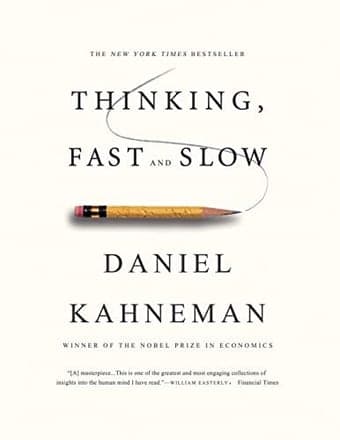 Thinking, Fast and SlowDaniel Kahneman · 528 pagesThe landmark | they want the book the field argues with | |
| 2 | 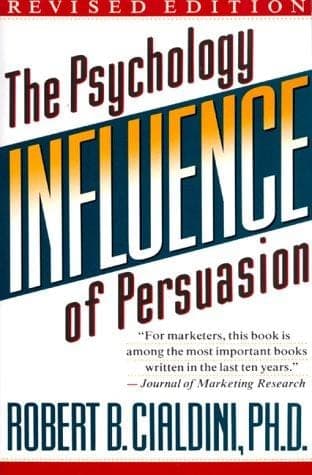 InfluenceRobert B. Cialdini · 287 pagesThe practical one | they sell, negotiate or get sold to | |
| 3 | 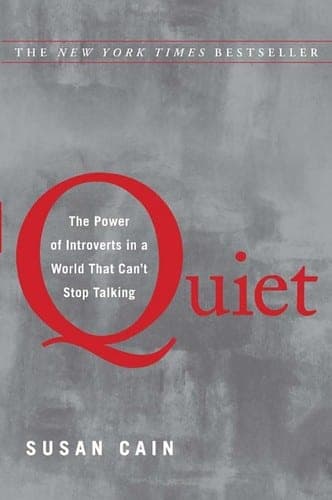 QuietSusan Cain · 368 pagesPersonality | they are the quiet one in meetings | |
| 4 | 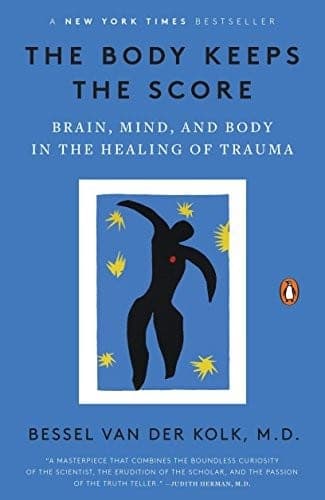 The Body Keeps the ScoreBessel van der Kolk · 520 pagesTrauma | they want to understand how trauma lands in the body | |
| 5 | 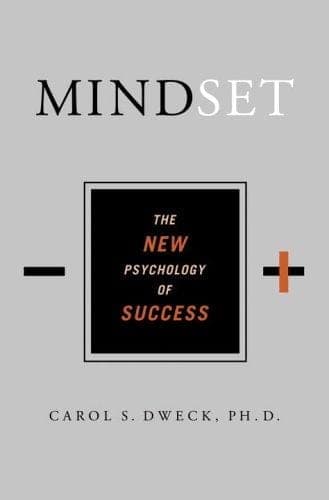 MindsetCarol S. Dweck · 288 pagesThe famous idea | they work with children or teams | |
| 6 | 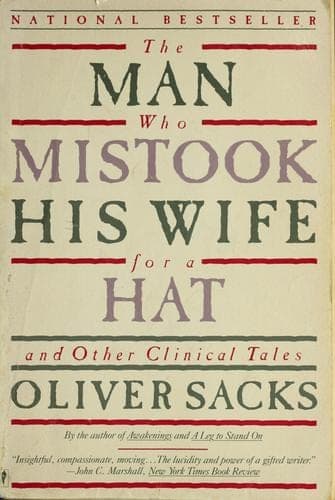 The Man Who Mistook His Wife for a HatOliver Sacks · 308 pagesThe clinical stories | they like people more than studies | |
| 7 | 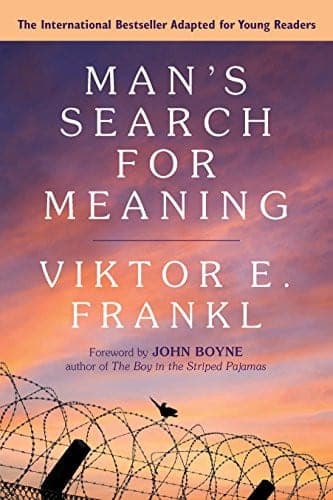 Man's Search for MeaningViktor E. Frankl · 192 pagesThe one that is also philosophy | they are asking what any of it is for | |
| 8 | 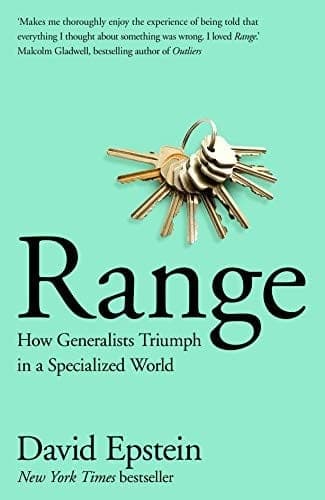 RangeDavid Epstein · 352 pagesThe counterargument | they have been told to specialize early |
#ad — buying through these links earns us a commission at no cost to you. Prices, where shown, come straight from Amazon’s product feed; the listing is always the final word.
Eight, by what they explain
1. The landmark
Thinking, Fast and Slow
Daniel Kahneman
Give this ifthey want the book the field argues with
A Nobel laureate's account of two systems of thinking, one fast and intuitive and one slow and effortful, and the biases that follow. Still the best map of the territory, even where individual studies in it have since been questioned.
One caveat: Long, and parts of the priming research have not replicated.
- Print length
- 528 pages
- First published
- 2011
- Formats
- print, Kindle and audio where the publisher offers them
#ad — how we’re funded · price as of September 24, 2026
2. The practical one
Influence
Robert B. Cialdini
Give this ifthey sell, negotiate or get sold to
The six principles that make people say yes — reciprocity, commitment, social proof, liking, authority, scarcity — with the fieldwork behind each. It reads as a defense manual as much as a sales one.
- Print length
- 287 pages
- Formats
- print, Kindle and audio where the publisher offers them
#ad — how we’re funded · price as of September 24, 2026
3. Personality
Quiet
Susan Cain
Give this ifthey are the quiet one in meetings
The case that Western workplaces and schools are built for extroverts and lose a great deal by it. Readers recognize themselves in it, which is both its appeal and the reason to read the evidence carefully.
- Print length
- 368 pages
- First published
- 2012
- Formats
- print, Kindle and audio where the publisher offers them
#ad — how we’re funded · price as of September 24, 2026
4. Trauma
The Body Keeps the Score
Bessel van der Kolk
Give this ifthey want to understand how trauma lands in the body
A psychiatrist's synthesis of decades of trauma work, and the book most often handed between people trying to understand their own. Clinicians disagree about some of its claims; it is still the common reference point.
One caveat: Detailed accounts of abuse and violence. Contested in places.
- Print length
- 520 pages
- First published
- 2014
- Formats
- print, Kindle and audio where the publisher offers them
#ad — how we’re funded · price as of September 24, 2026
5. The famous idea
Mindset
Carol S. Dweck
Give this ifthey work with children or teams
The distinction between believing ability is fixed and believing it can grow, and what each does to effort. The core finding has held up better than the classroom interventions built on it, which is a useful thing to know before quoting it.
One caveat: The school-based effects are smaller than the popular version suggests.
- Print length
- 288 pages
- First published
- 2006
- Formats
- print, Kindle and audio where the publisher offers them
#ad — how we’re funded · price as of September 24, 2026
6. The clinical stories
The Man Who Mistook His Wife for a Hat
Oliver Sacks
Give this ifthey like people more than studies
A neurologist's case studies of patients whose conditions rearranged how they experienced the world, written with unusual tenderness. It is the book that made neurology narrative.
- Print length
- 308 pages
- Formats
- print, Kindle and audio where the publisher offers them
#ad — how we’re funded · price as of September 24, 2026
7. The one that is also philosophy
Man's Search for Meaning
Viktor E. Frankl
Give this ifthey are asking what any of it is for
A psychiatrist's account of the concentration camps and the school of therapy he built afterward, around the search for meaning as the central human drive. Short, and unlike anything else on this shelf.
One caveat: The camp chapters are exactly as hard as they sound.
- Print length
- 192 pages
- First published
- 2017
- Formats
- print, Kindle and audio where the publisher offers them
#ad — how we’re funded · price as of September 24, 2026
8. The counterargument
Range
David Epstein
Give this ifthey have been told to specialize early
The case that generalists who sample widely often outperform early specialists, built against the ten-thousand-hours story. A good corrective to the tidier books on this list.
- Print length
- 352 pages
- First published
- 2019
- Formats
- print, Kindle and audio where the publisher offers them
#ad — how we’re funded · price as of September 24, 2026
The replication problem, plainly
Through the 2010s, researchers tried to repeat psychology's best-known experiments and often could not. That does not mean the field is worthless; it means the confident one-study result is the weakest kind of claim, and a book built on one is a bet. Our self-help page makes the same point about that shelf, where the problem is worse.
The practical filter is simple. A book that surveys decades of work, or that reports clinical experience honestly, ages far better than one selling a single counterintuitive finding. We have flagged the picks above where the evidence has moved since publication.
By the question you are asking
- How do people decide? Thinking, Fast and Slow.
- How do people get persuaded? Influence.
- Why am I like this? Quiet, Range.
- What does trauma do? The Body Keeps the Score.
- What is it all for? Man's Search for Meaning.
Where to go next
Self-help books covers the advice shelf and its evidence problem, philosophy covers the older version of the same questions, and science books covers the neighboring field. Several of these are good in audio, and the subscription panel on this page explains who that suits.
Two ways to read this list for less
If several books here appeal, a subscription usually beats buying them one at a time — but only for the right kind of reader. Here is who each one actually suits.
Audible Premium Plus
For anyone whose hands are busy
Driving, walking, cooking, cleaning. It converts hours that were never available for reading, which is a bigger effect than any discount. Books bought with a credit stay yours after you cancel — titles from the included catalog do not, and confusing the two is the most common complaint about the service.
See Audible plans and current pricingHow Audible actually works — credits, gifting and what happens when you cancel.
Kindle Unlimited
For fast readers who browse
It pays off from about three ebooks a month, in the genres the catalog covers well — romance, romantasy, cozy mystery, thriller, progression fantasy. It does not pay off if you are waiting on a specific new hardcover, because those are usually not included. Everything is borrowed, not owned.
See Kindle Unlimited terms and pricingIs Kindle Unlimited worth it? — the arithmetic, done on your own reading.
#ad — how we are funded. We print no subscription prices anywhere on this site, because they change and a stale figure sends you to a checkout expecting something that is not there. And if you read in silence in a chair, neither of these is for you — buy the book, or borrow it from your library.
What we would skip
A pop-psych book built on one study
The genre's weakness is the book-length extrapolation from a single striking experiment. Many of those experiments — power poses, ego depletion, much of priming — failed when other labs repeated them, and the books built on them are still in print. Prefer books that survey a field, or that present a case rather than a proof.
Questions people ask
What is the best psychology book to start with?
Thinking, Fast and Slow for the big picture, or Influence if you want something you can use this week.
Is The Body Keeps the Score reliable?
It is the most widely read book on trauma and clinicians disagree with parts of it. Read it as a synthesis and an argument rather than as settled science.
What is the replication crisis?
The finding that many famous psychology experiments could not be reproduced by other labs. It makes single-study books a weak bet.
What is the difference between psychology and self-help?
Psychology books explain how minds work; self-help tells you what to do. Our self-help page covers the second shelf, and its evidence problem.
Sources
- Open Library Search API — First publication year, median print length and cover art for every book on this page. Queried 8 September 2026.
- Audible Premium Plus membership page — The only authoritative source for current Audible plans, prices and terms.
Read next
- Best Nonfiction Books
Ten nonfiction books split by mode — narrative, argument or explainer.
- Best Self-Help Books
Nine self-help books that hold up, including two that argue against the rest of the shelf.
- Best Philosophy Books for Beginners
Eight philosophy books for beginners, in a sensible order, with the famous ones to leave for later.
- Best Science Books
Nine science books for non-scientists, sorted by field from animal senses to the biography of cancer.
- Best Self-Help Audiobooks
Eight self-help audiobooks whose audio adds something, from habits to how you treat people.